Your itinerary
Day 1
Day 1: Konnichiwa Tokyo
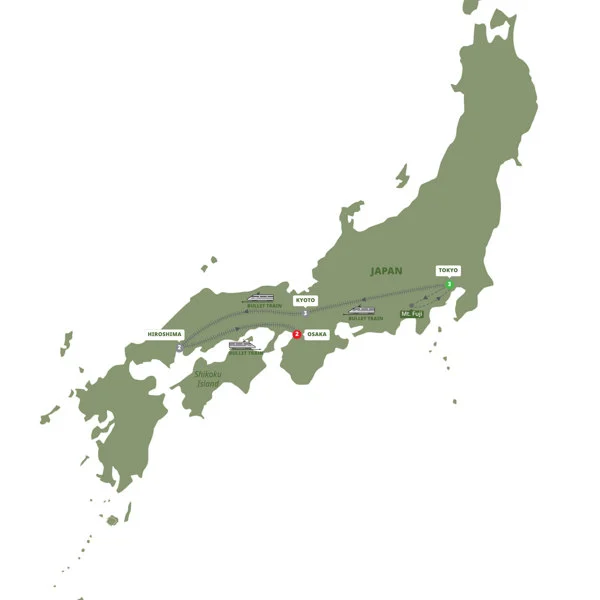
Arrive at Tokyo Narita or Haneda Airport and transfer to the hotel by airport shuttle. This evening, meet your Travel Director and fellow travellers for small bites with drinks.
Day 2
Day 2: Explore Vibrant Tokyo
Learn the art of Taiko drumming with a Local Specialist. Enjoy lunch at a Sumo-themed izakaya, then visit Sensō-ji Temple and stroll along Nakamise shopping street in Asakusa. Cruise the Sumida River past Tokyo’s modern skyline, old Edo neighbourhoods and Hama-rikyū Garden. Return to the hotel for leisure time.
Meals: Breakfast,Lunch
Day 3
Day 3: Majestic Mount Fuji and Lake Kawaguchi
Travel from Tokyo to Mt. Fuji and visit the 5th Station at 2,300 metres for countryside views, weather permitting. Have lunch at a local restaurant, then visit Lake Kawaguchi.
Meals: Breakfast,Lunch
Day 4
Day 4: Continue to Kyoto
Travel by high-speed bullet train from Tokyo to Kyoto. Take a walking tour of the Gion District and Kawaramachi Street, then visit Kinkakuji Temple. Return to the hotel for an evening at leisure.
Meals: Breakfast
Day 5
Day 5: Discover Enchanting Kyoto
Visit Arashiyama and walk through its bamboo groves. See Togetsukyo Bridge and the Zen gardens of Tenryuji Temple, then enjoy free time at Nishiki Market. Return to the hotel or consider joining an optional Japanese tea ceremony.
Meals: Breakfast
Day 6
Day 6: Admire Ancient Nara
Visit Sumiyama Village to learn about Kiyomizu pottery and the work of local craftsmen. Have a Be My Guest lunch at a local farmer’s home, sample fresh tea and visit the family’s tea plantation. In Nara, visit Todaiji Temple and stroll through Nara Park, then return to Kyoto for an evening at leisure.
Meals: Breakfast,Lunch
Day 7
Day 7: Bullet Train to Hiroshima
Travel by high-speed bullet train to Hiroshima and have an okonomiyaki lunch at a local restaurant. Take a ferry to Miyajima Island to visit Itsukushima Shrine and its torii gate. Learn to make Momiji Manjyu, then return to Hiroshima by ferry.
Meals: Breakfast,Lunch
Day 8
Day 8: Experience Hiroshima
Visit Peace Memorial Park and Museum and see the UNESCO-listed Peace Memorial. Spend the afternoon at leisure or consider joining an optional experience.
Meals: Breakfast,Lunch
Day 9
Day 9: Onwards to Osaka
Travel by high-speed bullet train to Osaka. Enjoy free time for lunch, then visit the Umeda Sky Building and its Floating Garden Observatory. Check in to the hotel and spend the rest of the day at leisure.
Meals: Breakfast
Day 10
Day 10: See the Sights of Osaka
Stop at Osaka Castle for a photo opportunity, then stroll through Dotonbori and Hōzenji Yokocho. Enjoy free time to shop, try street food or explore the city. This evening, gather for a final dinner with your Travel Director and fellow travellers.
Meals: Breakfast,Dinner
Day 11
Day 11: Sayonara Osaka
Transfer by airport shuttle to Kansai International Airport or Osaka Itami Airport for your onward flight.
Meals: Breakfast
What’s included
What’s not included
Additional information
Dining Summary
- 10 Breakfast (B)
- 5 Lunch (L)
- 1 Dinner (D)
Iconic Experience
- Tokyo: Explore Tokyo’s oldest temple, Sensoji, in the historic Asakusa district. Wander through Nakamise Arcade, lined with traditional treats and crafts, before arriving at the main hall, a symbol of faith, resilience and local spirit.
- Tokyo: Bask in the stunning skyline of Tokyo as you embark on your Sumida River Cruise.
- Tokyo: Spend some time learning the art of Taiko Drumming with your Local Specialist. Once used in temples and battlefields, this tradition is all about energy and rhythm. After a demonstration, it’s your turn to get hands-on—discovering the techniques and coordination behind this instrument.
- Tokyo: Visit Ameyoko Street Market, once a black market selling American goods after World War II.
- Mt Fuji: Admire the stunning countryside at Mt. Fuji 5th Station.
- Tokyo: Jump aboard the high-speed Bullet Train towards the cultural hub of Kyoto.
- Kyoto: Admire the beautiful golden pavilion of Kinkakuji Temple.
- Kyoto: Take a walk through the beautiful landscapes of the Arashiyama District.
- Nara: Discover the tame deer as you explore Nara Park.
- Kyoto: Savour one of Japan’s most beloved dishes as you enjoy okonomiyaki for lunch, rich in flavour and a true taste of local cuisine.
- Miyajima: Discover the majestic Itsukushima Shrine and learn a new skill when you join a Local Specialist to practice making Momiji Manjyu.
- Hiroshima: Shape momiji manju, Hiroshima’s maple-leaf buns, fill them with sweet red bean paste, and enjoy tasting your creation.
- Hiroshima: Discover the rich history when you visit the Peace Memorial Museum and Park.
- Osaka: Soar to the top of the Umeda Sky Building’s Floating Garden Observatory and take in the panoramic views of Osaka’s skyline.
- Osaka: Discover another side of Osaka in Dotonbori, a lively entertainment district known for its theatres and street food. You’ll walk the main strip before turning into Hozenji Yokocho, a stone-paved alley lined with traditional eateries leading to a small temple where locals splash water over a moss-covered statue for good luck. You may also wish to pause at one of the nearby street stalls to try takoyaki — Osaka’s famous octopus snack, said to have originated here.
Hiroshima Peace Memorial Park & Museum
Visit Hiroshima Peace Memorial Park and Museum to learn about the atomic bombing of 1945 and its human impact. See the UNESCO-listed Atomic Bomb Dome, preserved as a witness to the destruction, and allow time for quiet reflection.
The park and museum present Hiroshima’s history through memorials, accounts and exhibits while expressing the city’s commitment to peace. This is a sobering, meaningful visit whose significance reaches well beyond Japan.
Umeda Sky Building Floating Garden Observatory
Ascend the Umeda Sky Building to its Floating Garden Observatory, an open-air viewing platform connecting the building’s twin towers. Survey Osaka’s dense cityscape from above, with streets, rail lines and high-rises stretching across the view.
Completed in the 1990s, the building is a landmark of modern Osaka architecture. Its elevated vantage point helps put the scale and layout of this energetic commercial city into perspective.
Mount Fuji 5th Station & Lake Kawaguchi
Take in the views from Mount Fuji’s 5th Station, around 2,300 metres above sea level, when weather permits. Visit the shores of Lake Kawaguchi for another perspective on Japan’s most recognisable mountain.
Mount Fuji’s near-symmetrical profile has inspired artists and pilgrims for centuries and forms part of a UNESCO World Heritage site. On a clear, still day, its outline may appear reflected in the lake; mountain conditions determine which views are possible.
How You'll Travel
- Selected hotel dinners plus a locally hosted meal
- 4-star stays
- Deluxe coach and train travel
Operated By
Trafalgar
Tokyo Welcome Gathering
Meet your Travel Director and fellow travellers over small bites and drinks in Tokyo. This hosted gathering offers a relaxed introduction to the people sharing your journey through Japan.
Settle into the capital’s lively atmosphere while getting to know the group and hearing about the experiences ahead, from historic temples to regional food traditions. It is a sociable start rather than a formal sightseeing tour.
Tokyo Taiko Drumming Experience
Learn the rhythmic art of taiko drumming with a Local Specialist in Tokyo. Watch a demonstration, practise the movements and coordination, and feel how the drum’s deep sound is shaped by the energy of the player.
Taiko has long featured in Japanese festivals and religious ceremonies and was also used on battlefields. This hands-on session brings you closer to a performance tradition that is heard as much as it is felt.
Sumo-Themed Izakaya Lunch
Enjoy lunch in a sumo-themed izakaya in Tokyo, surrounded by references to one of Japan’s most recognisable sporting traditions. The meal offers a chance to experience the convivial setting of an izakaya rather than simply stop for lunch.
Sumo combines athletic contest with centuries-old ritual, from formal ring entrances to ceremonies rooted in Shinto practice. The setting adds a distinctive cultural dimension to your time in the capital.
Sumida River Cruise
Cruise the Sumida River for a waterside perspective on Tokyo’s modern skyline and older neighbourhoods. From the boat, watch bridges, riverside buildings and the city’s changing architecture unfold along a waterway closely tied to the capital’s history.
Look out towards the green surroundings of Hama-rikyu Garden as the cruise reveals contrasts between the former city of Edo and present-day Tokyo. It is sightseeing at an unhurried pace, away from the busy streets.
Ameyoko Street Market
Visit Ameyoko Street Market in Tokyo, a lively shopping area known for its close-packed stalls and energetic street atmosphere. Browse the market surroundings and see a more everyday side of the capital beyond its temples and towers.
The market grew from a post-Second World War black market where American goods were sold. Its layered history remains part of its identity, even as today’s traders offer an eclectic mix of food, clothing and other wares.
Kyoto Gion Walking Tour
Walk through Kyoto’s Gion District and experience the streets of one of Japan’s best-known traditional entertainment neighbourhoods. Your walking tour also takes in the energy of Kawaramachi, bringing Kyoto’s historic character and contemporary city life into focus.
Gion is associated with tea houses and the performing arts of geiko and maiko. Its streets offer a sense of the customs that developed while Kyoto served as Japan’s capital for more than a thousand years.
Kinkaku-ji Temple
Visit Kinkaku-ji and admire Kyoto’s Golden Pavilion beside its landscaped pond. Its gold-leaf-covered upper floors create striking reflections, making the temple one of the city’s most recognisable sights.
Originally built as a shogun’s retirement villa, the site became a Zen Buddhist temple after his death. The present pavilion was reconstructed in the twentieth century, while its carefully composed garden continues to express the aesthetic traditions that shaped historic Kyoto.
Kiyomizu Pottery Artisan Workshop
Visit Kiyomizu pottery artisans in the Kyoto-area village of Sumiyama and learn about the craft practised in their workshop. Hear how makers preserve established techniques while continuing to work in a living craft tradition.
Kiyomizu pottery originated in Kyoto around 500 years ago. Artisans later moved some production into rural surroundings amid concerns about pollution in the city. This visit supports the craftspeople and offers insight into the relationship between cultural heritage and local communities.
Nara Farmer’s Family Lunch & Tea Plantation
Share a home-made lunch with a local farmer’s family in the Nara area. Sample fresh tea, hear about family life and visit their traditional tea plantation for a closer look at the setting behind the cup.
This hosted meal offers a personal connection to rural Japan that a restaurant visit cannot provide. Conversation around the table and time at the plantation reveal how tea growing remains part of the family’s daily work and hospitality.
Hiroshima-Style Okonomiyaki Lunch
Taste okonomiyaki at a local restaurant in Hiroshima. This savoury speciality turns lunch into an introduction to a much-loved part of the region’s food culture.
Hiroshima-style okonomiyaki is typically assembled in layers, often with cabbage, noodles and a savoury sauce. Watching or tasting its contrasting textures offers a more specific sense of place than an everyday meal, in a city whose cooking has its own recognised regional identity.
Osaka Castle Photo Stop
Stop at Osaka Castle for photographs and hear how the landmark has witnessed centuries of change in the city. Take in its imposing exterior and surrounding grounds during this sightseeing stop.
The castle’s story is closely linked to Toyotomi Hideyoshi and the upheavals of Japan’s late sixteenth century. Today’s main tower is a twentieth-century reconstruction, making the site a place to consider both its historical importance and the ways Osaka preserves its past.
Tsuyunoten Shrine Visit
Visit Tsuyunoten Shrine in Osaka, a historic Shinto sanctuary tucked into the busy Umeda district. Its compact grounds offer a different perspective on the city amid the surrounding shops and streets.
Also known as Ohatsu Tenjin, the shrine is associated with a famous early eighteenth-century love story that inspired a work of bunraku puppet theatre. That literary connection gives this place of worship a particular role in Osaka’s cultural memory.
Okawa River Scenic Cruise
Cruise Osaka’s Okawa River and view the city from the water. The riverbanks offer a calmer perspective on Osaka’s urban scenery, with bridges and waterside neighbourhoods marking the route.
Waterways have long helped shape Osaka’s identity as a trading city. Seeing it from a boat highlights that connection while offering a scenic contrast to its busy shopping and entertainment streets. The riverside setting changes with the seasons, particularly when trees along the banks are in bloom.
Osaka Farewell Dinner
Gather for a farewell dinner with your Travel Director and fellow travellers in Osaka. This hosted evening is an opportunity to share favourite moments from the journey in a relaxed group setting.
Conversation may return to the contrasts that define this tour: Tokyo’s energy, Kyoto’s craft traditions, Nara’s ancient sites and Hiroshima’s message of peace. The shared occasion gives the journey a sociable close beyond an ordinary evening meal.
Japanese Tea Ceremony Experience
Experience a Japanese tea ceremony during your time in Kyoto. Observe the careful preparation and presentation of tea, with attention to the gestures, utensils and setting that give the ritual its measured pace.
Tea ceremony draws on traditions of hospitality and aesthetic simplicity developed over centuries. It offers a quieter way to engage with Kyoto’s cultural heritage. This Optional Experience is at additional cost and bookable on tour.
Senso-ji Temple & Nakamise Street
Explore Senso-ji Temple in Tokyo’s historic Asakusa district and walk along Nakamise Street, where stalls sell traditional snacks and crafts. See the temple’s gates and main hall amid a neighbourhood that retains the bustle of old Tokyo.
Founded in the seventh century and rebuilt following wartime destruction, Senso-ji remains a place of worship as well as a city landmark. The scent of incense and movement of visitors give the precinct its distinctive character.
Arashiyama Bamboo Groves, Togetsukyo Bridge & Tenryu-ji
Walk through Arashiyama’s bamboo groves, see Togetsukyo Bridge and explore the garden at Tenryu-ji Temple. This Kyoto district combines wooded paths, river scenery and temple grounds in a landscape that shifts visibly with the seasons.
The tall bamboo creates a changing pattern of light and shadow, while the Zen garden at Tenryu-ji frames the surrounding hills. Spring blossoms and autumn foliage bring different colours to an area long valued for its natural beauty.
Todai-ji Temple & Nara Park
Visit Todai-ji Temple to see its monumental bronze Buddha, and stroll through Nara Park among its freely roaming deer. Together, these sights introduce the religious and natural landscape of Japan’s first permanent capital.
Founded in the eighth century, Todai-ji became one of Nara’s powerful Seven Great Temples. The deer have long been associated with the area’s sacred traditions, lending a distinctive character to the paths and open spaces around the temples.
Miyajima’s Itsukushima Shrine & Momiji Manju Making
Visit Itsukushima Shrine on Miyajima Island and see its celebrated sea-facing torii gate. Join a Local Specialist to make momiji manju, shaping the maple-leaf sweet, filling it with red bean paste and tasting your creation.
The UNESCO-listed shrine is renowned for structures designed to appear closely connected to the surrounding water. Momiji manju draws its shape from the maple leaves associated with the island, adding a hands-on taste of local tradition to the visit.
Dotonbori & Hozenji Yokocho Walk
Walk through Dotonbori past canalside eateries and bright signs, and explore the narrower lanes of Hozenji Yokocho. The contrast captures two sides of Osaka’s entertainment district: exuberant streets and a lantern-lit alley leading to a small temple.
Dotonbori has long been associated with theatres and food. In Hozenji Yokocho, locals splash water over a moss-covered statue for good luck; nearby stalls offer a chance to encounter Osaka’s famous takoyaki at your own expense.