Your itinerary
Day 1
Depart UK
Depart UK
Day 2
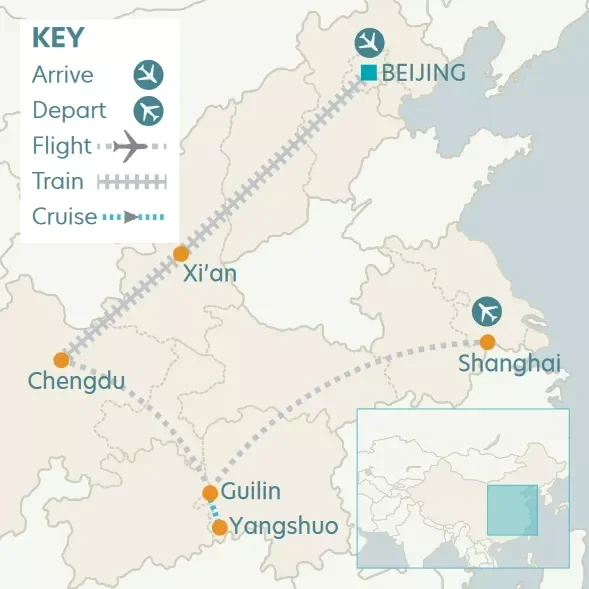
Arrive in Beijing
Arrive in Beijing – We’ll arrive in Beijing mid-afternoon and transfer directly to our hotel for check in.
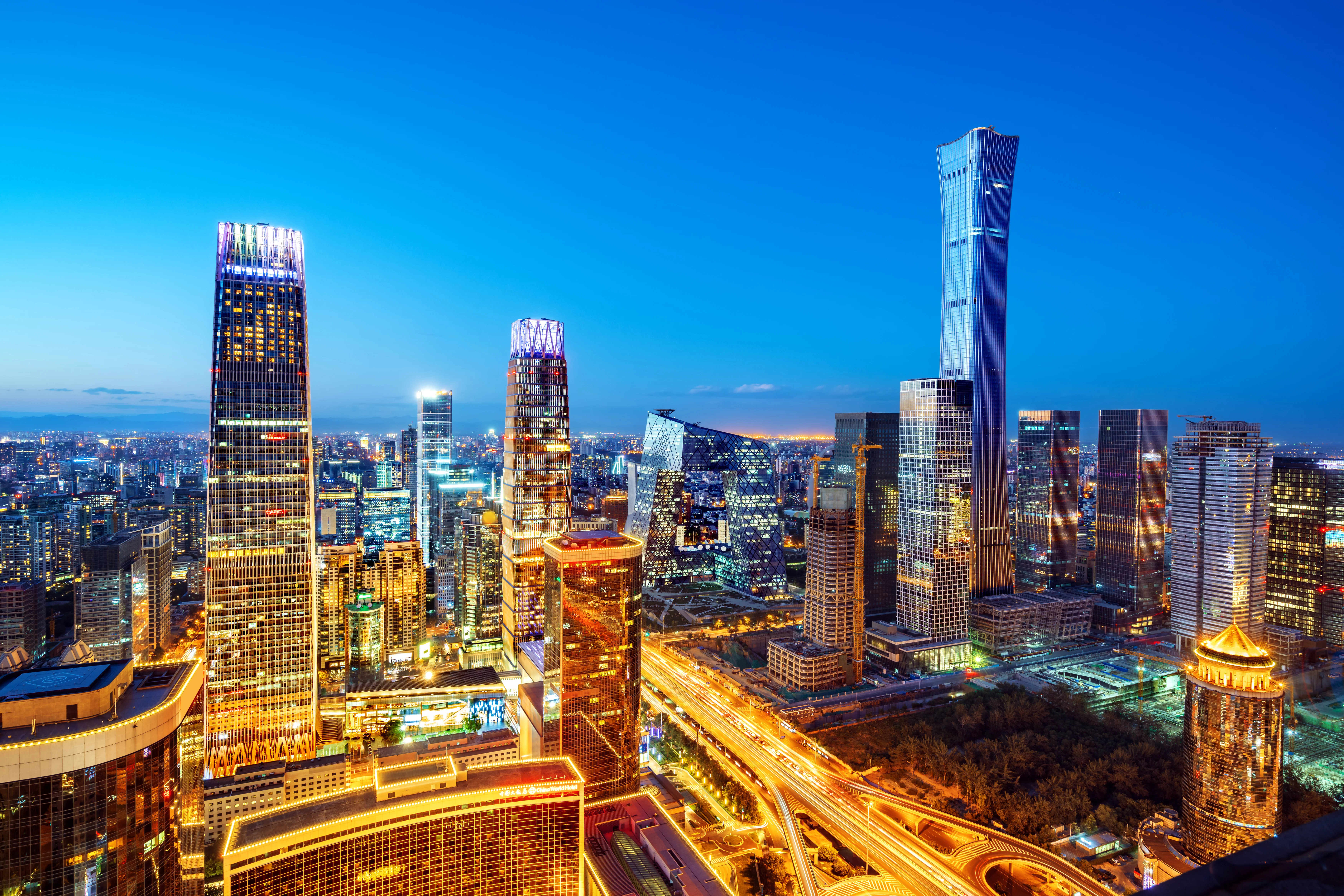
Those who prefer to “fly and flop” can spend the rest of the day enjoying the hotel’s facilities and a well-earned rest by the pool or in the bamboo garden. However, if you can’t wait to start exploring, you couldn’t be better placed. Located in the Central Business District area of Chaoyang, we’re in the heart of Beijing’s real downtown area. There are plenty of shops and restaurants within a 15-minute walk away and there’s easy access to the subway line.
Meals: Breakfast
Day 3
Beijing
Beijing – This morning, we’ll see the sights of Beijing on a guided tour. Our first stop is Tiananmen Square opposite the entrance to the Forbidden City. As one of the largest public squares in the world (although if we’re being picky, it’s actually rectangular), it has a historical, cultural and political significance that makes it a must-visit sight in Beijing. Through the years, this square has seen many historic events, including the proclamation of the founding of the People’s Republic of China in 1949 and the protests of 1989.
The square is also home to some major attractions, including Tiananmen Tower, the Mao Zedong Memorial Hall, the Great Hall of the People, the National Museum of China and, of course, the Forbidden City itself. The complex is the largest imperial palace in the world. Legend has it that there are 9,999 rooms (this number is auspicious in Chinese culture; it’s pronounced the same as the Chinese word ‘eternal’) spread over 250 acres. From the square, the horizon is a sea of curved eaves with yellow-glazed tiles and vibrant red walls. As you’d expect from the seat of supreme power in China for over five centuries, it’s incredibly impressive.
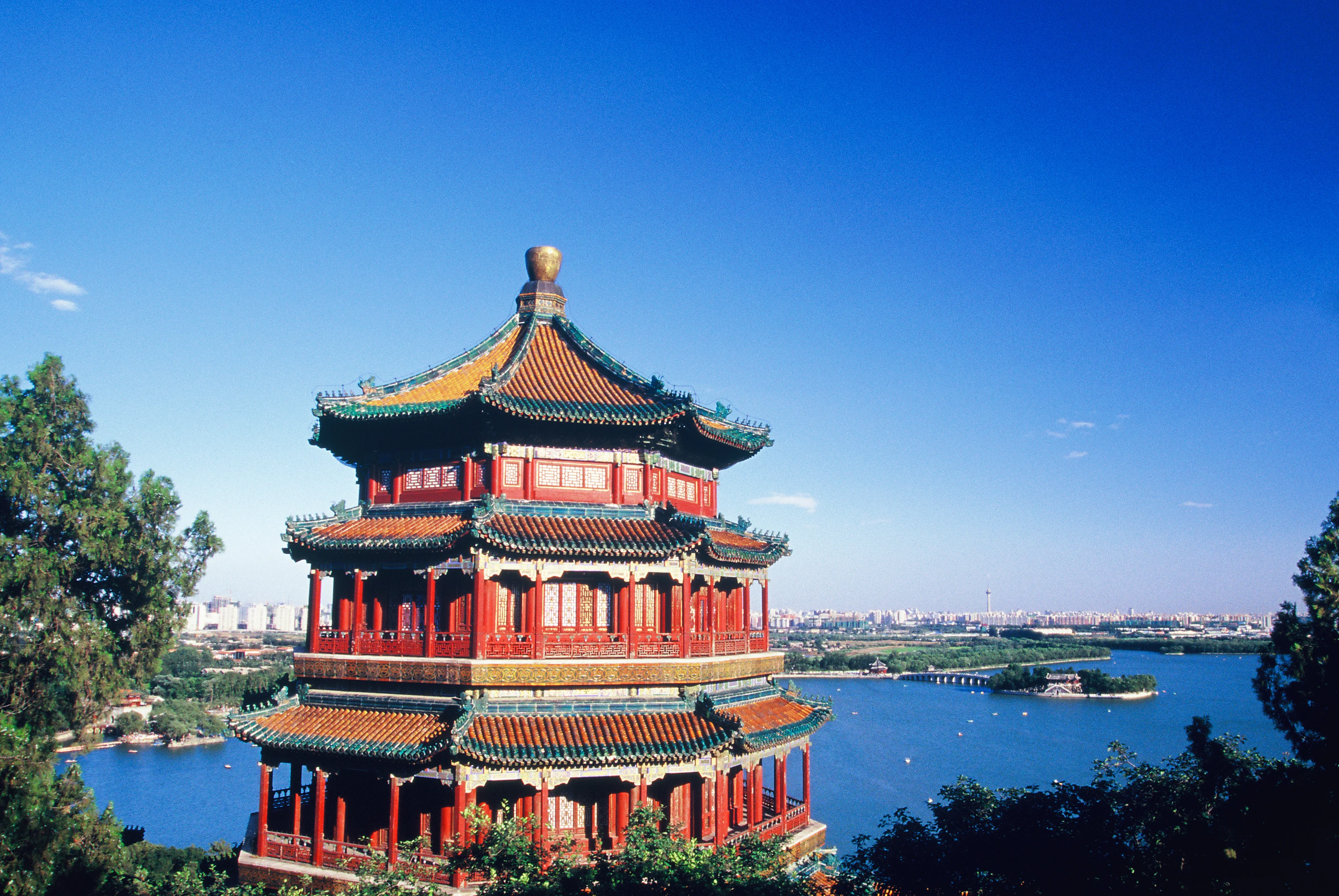
After an included lunch, we’ll head to the Summer Palace. It was built, destroyed and rebuilt (twice) to be the summer resort for the Qing dynasty’s royal family, with beautiful gardens and airy pavilions – the opposite of the walled-in Forbidden City. The gardens here are said to be one of the best-preserved imperial gardens in the world, three quarters of it is covered by the waters of Kunming Lake and the rest is punctuated with hills and palaces ripe for exploring. The hills provide extensive views of the complex (worth the uphill climb), and highlights include The Long Corridor – the longest corridor in the world; the Tower of Buddhist Incense; Qingyan Stone Boat – a boat sculpture at the edge of the lake; and the rainbow-shaped Seventeen Arches Bridge.
Meals: Breakfast,Lunch
Day 4
Beijing
Beijing – Today, we’ll help you tick off one of the destinations we know is on your bucket list: The Great Wall of China. From our hotel, we’ll travel out of the city towards the Mutianyu Section of the Great Wall, passing through farms and fruit orchards before catching our first glimpse of the Wall.
The Great Wall of China is one of the most famous structures in the entire world – and the largest man-made project in the world – with 20,000 km stretching from the Bohai Sea in the East to the Gobi Desert in the West. It’s said that from space you can see it winding across the mountains and plateaus like a dragon, but you won’t need a rocket ship today as we’ll get an up-close look.
As we get up close, you might be surprised to see it is not, in fact, a single wall but a series of towers, barracks, and fortresses forming one massive integrated defensive system (it’s not hard to see why it took over 2,000 years to build). This section is densely populated with watchtowers – they make a great vantage point to take in the natural beauty surrounding the structure.
Heading back to the city for lunch, we’ll then visit the Temple of Heaven. Its circular, three-tiered, conically roofed structure is set in gardens and surrounded by historic pine woods and is designed to symbolise the relationship between earth and heaven. Originally, it would have served as the stage for solemn rights performed by the emperor but don’t expect to see worshippers at prayer here today, it’s not so much a temple as a place of arcane, Confucian-inspired statecraft. As you gaze up at this fine wooden Chinese architecture, remember: no nails were used in its construction.
Signature experience –
This evening, we will enjoy a traditional Peking duck dinner at a local restaurant. This dish is said to have originated in Hangzhou, not far from Shanghai, in the 13th century. In those early days, the duck would have been roasted on a large metal fork over an open fire. It’s said that the chefs of the Forbidden City developed the technique in which the ducks are hung in the fierce heat on metal racks, as is common today.
Meals: Breakfast,Dinner
Day 5
Train from Beijing to Xi’an
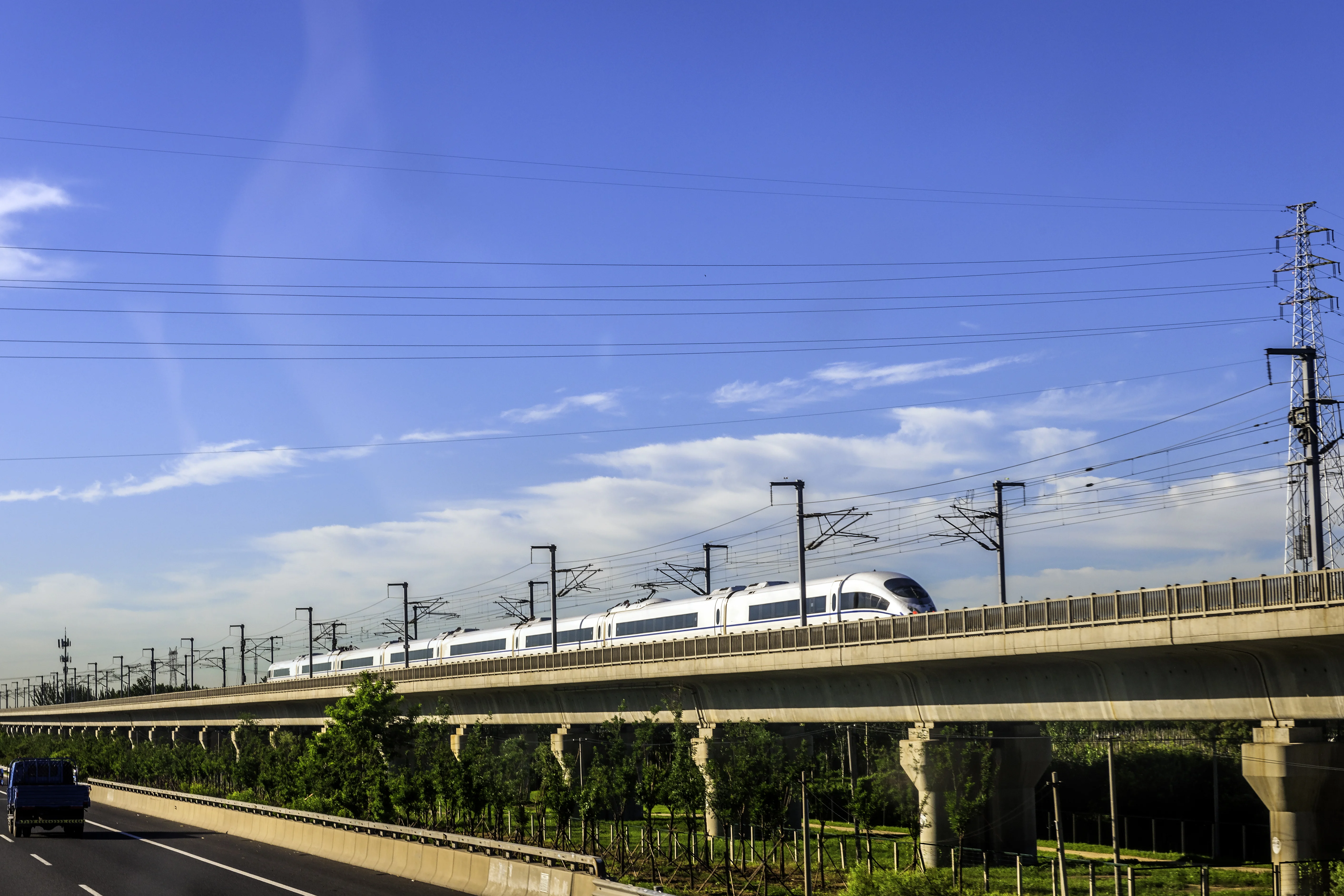
Train from Beijing to Xi’an – We’ll bid goodbye to Beijing this morning and travel like a native to Xi’an on one of China’s high-speed trains. These impressive trains – also known as The Bullet Train – can reach speeds of up to 350km per hour which makes traversing across China’s 9.6 million square kilometres much faster. And, thanks to China’s advanced technology, we’re happy to report it’ll be a smooth ride!
After 5 hours on a train, you’ll be ready to stretch your legs in the Ancient City Wall of Xi’an. Built in 1370, it’s one of the most complete walled cities in China, as well as one of the largest military defensive systems in the world. The city wall is massive — tall, long and thick – with only two main entrances to the inner city. You can stroll along it to see the complex system of inner and outer walls, watchtowers and moats.
Meals: Breakfast
Day 6
Xi’an Terracotta Army
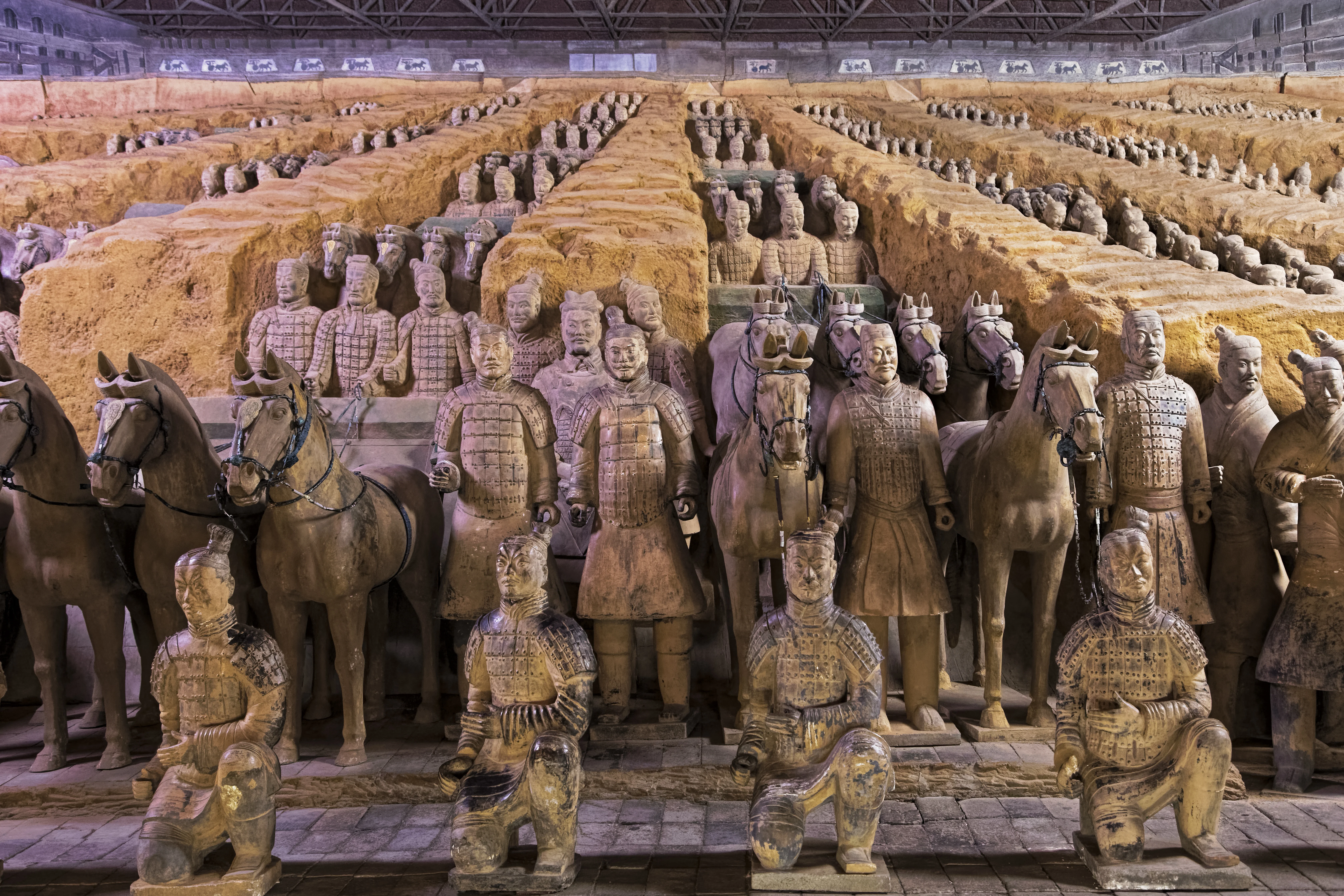
Xi’an Terracotta Army – Discovered by workers digging a well outside of Xi’an, the Terracotta Army is one of the greatest archaeological discoveries in the world and, today, we’ll get to see them for ourselves. According to archaeologists, this subterranean life-size army of thousands of clay soldiers poised for battle is part of an elaborate mausoleum created to accompany the first emperor of China into the afterlife. Rows and rows of figures, weapons and clay horses four abreast pulling wooden chariots stand in trenchlike, underground corridors. But while the size of the complex may hit you first, don’t forget to look closer at the individual figures – the detail is astounding; each soldier has unique facial expressions and, although it’s faded over time, you’ll still see patches of the paint on their clothing that once would have been brightly coloured.
After an included lunch, we’ll return to the city to visit the Big Wild Goose Pagoda. The large stone pagoda is enclosed within the Ci’en Monastery. It was erected in 652, during the Tang Dynasty, to commemorate the return of the temple’s abbot – a heroic figure to Chinese Buddhists – who travelled west across the Silk Road and throughout India for sixteen years, exploring the homeland of Buddhism before returning with hundreds of sutras (Buddhist texts). Today, visitors can still climb the seven storeys for fantastic views of the surrounding area.
Later, we’ll visit the bustling streets of the Muslim Quarter where the food is delicious, and the stalls sell souvenirs, trinkets and handicrafts you can smuggle home in your suitcase. For those brave enough to venture off the main streets, you can experience the reality of the local community; how they eat, how they shop, and what is popular. It is a great place to get to know the local culture.
Meals: Breakfast,Lunch
Day 7
Chengdu
Chengdu – We’ll bid goodbye to Xi’an and catch our next high-speed train to Chengdu, arriving in the afternoon.
On arrival, we’ll visit Du Fu Thatched Cottage, a beautiful park and museum in honour of the Tang dynasty poet Du Fu. Serenely located in a 24-acre park by the side of a stream, the memorial was originally a temple dedicated to the poet. It was built about a thousand years ago during the Song Dynasty and at the centre sits the remains of what is supposed to be Du Fu’s original cottage. The park is a beautiful space to explore, and the cottage has been restored to its former glory. It’s like stepping back into the 700s.
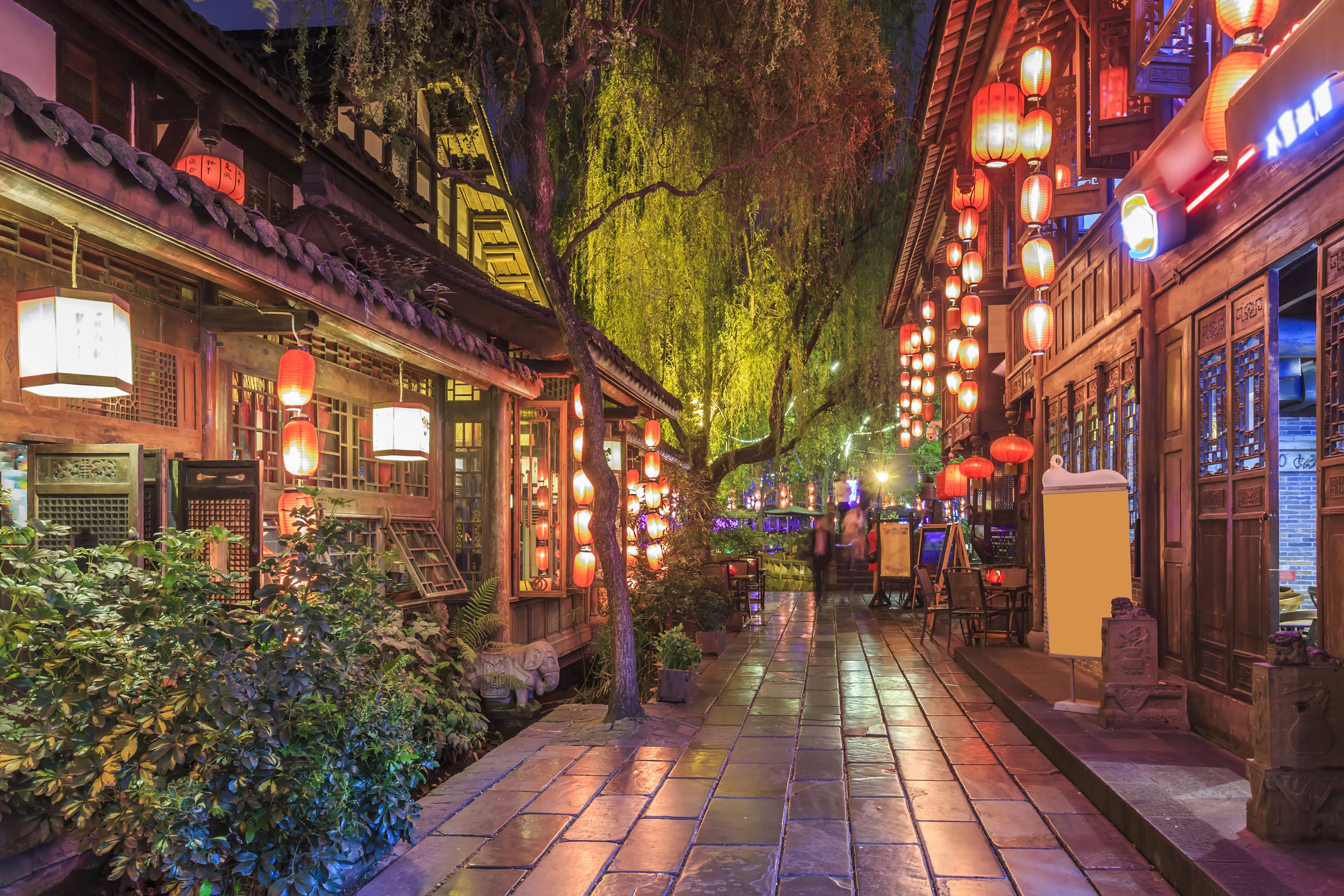
Later, we’ll walk through Jin Li Street. As early as the Qin Dynasty Jin Li Street was the most famous place for baldachin – a rich, ornate cloth – and it became one of the busiest commercial areas during the Shu Kingdom.
We’ll experience the traditional shopping streets as it was during those years of prosperity, thanks to its restoration in 2004. Strolling down the narrow street, you will find yourself surrounded by old-world stores selling Shu Embroidery, lacquer products, folk handicrafts, curiosities, calligraphies and paintings. Perhaps stop to frequent the tea houses, stores and hotels, modelled on the traditional architectural style. There are plenty of places to sit down and relax with a cup of green tea – a local favourite – or coffee.
Meals: Breakfast
Day 8
Chengdu
Chengdu – Our day will start with a once-in-a-lifetime opportunity to see the pandas of Chengdu on a visit to the Chengdu Panda Breeding and Research Centre.
If you enjoy people-watching, you’ll enjoy our visit to Chengdu People’s Park after our included lunch. In the popular park at the centre of the city, you’ll find locals engaged in a wide range of activities – dancing, drawing, singing, playing sports and other games – there are even fortune tellers and matchmakers hard at work here. On the south side of the park is a large lake where you can rent a boat or simply follow the winding paths towards the famous Heming teahouse. Watch as Chengdu residents play mahjong and enjoy a steaming cup of tea.
Signature experience –
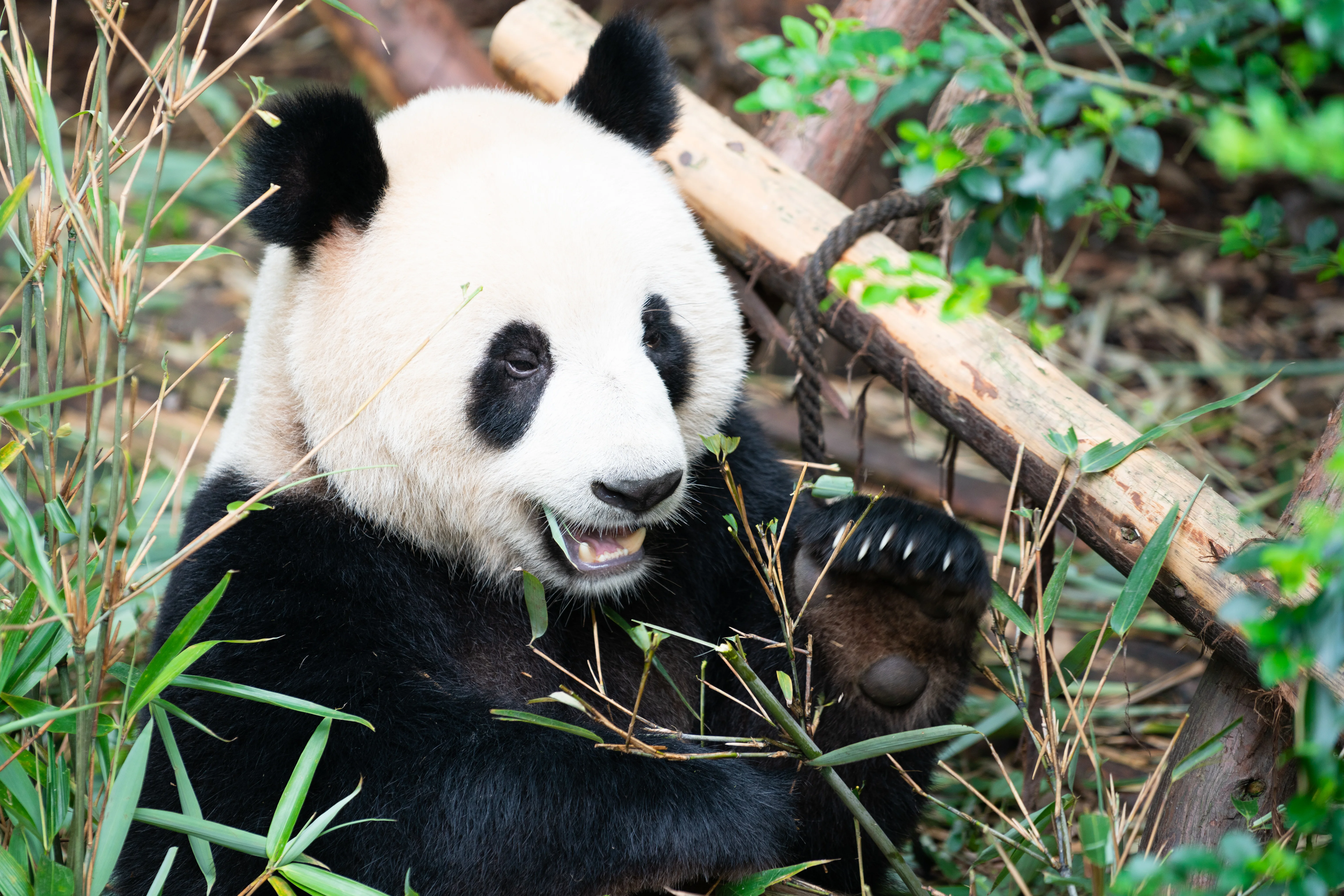
Today, we’ll enjoy a once-in-a-lifetime opportunity to see the pandas of Chengdu on a visit to Chengdu Panda Breeding and Research Centre. Located just 10km away from downtown Chengdu, you might not expect such wildlife so close to the city but as you walk through the 200 acres of the beautiful park, you almost forget how close to civilisation you are. But you’re not here for the landscape. Giant pandas are not only a Chinese national treasure but are also beloved by people the world over, the centre was created to imitate the natural habitat of these adorable creatures to facilitate the rearing and breeding of this once endangered species. It is the largest such centre in China and now houses over a hundred of these wonderfully photogenic creatures.
Bamboo-shaded pathways will lead you to the large panda enclosures and one of our favourite stops – the baby panda enclosure. Here, you can usually spot 3-4 youngsters – or cubs – playing, eating and climbing over specially constructed bamboo frames. You can also see the lesser-known (but equally adorable) red pandas, with their red and white faces and bushy tails. There’ll be plenty of opportunities to see the creatures up close (probably munching away on a snack) in their morning routine, when the bears are most active, and find out more about the centre’s efforts in research and breeding pandas.
Meals: Breakfast,Lunch
Day 9
Guilin
Guilin – We’ll fly from Chengdu to Guilin, known for its scenery and natural beauty.
On arrival, we’ll visit the Reed Flute Caves, so named for the reeds that grow at its mouth, which it’s said can be used as flutes. Inside are sights that seem plucked from another world; the karst caves are filled with a vast selection of stalactites and stalagmites, lit by colourful lights. They’re named according to how they look – Fish Tail Peak, Dragon Pagoda, Sky-Scraping Twin, Virgin Forests and Red Curtain – which only adds to their otherworldliness. More than 70 ancient inscriptions inside the cave dating back to the Tang Dynasty – including travelogues and poems – provide insight into the history of the cave. According to legend, one unfortunate scholar tried to write a poem depicting the cave’s beauty, but it took him so long to find the right words that he turned to stone. You can see his human-shaped stalactite in the Crystal Palace of the Dragon King.
After checking in to our hotel, venture out into Guilin this evening. It’s the perfect opportunity to explore the local area and try some authentic local dishes.
Meals: Breakfast
Day 10
Li River Cruise
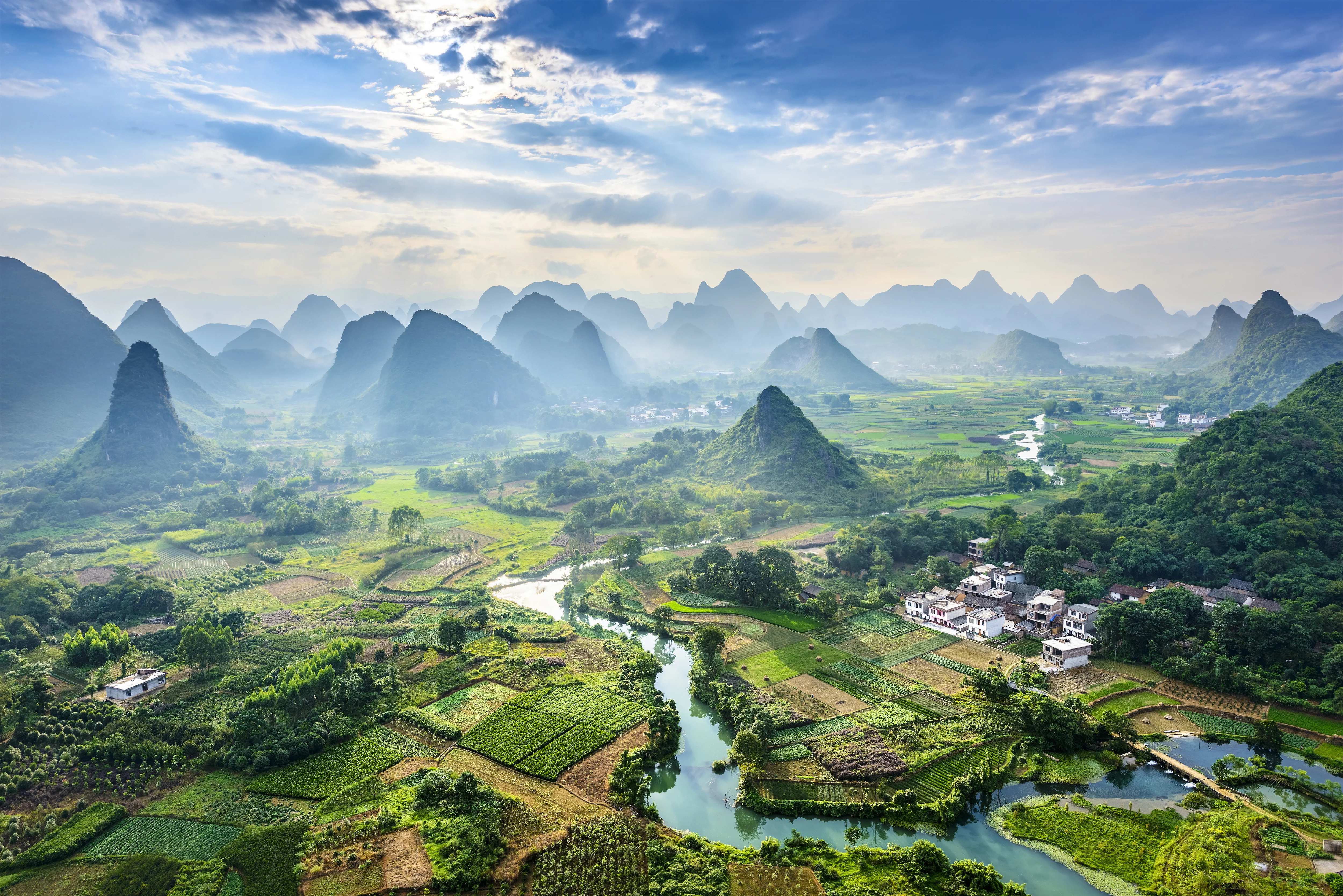
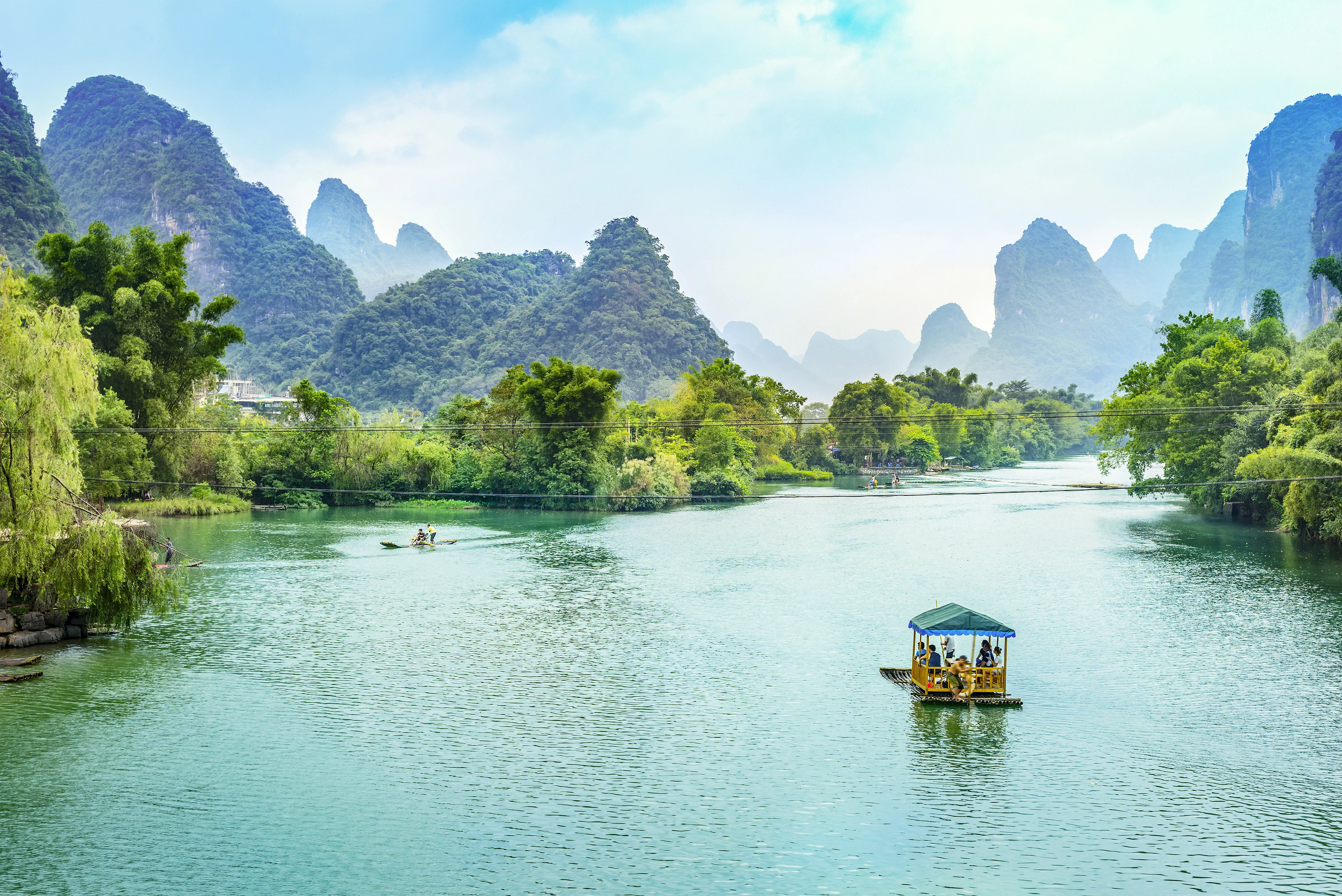
Li River Cruise – Cruising down the Li River this morning is an absolute delight. The river snakes past a procession of jutting limestone karsts with bizarre names and associated legends. They rise from the flat rice paddies surrounding the river and mountain peaks covered in tropical forests – it’s easy to see why this magical landscape has been celebrated by generations of the greatest Chinese painters and poets. Get your cameras ready and look out for farmers tending to their crops in the fields, swaying bamboo groves and maybe even buffalo cooling in the river. You’ll want to capture this moment.
After our included lunch on board, we’ll have some free time to explore the town of Yangshuo, where streets are lined with a variety of shops, cafes and restaurants – bargain hunters might pick up excellent pieces in pearl and jade, or fine Chinese paintings in the stalls here.
Meals: Breakfast,Lunch
Day 11
Huangpu River Cruise
Huangpu River Cruise – We’ll take a short flight to Shanghai. The city has been an economic powerhouse since the British and French forced trading concessions from the Chinese in the 19th century. Its trade in opium, silk and tea, rapidly made it Asia’s most dynamic city and, today, it is an extraordinary blend of colonial and ultra-modern living.
This evening, we’ll head to a local restaurant for our first look at Shanghai’s gastronomic scene.
Signature experience –
On arrival in Shanghai, we’ll take a cruise along the Huangpu River. It’s one of the best ways to see both traditional and modern Shanghai.
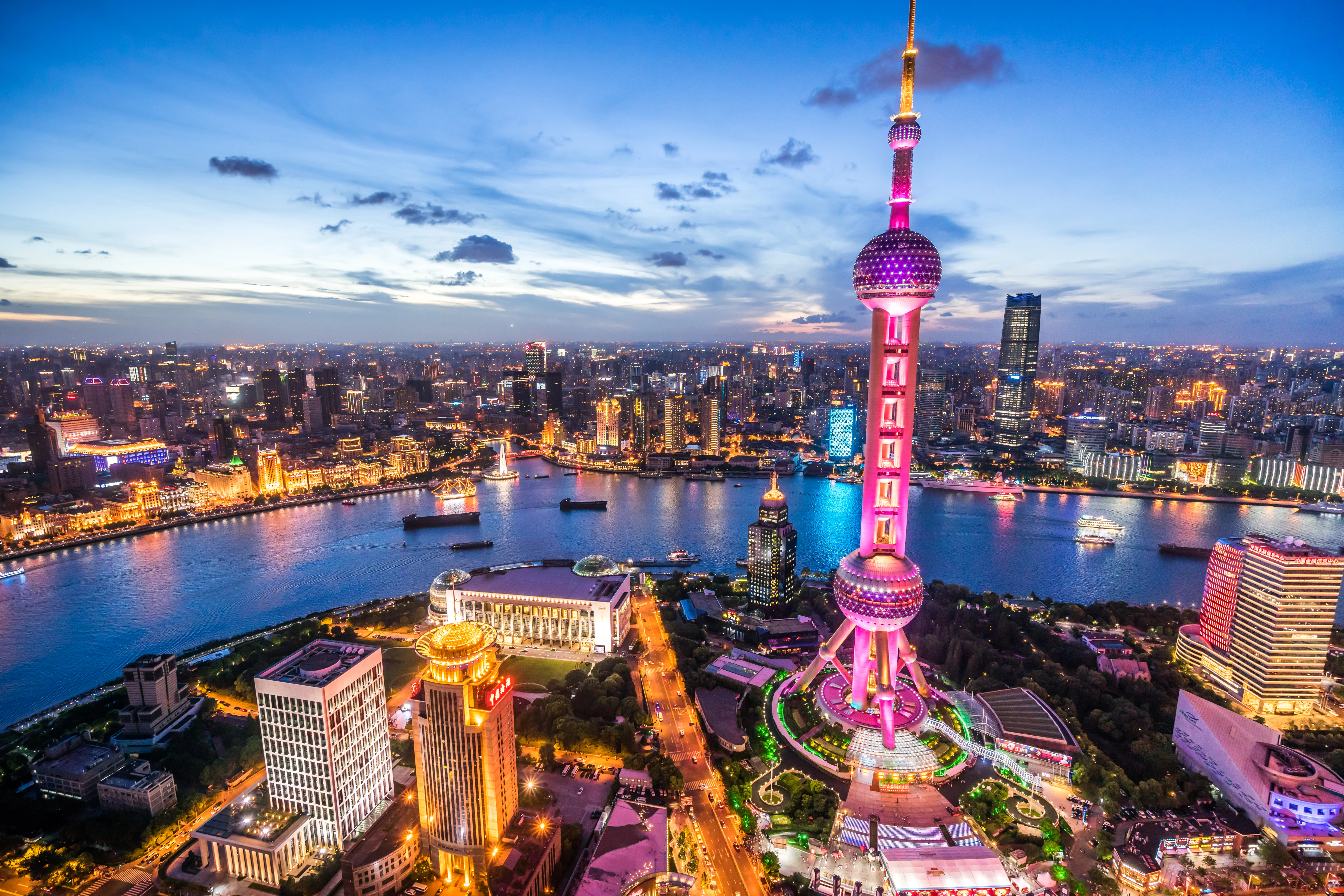
The river is a landmark of Shanghai, separating the city into two parts. It’s become a symbolic boundary between two Shanghais – west and east, past and future. If you look to the western shores, you’ll see colonial landmarks of the Bund, and on the eastern shore, you’ll see the steel-and-glass skyscrapers of the Pudong – the blossoming financial empire. The contrast between traditional river traffic of ferries and barges sailing under the futuristic Yangpu Bridge somehow encapsulates the very essence of Shanghai – it’s the perfect introduction to the city.
Meals: Breakfast
Day 12
Shanghai
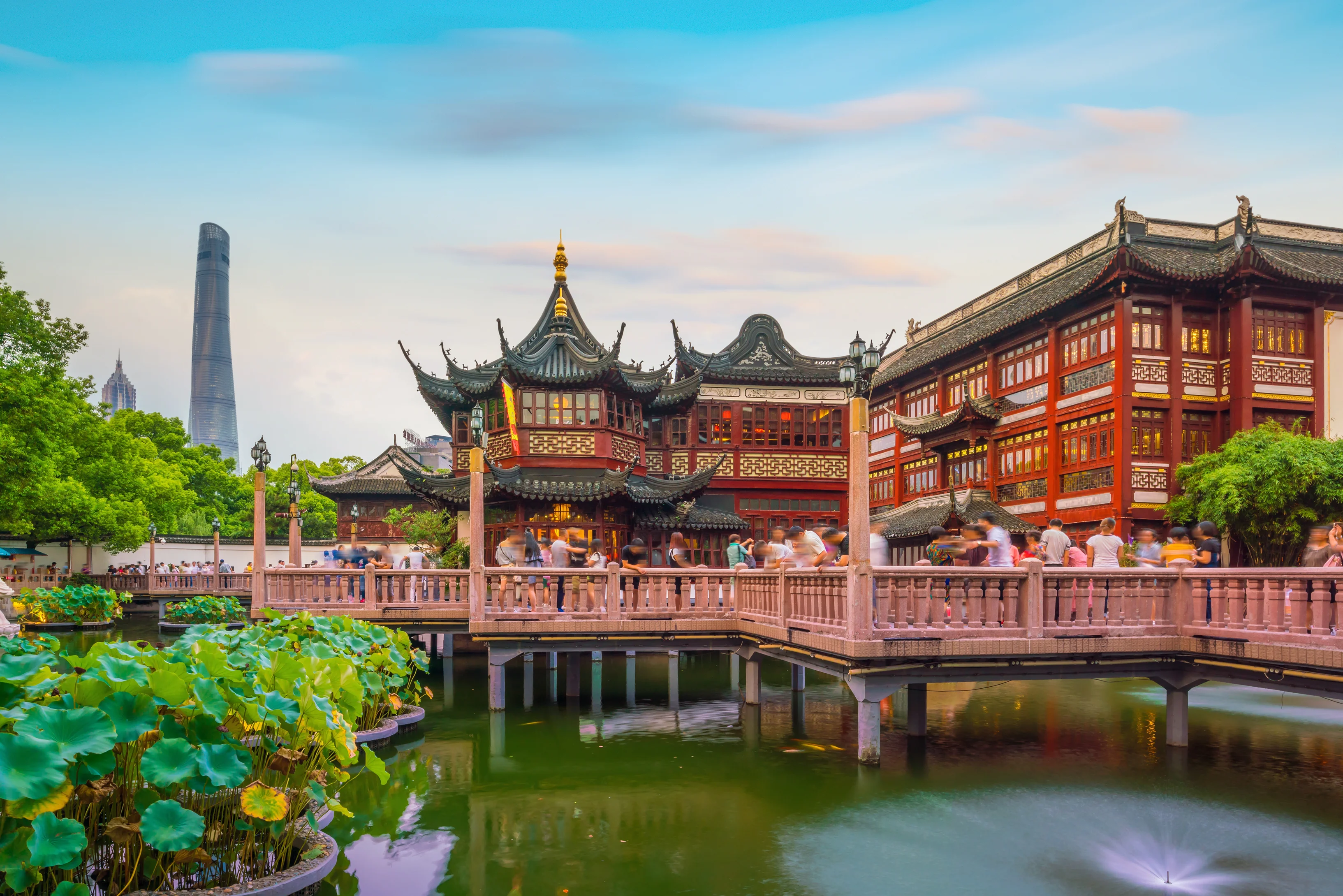
Shanghai – This morning starts with a visit to Yuyuan Garden in Shanghai’s Old Quarter. Originally a private garden in the Ming Dynasty, it still features shaded alcoves, glittering pools churning with fish, pavilions and pines sprouting wistfully from rockeries. (Although, now garden might be a bit of a misnomer, as there are also temples, halls, boathouses and even a theatre to explore – all built in the traditional style.) The vibrant spring and summer blossoms give the air a fragrant, floral aroma.
Here, you can explore as you wish. The superstitious among you may choose to walk to the Jiu Qu Bridge (the Nine-Turn Bridge). The Chinese people believe that the number nine symbolises auspiciousness and walking across the Jiu Qu Bridge is said to bring people good luck. If you’re not superstitious, you can simply enjoy views of the lake from the bridge on your way to Mid-Lake Pavilion Teahouse – the oldest teahouse in Shanghai.
After an included lunch, we’ll visit one of Shanghai’s active Buddhist monasteries, the Jade Buddha Temple, which houses two jade Buddha statues imported from Burma in the late 19th century. Originally built in 1882, the temple was destroyed, but the statues were saved, and a new temple was built around them in 1928. One is a massive statue of a seated Buddha covered with jewels, and the other is a reclining Buddha that represents the Buddha’s final moments. The estimated weight of the statues exceeds 900 kg.
This evening, you may wish to explore nearby Nanjing Road, one of the busiest shopping streets in Shanghai lined with high-end luxury stores and local speciality shops – perfect for those last-minute souvenirs. It’s also worth detouring into the side streets, where you may stumble upon authentic market stalls of fresh produce frequented by the locals and teahouses serving dumplings and hot cups of oolong.
Meals: Breakfast,Lunch
Day 13
Transfer to the airport
Transfer to the airport
Meals: Breakfast
Day 14
Arrive home
Arrive home
What’s included
What’s not included
Additional information
Li River Cruise to Yangshuo
Cruise the Li River past ranks of karst peaks, bamboo groves, and rice paddies where water buffalo wade. Sit on deck to photograph misted cliffs and fishermen gliding by—scenes long cherished by painters and poets.
Hear how limestone uplift and erosion sculpted this dreamlike panorama. The boat glides through tranquil bends and lakeside hamlets before reaching Yangshuo, where dramatic silhouettes frame a timeless rural tableau.
Big Wild Goose Pagoda & Ci’en Monastery
Visit the storied Big Wild Goose Pagoda, a seven-tier Tang landmark within Ci’en Monastery. Climb the pagoda’s inner stairways for elevated views and appreciate the elegant symmetry of classic Tang design.
Hear the tale of monk Xuanzang, who journeyed the Silk Road to India and returned with sacred sutras. The pagoda’s austere brick silhouette honors a pivotal chapter in Chinese Buddhism, scholarship, and translation.
Xi’an Muslim Quarter Food & Market Stroll
Explore the lantern-lit lanes of the Muslim Quarter, where sizzling grills and spice-laden stalls energize the streets. Sample local specialties—think sesame breads, hand-pulled biangbiang noodles, and cumin-scented lamb skewers—while browsing handicrafts and calligraphy.
The district’s heritage reflects centuries of Silk Road exchange, centered around the historic Great Mosque. Culinary aromas, shopfronts, and backstreet scenes reveal a living tapestry of Hui culture within Xi’an’s old city.
Du Fu Thatched Cottage Park, Chengdu
Wander bamboo groves and tranquil ponds at Du Fu Thatched Cottage, a poetic sanctuary honoring China’s revered Tang poet. Pavilions, stone bridges, and a stream-fringed garden frame a serene retreat in the heart of the city.
Discover how Du Fu’s verses chronicled war, exile, and everyday compassion. Memorial halls, inscribed steles, and reconstructed study rooms evoke the scholar’s world, offering a contemplative pause amid Chengdu’s bustle.
Jinli Ancient Street Walk, Chengdu
Stroll the restored facades of Jinli Ancient Street, alive with red lanterns, Shu embroidery studios, and folk-craft kiosks. Stop at teahouses or snack stalls for local bites and soak up the old-Sichuan atmosphere.
Once a hub of brocade trade, Jinli’s Qing-style architecture and stage-front courtyards celebrate regional artistry. Street performers, woodcarvers, and souvenir ateliers make this a photogenic and engaging cultural walk.
Chengdu Panda Breeding & Research Centre with Conservationist Talk
Follow bamboo-shaded paths at the Chengdu Panda Breeding and Research Centre to observe giant pandas and red pandas during their most active hours. Watch playful cubs climb frames and adults tuck into fresh bamboo at close yet respectful distances.
Gain insight as you meet the conservationist or a member of the expert team to learn about breeding and habitat restoration. Exhibits and nursery views underscore China’s flagship program safeguarding these beloved animals.
People’s Park & Heming Teahouse, Chengdu
Experience everyday Chengdu in People’s Park, where locals dance, sketch, and play mahjong under plane trees. Settle into the storied Heming Teahouse to sip fragrant jasmine or green tea and watch the city’s social life unfold.
The park’s boating lake, bonsai corners, and hobby clubs reveal a community spirit unique to Sichuan’s capital. Gentle clinks of porcelain cups and lively conversation give this pause its relaxed rhythm.
Reed Flute Cave: Karst Chambers of Guilin
Venture underground into the Reed Flute Cave, a fantasia of stalactites and stalagmites mirrored in still pools. Themed chambers—like the Crystal Palace—glow with atmospheric lighting that reveals rippled limestone draperies and soaring columns.
Ancient Tang-dynasty inscriptions attest to centuries of wonder here, while local legends animate the rock formations with poetic names. Guides decode geology and folklore as you explore this cool, otherworldly sanctuary.
Huangpu River Cruise: Bund & Pudong Skylines
See Shanghai’s twin identities from the water on a Huangpu River cruise. One bank reveals the Bund’s colonial landmarks—Art Deco and neoclassical facades—while the other surges skyward with Pudong’s futuristic skyline.
Glide past ferries and bridges as your guide points out icons like the Oriental Pearl TV Tower and Shanghai Tower. The juxtaposition of heritage quays and glass spires captures a city forever balancing past and future.
Shanghai Old Town & Yuyuan Garden
Wander Shanghai’s Old Quarter to the classical Yuyuan Garden, where koi-filled ponds, rockeries, and pavilions compose a scholar’s retreat. Tiptoe across the Nine-Turn Bridge (Jiu Qu) toward the storied Mid-Lake Pavilion Teahouse.
Built in the Ming era, the garden’s symbolism—zigzags to deter spirits, yin–yang landscapes—makes a graceful counterpoint to the modern metropolis. Incense, latticework, and camphor shade lend an intimate, time-honored mood.
Jade Buddha Temple of Shanghai
Visit the Jade Buddha Temple, home to two revered statues carved from Burmese jade: a jewel-studded seated Buddha and a serene reclining Buddha. Incense curls through grand halls as monks and devotees chant softly.
Originally founded in 1882 and rebuilt in 1928, the temple anchors Buddhist practice in a fast-paced city. Carved altars, scripture halls, and gilded images create a luminous setting for quiet reflection.
Great Wall of China Walk at Mutianyu
Walk the mountain ridges of the Great Wall at Mutianyu, where Ming-era watchtowers punctuate stone ramparts threading through pine and cypress. Step onto the battlements to take in far-reaching views across valleys and serrated peaks.
Hear how successive dynasties forged these fortifications into a vast defensive system spanning deserts and sea. The Wall’s dragon-like curves, steep stairways, and weathered crenellations make an atmospheric backdrop for remarkable photos and reflection.
Temple of Heaven: Hall of Prayer for Good Harvests
Visit the serene Temple of Heaven, centerpiece of imperial rites linking earth and sky. Gaze up at the Hall of Prayer for Good Harvests, a perfect wooden structure famously built with no nails, layered in blue tiles symbolizing the heavens.
Learn how emperors once performed solemn ceremonies on the Circular Mound Altar. Cypresses, echo stones, and ritual geometry reveal the Confucian order underpinning sacred space, while today’s tai chi and music lend a contemplative atmosphere.
Traditional Peking Duck Dinner
Taste a culinary classic at a local restaurant with a traditional Peking duck dinner. Watch chefs present slices of crisp lacquered skin and tender meat, then roll your own wraps with pancakes, scallions, cucumber, and sweet bean sauce.
Discover how imperial kitchens refined roasting techniques that became a Beijing hallmark. The balance of textures and aromatic hints of jujube wood elevate a simple ritual into a celebrated dining experience shared at convivial round tables.
Xi’an Ancient City Wall Walk
Walk the broad ramparts of the Xi’an Ancient City Wall, one of China’s most complete Ming-era defenses. From towering gates and battlements to sentinel towers, the wall offers sweeping panoramas over the old city.
Built in 1370 atop Tang foundations, this massive rectangle—moat, outer wall, and inner fortifications—speaks to the city’s Silk Road prosperity and strategic might. The vantage points are ideal for photographers and history-lovers alike.
Terracotta Army of Emperor Qin Shi Huang
Encounter the ranks of the Terracotta Army, thousands of life-size warriors, horses, and officers guarding the tomb of Emperor Qin Shi Huang. Walk the galleries overlooking Pit 1’s vast battle lines and study unique faces, armor, and hairstyles handcrafted over two millennia ago.
Learn how these buried legions formed part of an immense mausoleum complex. Archaeology, painstaking restoration, and displays of bronze weaponry reveal a state-of-the-art army frozen in clay.
Summer Palace Gardens & Kunming Lake
Explore the lakeside elegance of the Summer Palace, wandering shaded pavilions, pebble paths, and willow-draped shores. Stroll the painted scenes of the Long Corridor, admire the Tower of Buddhist Incense crowning Longevity Hill, and pause on the graceful Seventeen-Arch Bridge over Kunming Lake.
Hear how this retreat, rebuilt in the Qing era, balanced imperial ritual with leisurely escape. Rockeries, courtyards, and the marble-like Qingyan Stone Boat evoke a world of scholarly gardens, poetry, and lake breezes.
Beijing Panoramic Tour: Tiananmen Square & Forbidden City
Discover Beijing’s imperial core on a guided exploration of Tiananmen Square before entering the Forbidden City through its grand Meridian Gate. Absorb the vast scale of courtyards and vermillion halls, and scan a horizon of yellow-glazed rooftops that once sheltered emperors and their households.
Gain context around milestones such as the proclamation of the People’s Republic in 1949, then learn how Ming and Qing dynasties shaped court ritual, architecture, and symbolism. Ornamental gates, carved stone ramps, and guardian lions reveal layers of artistry and power.