Your itinerary
Day 1
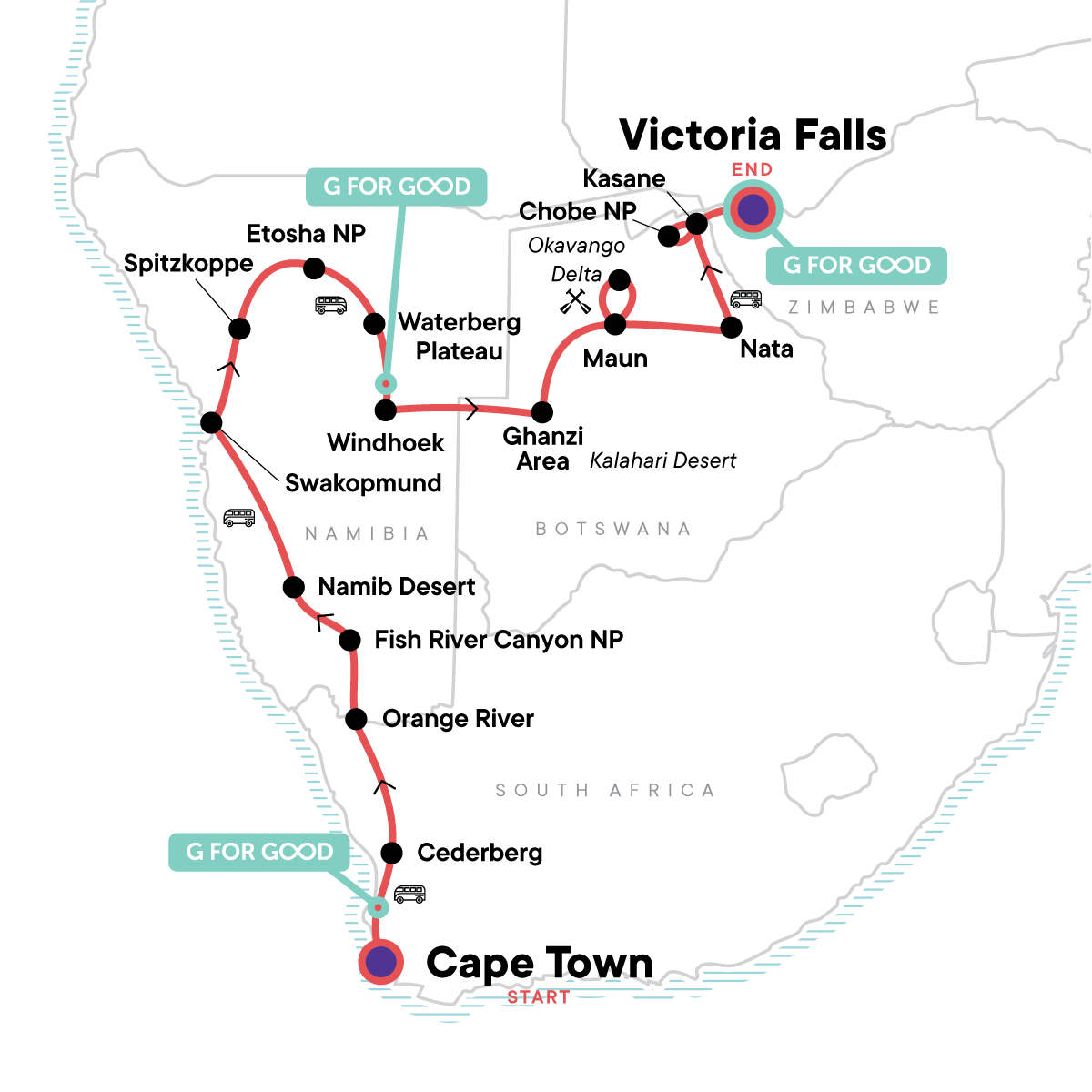
Day 1: Cape Town
Arrive in Cape Town at any time. Evening welcome meeting with your CEO and optional group dinner. Optional pre-booked South African Wine Tour and Tasting (consider a pre-night). Ensure required visas.
Day 2
Day 2: Cape Town/Cederberg
Drive the Western Cape to the G Adventures-supported !Khwa ttu San Culture and Education Centre to learn about San history and culture. Continue to the Cederberg and set up camp; free time in the afternoon. Note: !Khwa ttu closed Dec 25 and Jan 1.
Meals: Breakfast,Lunch,Dinner
Day 3
Day 3: Cederberg/Orange River
Travel north past rooibos plantations to camp on the Orange River; arrive with time for a late-afternoon swim.
Meals: Breakfast,Lunch,Dinner
Day 4
Day 4: Orange River/Fish River Canyon
Cross into Namibia and continue to Fish River Canyon. Watch sunset from the canyon rim; camp nearby and enjoy a campfire.
Meals: Breakfast,Lunch,Dinner
Day 5
Day 5: Fish River Canyon/Namib Desert
Long drive north to the Namib Desert; set up camp late afternoon and take in the red dunes of Sossusvlei.
Meals: Breakfast,Lunch,Dinner
Day 6
Day 6: Namib Desert
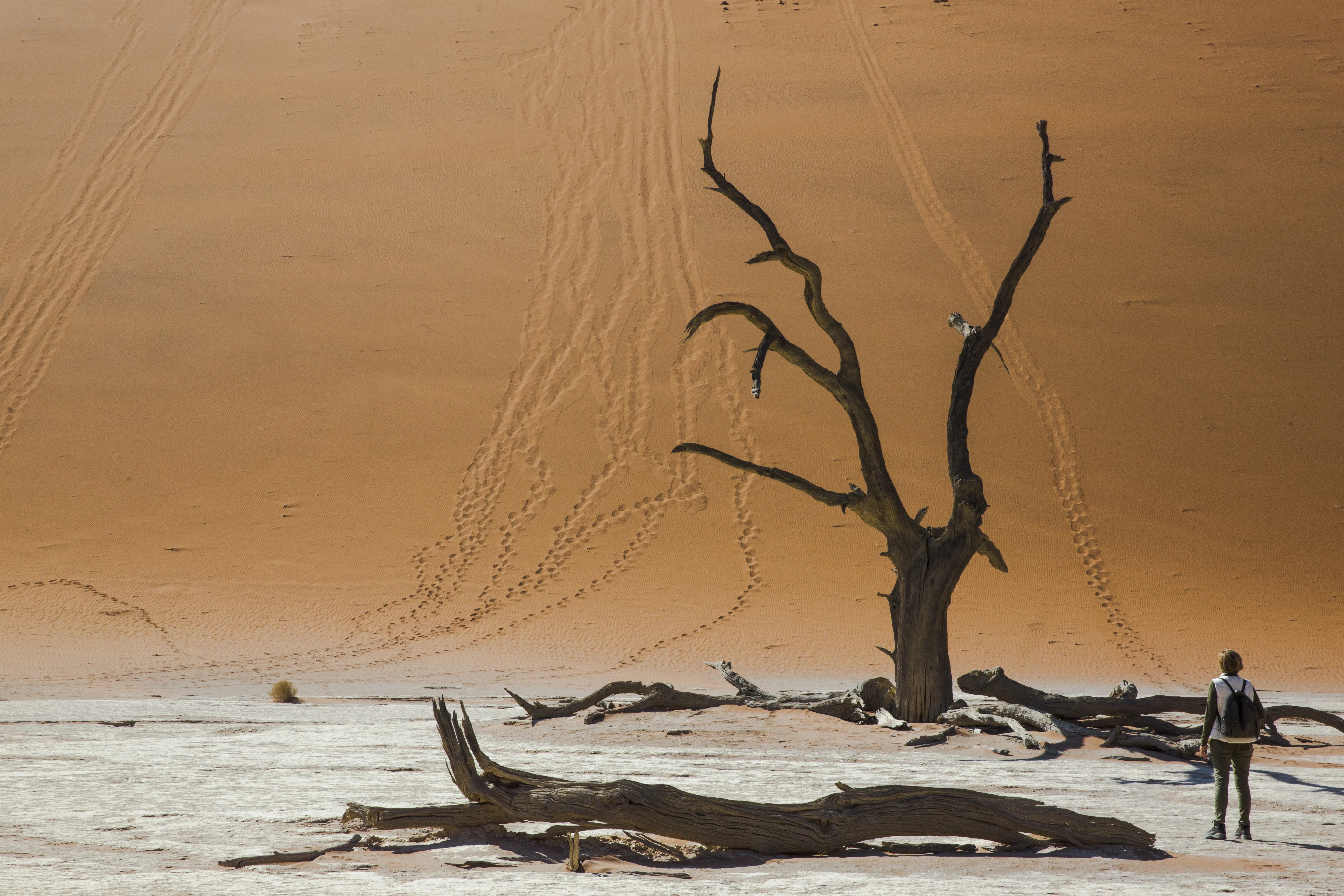
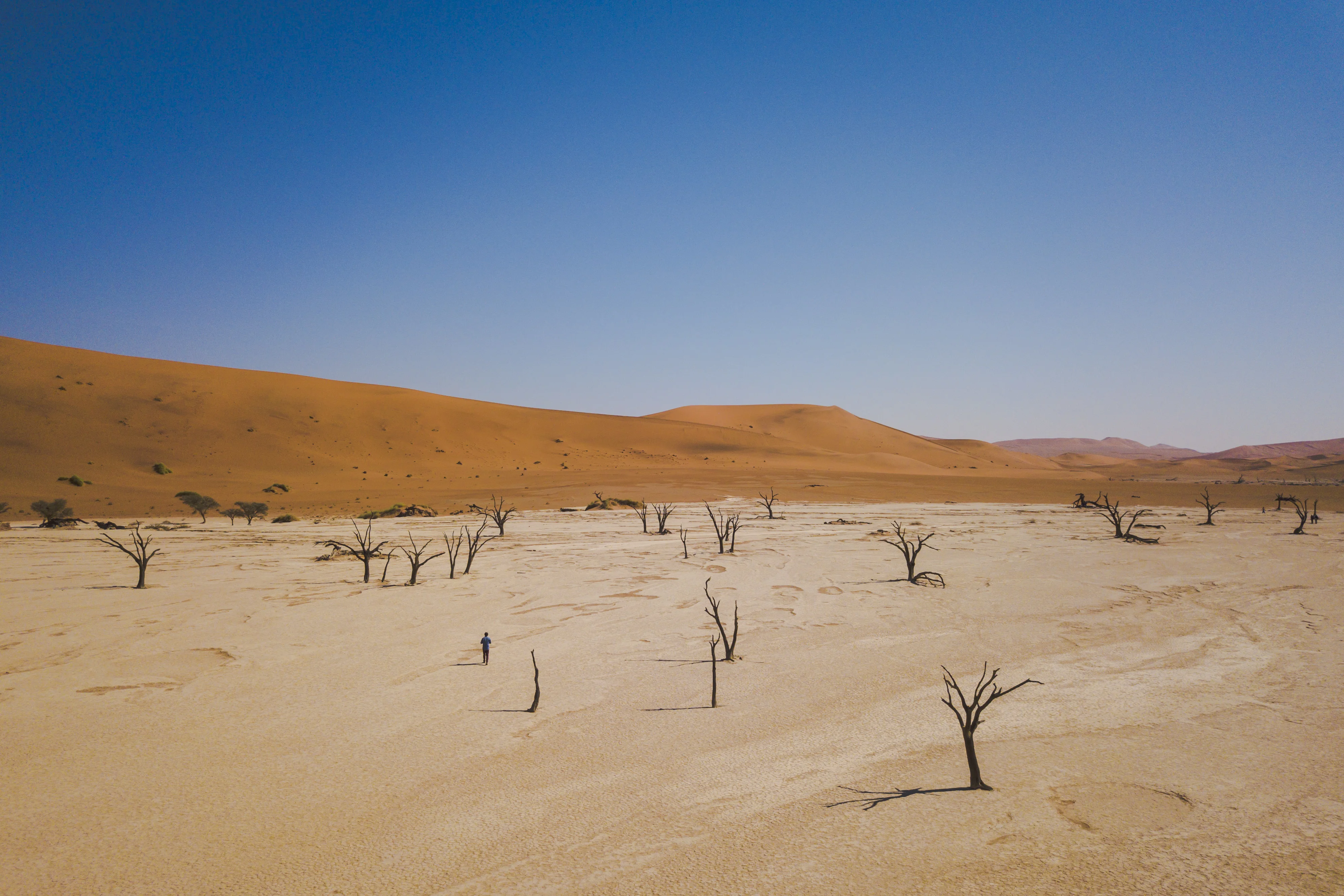
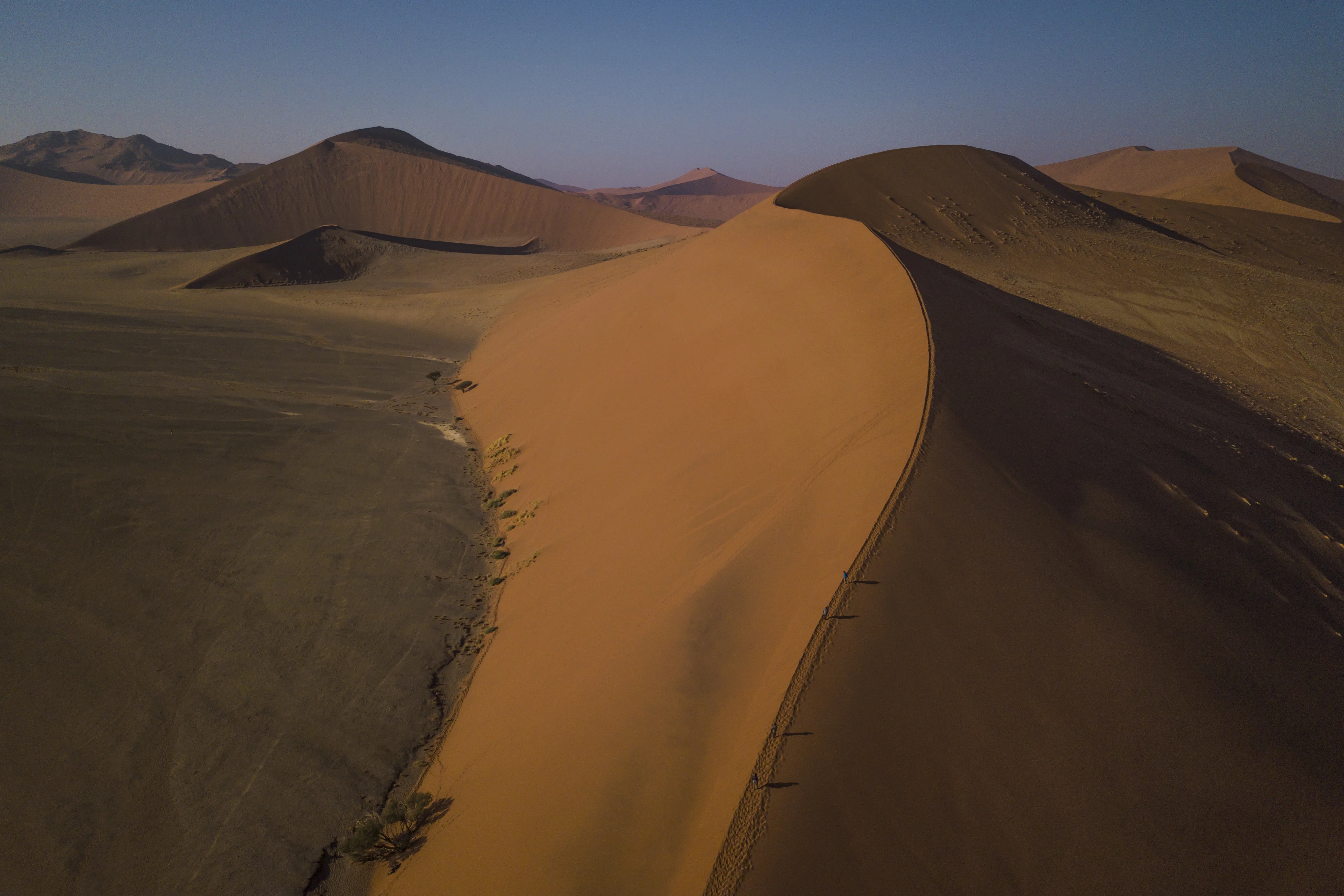
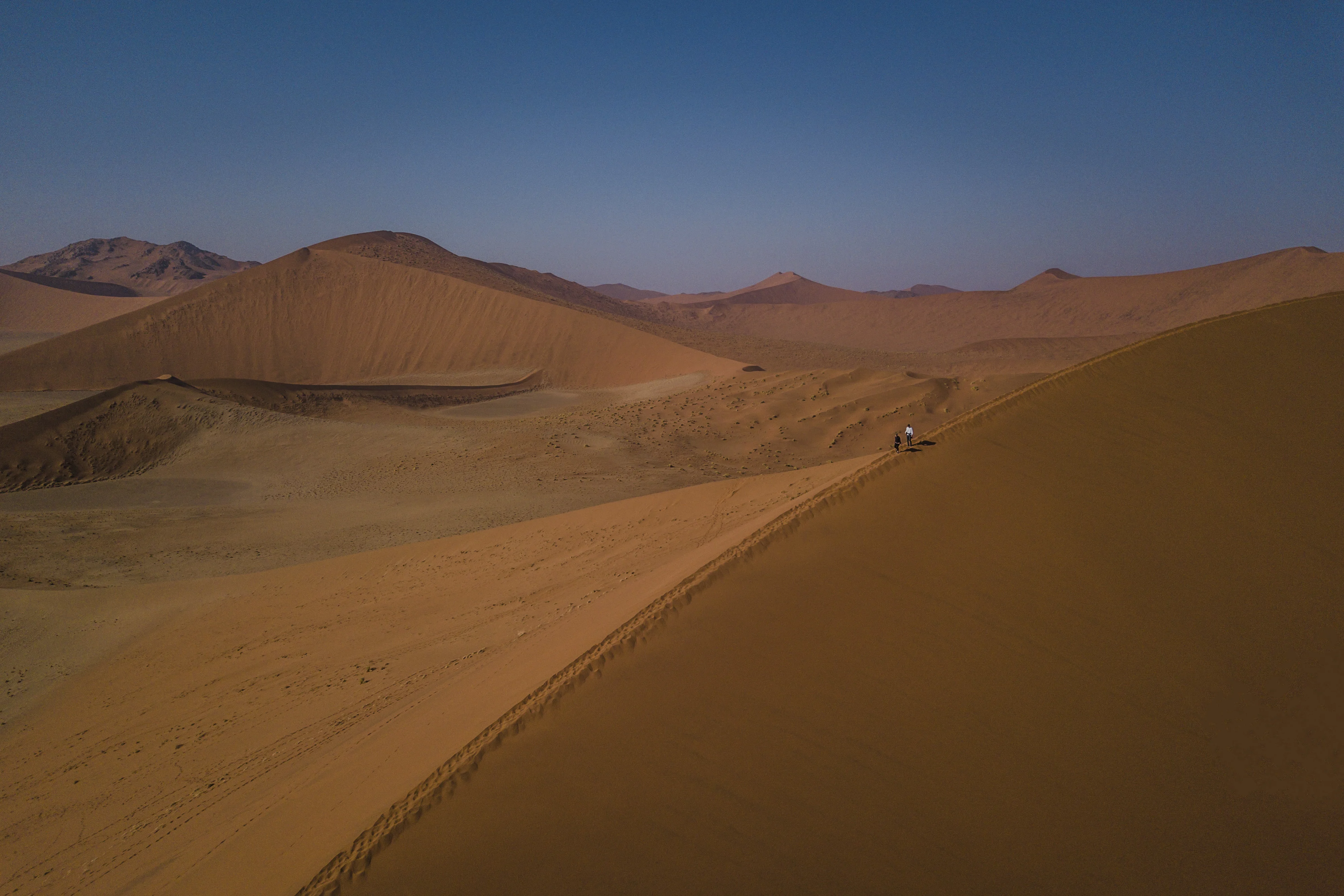
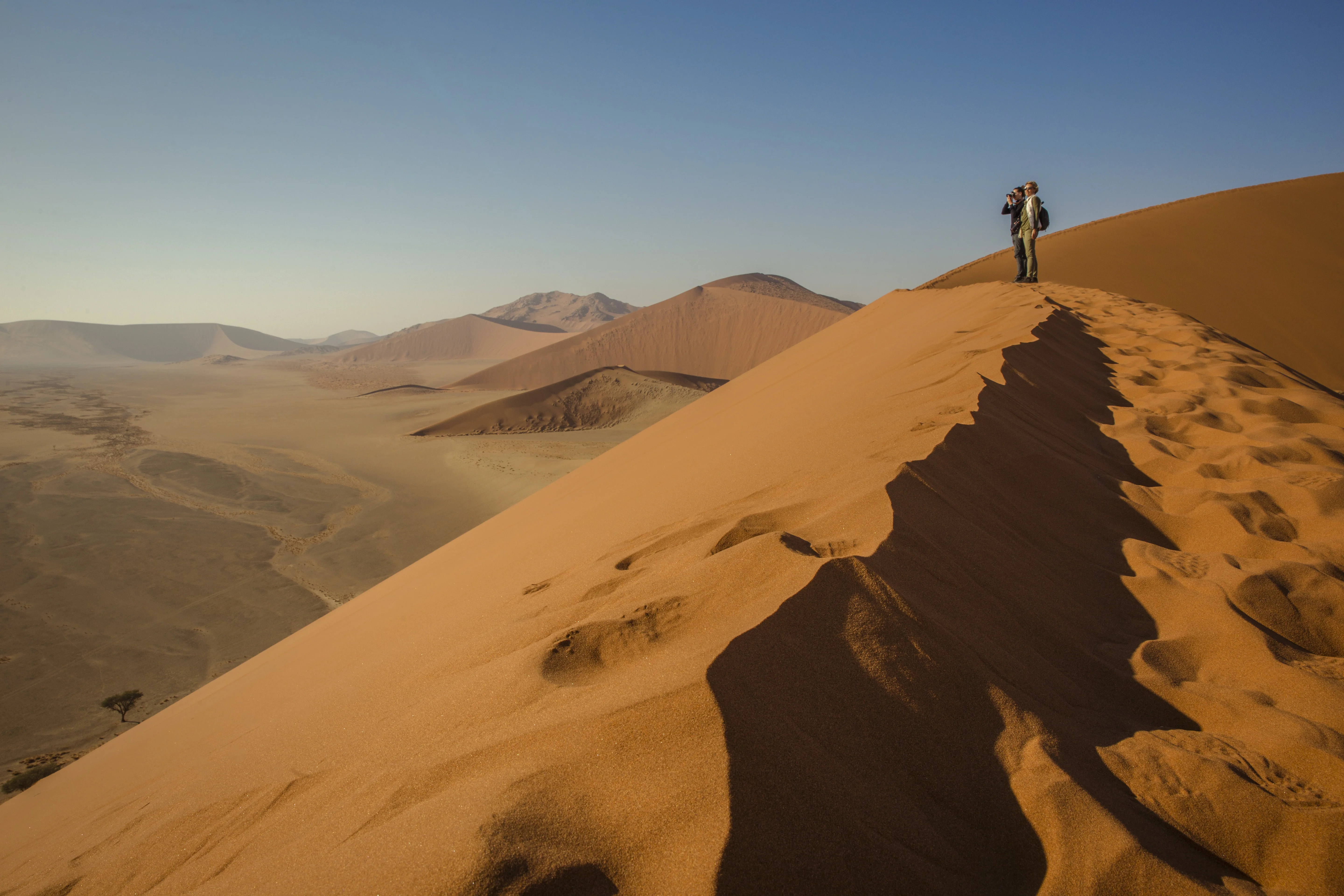
At dawn, climb Dune 45 for sunrise. Optional shuttle to Deadvlei (extra cost), then visit Sesriem Canyon. If time permits, scenic drive via Solitaire. Optional evening Namib Desert Walk.
Meals: Breakfast,Lunch,Dinner
Day 7
Day 7: Namib Desert/Swakopmund
Cross desert passes to Swakopmund, Namibia’s adventure capital. Settle in for two nights with time for optional activities.
Meals: Breakfast,Lunch
Day 8
Day 8: Swakopmund
Free day for optional activities such as skydiving, sandboarding, or a scenic flight over the Skeleton Coast. Meals not included to explore local restaurants.
Day 9
Day 9: Swakopmund/Spitzkoppe
Travel to the granite peaks of Spitzkoppe. Explore on foot and enjoy exceptional stargazing. Basic bush camp with long-drop toilets and no running water.
Meals: Breakfast,Lunch,Dinner
Day 10
Day 10: Spitzkoppe/Etosha National Park
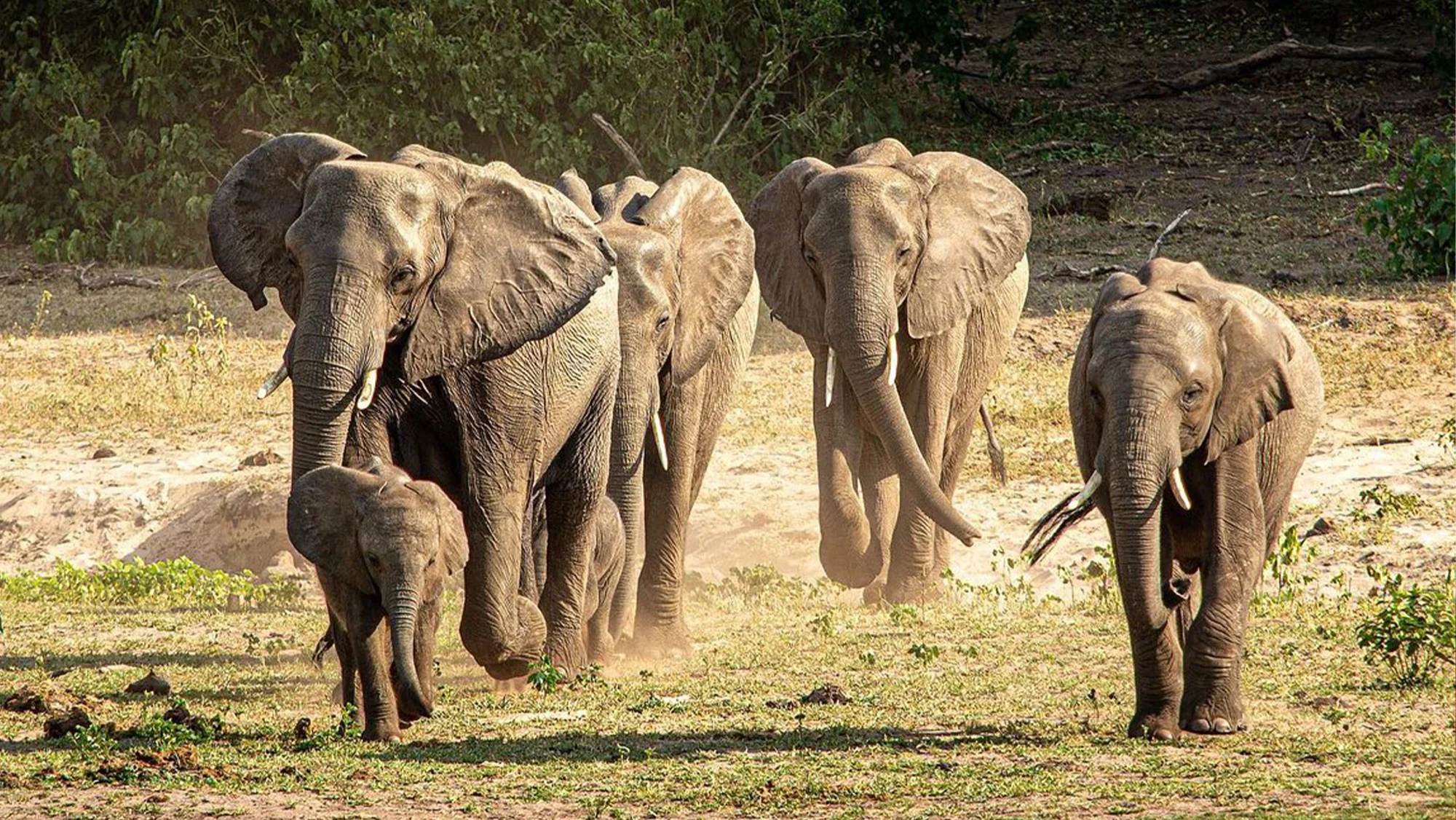
Continue to Etosha National Park; safari drive en route to camp. After dark, watch wildlife at the floodlit waterholes; optional night safari.
Meals: Breakfast,Lunch,Dinner
Day 11
Day 11: Etosha National Park
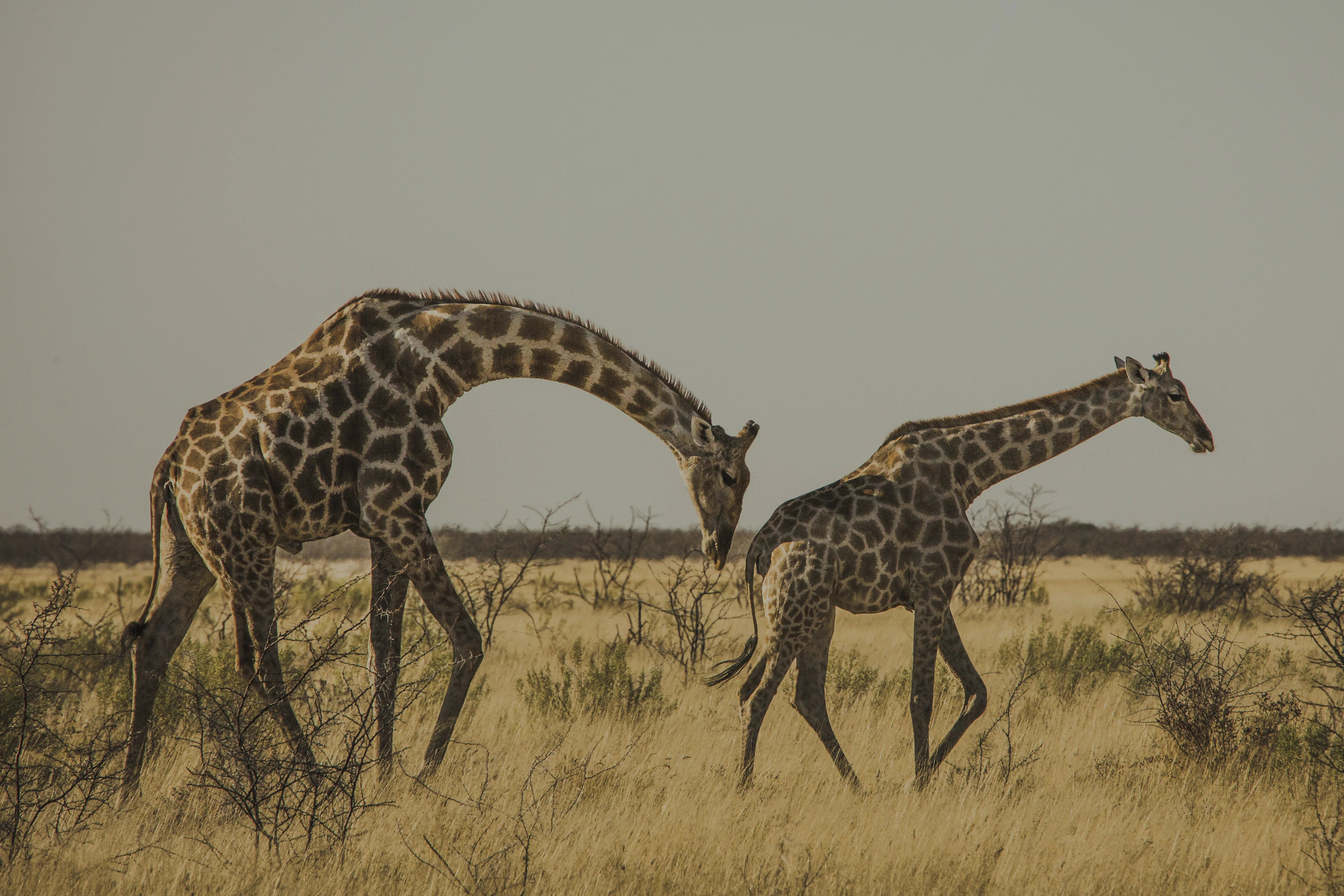
Full-day wildlife viewing in Etosha National Park, home to over 100 mammal species. Dry season (May–Oct) offers dense wildlife at waterholes.
Meals: Breakfast,Lunch,Dinner
Day 12
Day 12: Etosha National Park/Waterberg Plateau
Travel south to Waterberg Plateau. Free time to hike trails in search of wildlife or relax at camp.
Meals: Breakfast,Lunch,Dinner
Day 13
Day 13: Waterberg Plateau/Windhoek
Drive to Windhoek with lunch at the G Adventures-supported Penduka Village Restaurant & Shop; visit and support community crafts. Free time in Windhoek; this is a combination tour with some travellers departing/joining; optional group dinner.
Meals: Breakfast,Lunch
Day 14
Day 14: Windhoek/D'kar
Cross the border from Namibia into Botswana and travel east into the heart of the Kalahari to D’kar.
TRANSPORT: Climb aboard our custom built ride …. overlanding G-style!
ACTIVITY: Ready for a little more ink in your passport? Grab your bags and get ready to check another country off your bucket list. Today, you will be crossing at the Trans-Kalahari Border Post.
Meals: Breakfast,Lunch,Dinner
Day 15
Day 15: D'kar/Maun
Continue to Maun; free afternoon. Prepare for the Okavango Delta excursion and stock up on supplies (recommend 5L water per person). Optional scenic helicopter ride.
Meals: Breakfast,Lunch
Day 16
Day 16: Maun/Okavango Delta
Transfer by 4×4 deep into the Okavango Delta (Sankoyo Concession) to a basic bush camp. Explore by mokoro for birdwatching and take a guided walking safari. Enjoy a campfire sundowner. Note: no showers; bush toilet.
Meals: Breakfast,Lunch,Dinner
Day 17
Day 17: Okavango Delta/Nata
Morning safari walk, return to Maun, then drive to Nata, known for ancient baobabs; free time on arrival.
Meals: Breakfast,Lunch,Dinner
Day 18
Day 18: Nata/Kasane
Drive to Kasane, gateway to Chobe National Park. Optional Chobe River sunset cruise (pre-bookable).
Meals: Breakfast,Lunch
Day 19
Day 19: Kasane/Victoria Falls
Optional early Chobe National Park safari drive. Cross the Kazungula border into Zimbabwe and continue to Victoria Falls. Enjoy a traditional lunch with the G Adventures-supported Lusumpuko Women’s Club.
Meals: Breakfast,Lunch
Day 20
Day 20: Victoria Falls
Free day in Victoria Falls with optional activities including whitewater rafting, helicopter flight, and the Zambezi River sunset cruise.
Day 21
Day 21: Victoria Falls
Depart at any time; speak to your CEO about extending your stay.
Meals: Breakfast
What’s included
What’s not included
Additional information
Meals Included
18 breakfasts, 17 lunches, 12 dinners
Solo Travellers
Meals
As mentioned above, most of the meals on this tour are included in the tour price. When a meal is not included, this is because there are often many options available – we would like to give you the opportunity to explore a bit and test the local cuisine yourself. In these cases, your CEO will be able to suggest some good local restaurants or options for you to choose from.
All included meals will be prepared from fresh local produce. The majority of the shopping for foodstuffs will be done before the trip departs, and fresh goods, such as meats, fruits, vegetables, and dairy products, will be bought en route during the trip from supermarkets, local shops and markets. Breakfasts will generally consist of breads and cereals, if time allows a warm breakfast may be prepared. Many lunches will be provided en-route and will be light meals such as sandwiches and/or salads. All evening meals will be freshly-prepared hot meals, and will consist of a variety of continental and local dishes.
Our cook will organize the meal preparation and lead the way here, but will prepare a duty schedule for ensuring a fair, rotating participation from you and your group members in the meal preparation and dish washing duties.
Vegetarian meals and other dietary requirements need to be specified prior to arrival.
Minimum Age
You must be 18 to travel unaccompanied on a G Adventures tour. For minors travelling with a guardian over 21 years old, the minimum age is 12.
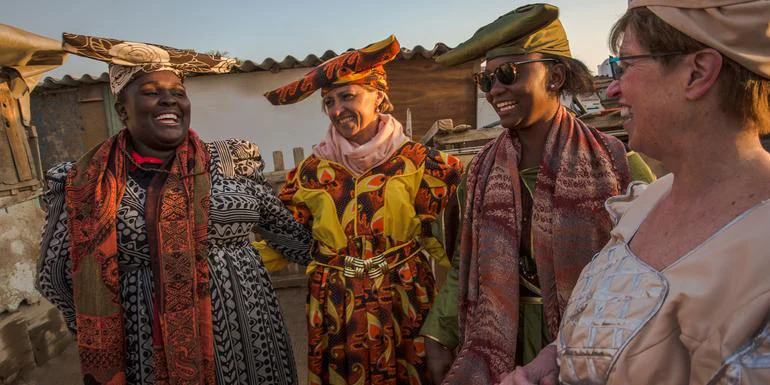
Local Dress
Important Notes
1. In the instance that you are a parent or guardian traveling with a minor under the age of 18 and you do not share the same gender as the minor child, you will accommodated together in a private room instead of the multi share option
2. Please note that this tour combines with other G Adventures tours. As such, the staff and some travel companions on your tour may have previously been traveling together with G Adventures, prior to Day 1 of your tour. Likewise, some staff and travel companions may be continuing together on another G Adventures tour, after your trip concludes
3. This is not a physically demanding journey; however, travelling can be difficult, with long drives and poor road conditions at times. Despite this, most clients feel that the diversity of the African landscape, countries, culture and wildlife are all well worth the experience. We use a comfortable and safe customized safari truck for the long drives.
4. An essential part of your safari is participation. The group is usually divided into small groups and given different tasks which change on a day to day basis, from kitchen duty group (helping in prepare meals and clean up afterwards), the packing group (sets up all tables and chairs outside) and the cleaning group (which cleans the truck by emptying the rubbish bin and brooming). it is all part of your adventure and when everyone puts in a little effort the trip will run smoothly. Your CEOs will do all the meal preparation, but we do ask the clients to help with the washing up. Team spirit is part of the fun! All camping equipment (with the exception of your sleeping bag and pillow) is supplied. We supply dome tents and assembly/disassembly takes only 5 minutes. All tents have built-in insect nets. Mattresses are also available, which are approximately 4cm thick, warm and comfortable.
5. LUGGAGE COMPLICATIONS: It occasionally happens that luggage on international flights into Cape Town, Victoria Falls or Johannesburg does not arrive. Please be aware that this may happen, especially if you have a tight connection in either of these centers, are flying with different airlines with a connection, have a last minute flight change or re-route, or fly from or connect through another African centre. Please be prepared and keep all important documentation and valuables on your person. As well we recommend a change of clothes in your hand luggage. If unfortunately, this does happen, and your luggage does not arrive, you should be entitled to a limited initial compensation from your airline. In Southern Africa, the arrival of lost luggage normally takes between 10 and 48 hours after the initial plane’s arrival. The airlines technically should be responsible to forward your luggage to you, to your hotel or elsewhere in Southern Africa. You may find that your tour will begin, and you still have not received your luggage. When reporting your missing bag at the airport please provide the airline with the emergency telephone number of our local office in South Africa (+27 71 470 6928). Please do not give out any address (starting point hotel) as on most trips we do not stay long enough for the bag to arrive, the airline should phone our local office to arrange the 1. Please note that this tour combines with other G Adventures tours. As such, the staff and some travel companions on your tour may have previously been traveling together with G Adventures, prior to Day 1 of your tour. Likewise, some staff and travel companions may be continuing together on another G Adventures tour, after your trip concludes
6. YELLOW FEVER: COUNTRY DETAIL
There is no risk of Yellow Fever transmission in Botswana, Kenya, Malawi, Namibia, South Africa, Tanzania, Uganda, Zambia, or Zimbabwe. However, all of these countries require proof of vaccination under International Health Regulations to prevent importation of the virus. It is compulsory to show a valid Yellow Fever vaccination certificate if you are travelling to any of the above countries from a Yellow Fever endemic country, or have recently transited through one (12 hours or more in airport). Endemic countries include: Angola, Benin, Bolivia, Brazil, Burkina Faso, Burundi, Cameroon, Central African Republic, Chad, Colombia, Democratic Republic of the Congo, Republic of the Congo, Côte d’Ivoire, Ecuador, Equatorial Guinea, Ethiopia, French Guiana, Gabon, Gambia, Ghana, Guinea, Guinea-Bissau, Guyana, Kenya, Liberia, Mali, Mauritania, Niger, Nigeria, Panama, Paraguay, Peru, Rwanda, São Tomé and Príncipe, Senegal, Sierra Leone, Somalia, South Sudan, Sudan, Suriname, Tanzania, Togo, Trinidad and Tobago, Uganda, Venezuela.
We advise all travellers on Southern and East Africa itineraries to carry a valid Yellow Fever vaccination certificate regardless of their country of origin. Given the multi-country nature of these itineraries, travellers will cross borders into countries that require the certificate as a condition of entry from preceding destinations. A traveller entering the itinerary from a non-endemic country may not require the certificate to enter the first country, but will almost certainly require it by the time they cross into a subsequent one. Yellow Fever vaccinations must be administered at least 10 days prior to entry into the first country visited. Under WHO regulations (effective 11 July 2016), certificates are valid for the lifetime of the person vaccinated, there is no 10-year expiry on the certificate itself, though some border officials may be unaware of this. Travellers should carry their original International Certificate of Vaccination or Prophylaxis (yellow card) at all times during the tour. Travellers without a valid certificate run the risk of being denied entry and will not be able to continue with the tour. Any additional travel expenses incurred will be at the traveller’s own account.
7. Your CEO aims to provide you with the best service possible during your tour. They will be joining you in the back of the truck for a maximum of approximately 50% during driving, to answer questions and provide more information about the areas that you visit. They will spend the remainder of the driving time in front with the driver to enable them to make bookings, do planning and to fulfil other organizational requirements of the tour. During wildlife safari drives, your CEO will ensure to accompany you in the passenger area of the truck. This is of course because they have a lot of knowledge to share with you during these exciting wildlife safari drives. Please do not hesitate to ask your CEO any questions.
8. Please note that on all our Lando (OAV) safari there is a maximum of 22 people per vehicle.
9. VISAS. Please read the Visa section very carefully. Visas are your own responsibility. Always double check with the embassies what each countries requirement are.
10. Water-wise tips when visiting Cape Town:
– Bring a reusable water bottle, that you can fill with Cape Town’s tasty tap water.
– Reuse your towels in the hotel, for at least two days, before getting new ones.
– Keep your laundry until you have a full load to do, rather than just doing a handful of items.
– Turn off the tap when brushing your teeth, or shaving.
– Keep your showers to two minutes or less, and don’t use the bath.
– Use hand sanitizer, instead of washing hands.
11. MONEY EXCHANGE
We strongly advise that you bring ZAR or USD from your home country or exchange money before the start of the tour, to avoid delays on tour. Please see the Money Exchange section for more details.
12. DRONES
The use of drones in national parks in Southern Africa is prohibited.
Group Leader
2 CEOs (Chief Experience Officers) throughout as head guide/cook, driver, local guides.
About Accommodation
Camping in Africa is truly an adventure. You will be able to get off the beaten track to get a first-hand experience of the beautiful wilderness and nature. While camping, we stay at designated campsites in national parks and outside towns. Campsite facilities in southern Africa are generally good, but can be basic in certain places. There are generally small restaurants and/or bars, washing facilities and occasionally telephones available.
The camps have flush toilets, and showers at some camps are outdoors, having simple reed enclosures for privacy. Additionally, warm water is available at most sites, but it is not guaranteed to always be warm when you take your shower; the warm water may be used up others who also use the camp. We usually set-up camp within close proximity to the toilet facilities, though occasionally to reach them you may to walk a short distance.
All camping equipment (with the exception of your sleeping bag and pillow) is supplied, including camp mattresses, which are warm and comfortable. We supply dome tents and assembly/disassembly takes only 5 minutes. They are good quality, durable, industry-standard 2-person safari canvas tents. Please note that most adults will not be able to fully stand up inside the tents, though most travellers find these more than adequate, as they have a base area of approximately 4 square meters. These tents are regularly treated with a waterproofing agent, but under certain rainy conditions, the tent fabric may become saturated to the point where seepage or leakage may occur. All tents have built-in mesh insect netting on the windows and doors.
We travel with our own portable camp chairs with a comfortable back-rest, and we utilize our own cooking equipment to provide the group good quality camp meals.
In camping within the national parks and conservation areas, some camp sites are enclosed for keeping the resident wildlife out. Other camps are open to the natural environment – care must be taken, especially at night, when a torch/flashlight is recommended when walking around the camp area.
Your camping experience in the Okavango Delta is fondly called “bush camping”. This will be the most basic two nights of our trip, as there is no running water, no showers, nor toilets facilities. You will be truly camping in the wild, away from civilization and its comforts, and completely surrounded by nature – an unbelievable experience some in fact feel is the highlight of the trip.
Despite the challenge that a few days “roughing it” may pose to some, the experience of being that close to nature, camping under the African stars, and seeing incredible wildlife at your tent door-step is not just gratifying but ultimately an experience of a lifetime.
In Swakopmund, we stay in backpacker’s (hostels) or small guest houses, which will give us a break from camping and to be better located than the campgrounds in the area. Here, the accommodation is based on several people sharing dormitory-style rooms, with possibly 6 to 8 people sharing a room. There will be a mix of private and shared bathroom facilities. Please be aware that where we use multi-share accommodations, rooming requests of any kind cannot be taken.
Please note that due to the high demand for accommodation in the parks, sometimes we will arrange alternative accommodation outside of the park. For private accommodation please see tours in our Classic/Standard Travel Style.
What to Take
You will be on the move a lot, so our advice is to pack as lightly as possible. Your baggage should be clearly labelled and restricted to one soft compact suitcase (please avoid a hard-top case), or sports bag, maximum 20kg, plus a daypack. Luggage limits on airlines are strictly enforced and space on vehicles is limited. Porters are not often available, so be prepared to carry your own bags.
For our camping style tours you will need to provide your own sleeping bag, small pillow and sleeping sheet (if you would like). We provide the tent and the sleeping pads.
Please note that the seasons in Africa is quite extreme. Winters (especially South Africa, Namibia and Botswana) can be really cold and summers will be really hot.
If you travel during winter months(May to October) please ensure that you bring warm clothing and a suitable sleeping bag.
A set of smart casual clothes is also advisable.
Please be advised that if you plan to bring a drone with you, the use of drones in national parks in Southern Africa is prohibited.
Spending Money
Every traveller is different and therefore spending money requirements will vary. Some travellers may drink more than others while other travellers like to purchase more souvenirs than most. Please consider your own spending habits when it comes to allowing for drinks, shopping and tipping. Please also remember the following specific recommendations when planning your trip.
Group Size
22
Etosha National Park Wildlife Drives & Waterhole Viewing
Join game drives in Etosha National Park, where the vast Etosha Pan frames sightings of elephant, lion, black rhino, giraffe, and great herds of antelope. Open savanna gives superb visibility for photography.
After dusk, settle quietly at Okaukuejo’s floodlit waterhole to watch nocturnal visitors come and go. The gathering of animals around permanent water makes Etosha one of southern Africa’s best places for unhurried wildlife observation.
Lusumpuko Women’s Club Traditional Lunch, Victoria Falls
Sit down to a traditional Zimbabwean meal prepared by the Lusumpuko Women’s Club, a cooperative that channels dining revenue into community uplift. Expect seasonal dishes and warm hospitality.
Learn customary dining practices and hear stories of resilience and entrepreneurship. This G for Good experience connects travellers with local culture while supporting community empowerment right on the doorstep of Africa’s most famous waterfall.
Swakopmund Sandboarding on the Namib Dunes
Strap in for sandboarding on steep Namib slopes near Swakopmund, Africa’s adrenaline capital. Carve smooth lines on stand-up boards or rocket down on a lie-down sled.
Guides provide instruction and safety gear so you can carve down golden slopes with confidence. This activity is at additional cost and bookable on tour, weather permitting.
Skeleton Coast Scenic Flight (Swakopmund)
Lift off for a scenic flight above the Skeleton Coast, tracing the line where the dune sea meets the Atlantic. Spot seal colonies, salt works, and rusting shipwrecks marooned on shifting sands.
Pilots narrate geology and maritime lore as you photograph Namibia’s starkest contrasts from the air. This flight is at additional cost and bookable on tour, weather dependent.
Etosha Night Safari in an Open Vehicle
Head out after dark on a night safari to search for elusive nocturnal wildlife—genet, aardwolf, and prowling predators. Guides use red filters for ethical, spotlit sightings without dazzling animals.
Open vehicles heighten the senses as sounds carry across the plains. This add-on is at additional cost and bookable on tour inside Etosha National Park.
Penduka Village Restaurant & Craft Centre, Windhoek
Visit Penduka Village Restaurant & Shop on the outskirts of Windhoek for a wholesome, locally sourced lunch that supports a women-led social enterprise. Browse handmade textiles, pottery, and beadwork produced on site.
Hear how Penduka partners with artisans from the nearby Katutura township, creating sustainable livelihoods through craft and hospitality. Your stop directly contributes to training and employment while you enjoy simple, flavourful, farm-to-table fare.
Okavango Delta Mokoro & Walking Safari with Bush Camping
Glide silently by mokoro canoe through papyrus-lined channels of the Okavango Delta, guided by skilled local polers. Step ashore for a guided walking safari to read tracks, learn flora, and look for wildlife at ground level.
Camp in a remote concession—often within the Sankoyo area—embraced by night sounds and an immense sky. Evenings by the fire and daybreak bird calls capture the Delta’s rhythm, with true bush camping under the stars heightening the sense of place.
Cape Winelands Wine Tour & Tasting (Pre-Tour)
Explore the Cape Winelands on a day of cellar tours and tastings. Sample regional wines—from crisp Chenin Blancs to signature Pinotage—set against mountain valleys and historic Cape Dutch estates.
Gain insight into terroir and South Africa’s modern wine renaissance as you visit a selection of renowned estates. This experience is at additional cost and bookable on tour (often requiring a pre-night in Cape Town).
Deadvlei 4x4 Shuttle & Clay Pan Walk
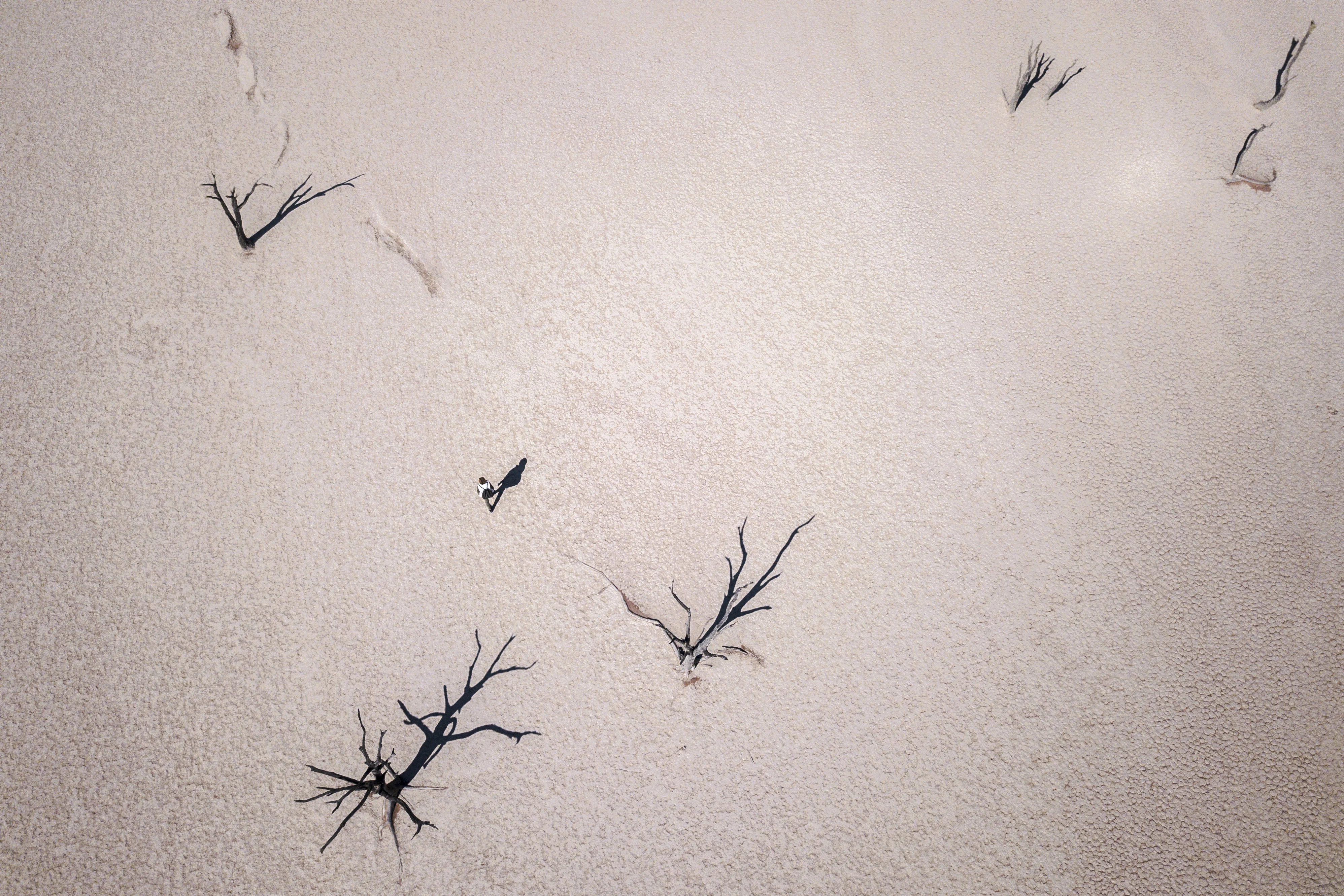
Ride a 4×4 shuttle across deep sand from Sossusvlei to haunting Deadvlei, then walk onto its bleached clay pan where long-dead camelthorn tree skeletons stand stark against red dunes.
Photographers adore the surreal contrasts and stillness. This access shuttle is not included in park fees, is at additional cost, and is bookable on tour with your CEO, conditions permitting.
Namib Desert Educational Walk at Sunset
Join a local guide for the Namib Desert Walk, learning bush survival skills, animal tracking signs, and the desert geology that shapes this dune sea. The soft evening light intensifies colours and shadows.
Finish as the sun slides behind the dunes for a contemplative finale to the day. This experience is at additional cost and bookable on tour, subject to local conditions and daylight.
Swakopmund Tandem Skydive
Take the leap on a tandem skydive for unmatched views where the Atlantic and Namib Desert meet. Experience the rush of freefall before the parachute opens for a sweeping coastal glide.
Operated by licensed drop zones with full briefings and gear, this is Swakopmund’s signature thrill. It’s at additional cost and bookable on tour, subject to weather and weight limits.
Waterberg Plateau Guided Hike
Stretch your legs on a guided hike among the sandstone cliffs and wooded slopes of the Waterberg Plateau. Learn about hardy savanna flora and look for birds along the escarpment.
Views open over the plains below, revealing the scale of central Namibia. This activity is at additional cost and bookable on tour, with routes tailored to fitness and conditions.
Okavango Delta Helicopter Scenic Flight (Maun)
Soar on a helicopter flight above the Okavango Delta for a bird’s-eye view of floodplains, islands, and a labyrinth of channels. Look for elephants threading game paths and hippos in oxbow pools.
Doors-off options amplify visibility for photographers. This flight is at additional cost and bookable on tour from Maun, weather permitting.
Chobe River Sunset Cruise
Board a boat for a Chobe River Sunset Cruise, drifting past riverine islands as elephants and hippos wade and graze. The low sun paints the water in golden light—prime time for photos.
Guides interpret behaviour and point out crocs and prolific birdlife along the banks. This cruise is at additional cost and bookable on tour in Kasane.
Chobe National Park Safari Drive
Set off early on a Chobe National Park Safari Drive across riverine plains famed for Africa’s most iconic elephants. Scan for buffalo herds, sable antelope, and predators moving in the cool hours.
Local guides navigate prime loops along the riverfront for quality sightings. This excursion is at additional cost and bookable on tour in Kasane.
Victoria Falls Helicopter Flight
Take the classic “Flight of the Angels” for sweeping views of Victoria Falls and the zigzagging basalt gorges carved by the Zambezi. Watch the spray cloud rise as the river plunges over the lip.
Pilots circle both sides for balanced views and photos. This flight is at additional cost and bookable on tour, subject to weather and aviation schedules.
Zambezi Whitewater Rafting (Seasonal)
Tackle the Zambezi whitewater rafting below the falls, running famed Grade IV–V rapids through the dramatic Batoka Gorge. Expect expert guides, comprehensive briefings, and high-adrenaline fun.
Water levels determine the section and difficulty; seasonal shifts mean routes vary across the year. This activity is at additional cost and bookable on tour in Victoria Falls.
Zambezi River Sunset Cruise
Unwind on a tranquil Zambezi River Sunset Cruise, watching a burnished sky while hippos surface and birds skim the water. The spray from the falls often hangs on the horizon.
Commentary highlights river ecology and seasonal wildlife patterns as you sip drinks on deck. This cruise is at additional cost and bookable on tour from Victoria Falls.
Meet Your CEO & Group Welcome
Meet your fellow travellers and meet your CEO to set the tone for your overland journey. Get an overview of life aboard the Lando, the rhythm of participation camping, and the highlights that lie ahead from the dunes to the Delta.
Use this relaxed session to ask questions, align expectations, and tap into your leader’s local know-how. It’s a friendly, practical start that helps the group travel confidently as a small team on an adventure-packed route through southern Africa.
!Khwa ttu San Culture & Education Centre Visit
Explore the !Khwa ttu San Culture and Education Centre on South Africa’s West Coast to learn about San culture and history through guided exhibits and storytelling. Hear how communities are preserving languages, traditions, and knowledge of the land.
This G for Good experience supports training for young San men and women. Engage with displays on tracking skills and healing traditions, and see how ethical tourism can empower communities while honouring one of southern Africa’s oldest peoples.
Fish River Canyon Sunset Viewpoint
Watch sunset over the canyon’s rim at Africa’s largest canyon, the epic Fish River Canyon. As the light drops, ancient rock strata glow bronze and violet, and the vast chasm curves into the distance.
Learn how shifting geology carved this gorge over millions of years and pause for reflection at designated viewpoints near Hobas. The changing colours and scale make this a moment to pause for photos and reflection in Namibia’s stark south.
Sossusvlei Sunrise at Dune 45 & Sesriem Canyon
Climb the ridge to climb Dune 45 at sunrise and gaze across a sweeping dune sea in Namib-Naukluft National Park. Fine red sands glow in early light, and the wind-carved curves make spectacular silhouettes.
Afterward, descend into Sesriem Canyon to see the Tsauchab River’s handiwork and how occasional floods leave hidden pools that draw desert wildlife. It’s a vivid contrast of towering dunes and cool, narrow rock corridors.
Spitzkoppe Granite Peaks & Desert Night Sky
Walk among the burnished boulders of Spitzkoppe, a cluster of granite inselbergs that rise abruptly from the plains. Explore natural arches and sculpted rock, and feel the silence of Namibia’s interior.
By night, settle in beneath a star-filled desert sky. With minimal light pollution, constellations are razor-sharp and the Milky Way gleams overhead—an atmospheric counterpoint to daytime explorations, with optional visits to nearby San rock art sites where permitted.