Your itinerary
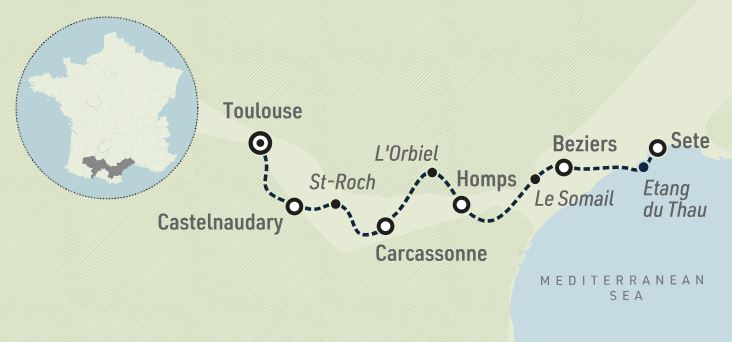
Day 1
1: Arrival in Toulouse
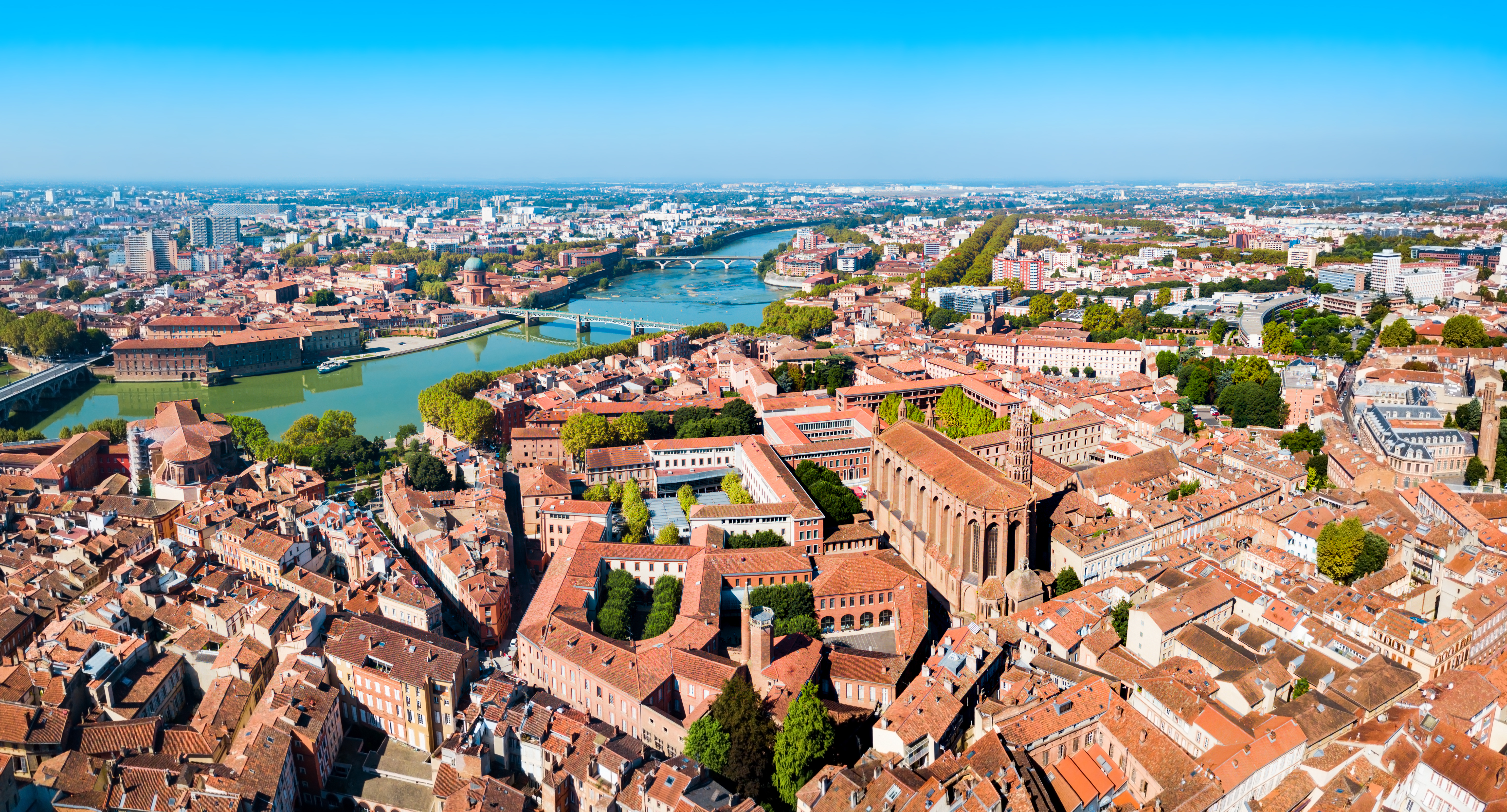
The ‘Pink City’, which owes its name to the colour of the brick that adorns the facades, is as lovely as its name. Toulouse has no shortage of sights to visit: the wide Capitol Square, the Bernardins convent with the palm-shaped vault, the Assezat hotel in the Renaissance style, the banks of the Garonne in the heart of the city, the Space museum…
Meals: Breakfast
Day 2
2: Toulouse - Castelnaudary
Starting in the centre of Toulouse, the route leads you through the green valleys of the Lauragais district. You will be able to enjoy a pastoral setting of wheat and sunflower fields. Your route is also interspersed with locks and beautiful rural villages with a southern Gothic architectural style. Later on, Castelnaudary, famous for its ‘Cassoulet’ (a slow-cooked bean and meat casserole), welcomes you and invite you to taste its local cuisine.
Meals: Breakfast
Day 3
3: Castelnaudary - Carcassonne
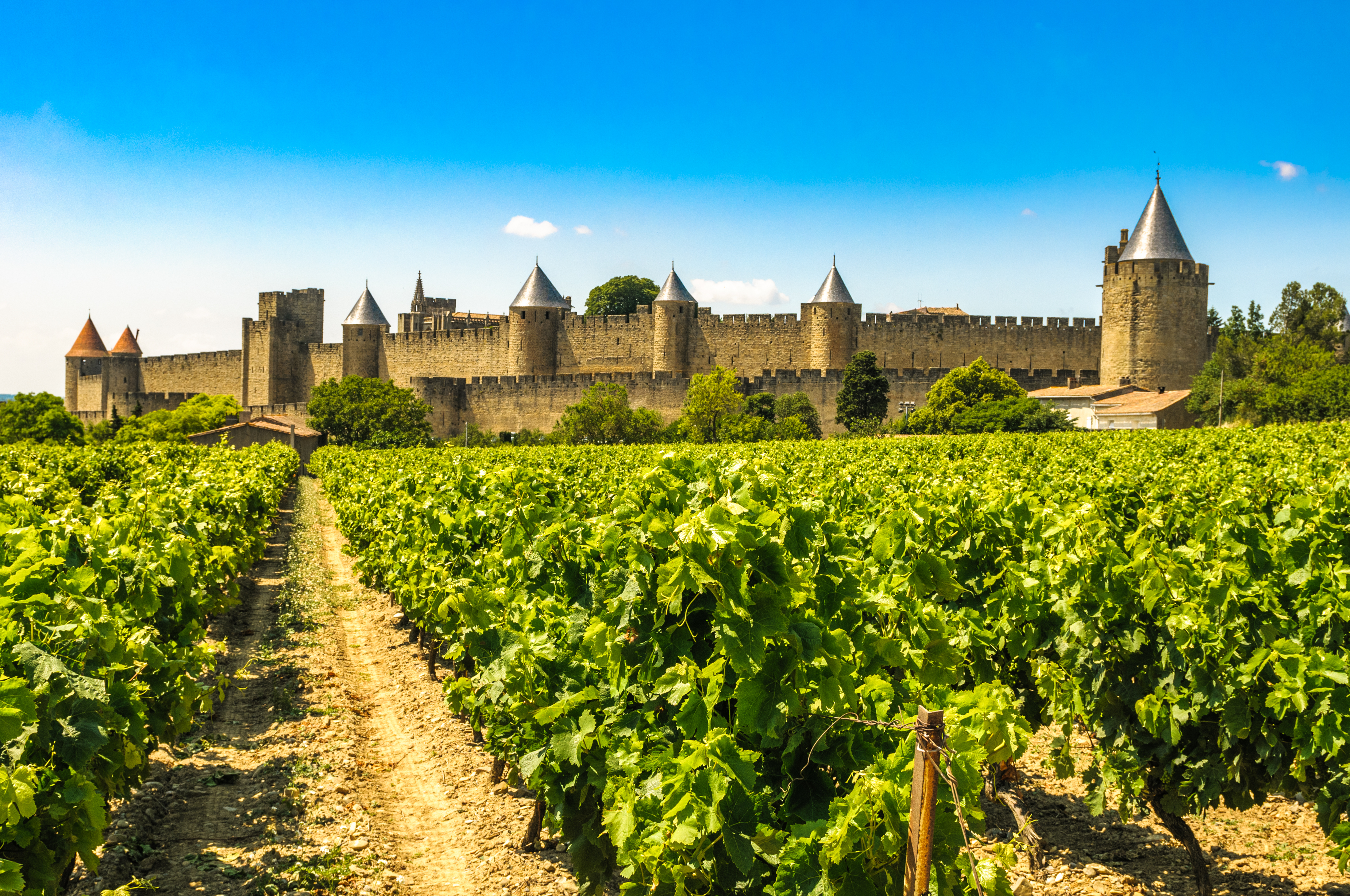
Leaving Castelnaudary, you pass the imposing St-Roch lock. Follow the canal at your own rhythm and enjoy this quiet ride with lovely views over the peaceful countryside. Then, arrive in Carcassonne via the port in the lower town. Do not miss the medieval citadel overlooking the surrounding countryside. This ancient oppidum (fortified city) dating from the Roman times became an imposing fortress over the centuries, raised to defend itself against Spanish Aragon. The architect Viollet-Leduc saved the walled city from the demolition and today it is listed as a World Heritage Site by UNESCO.
Meals: Breakfast
Day 4
4: Carcassonne - Homps
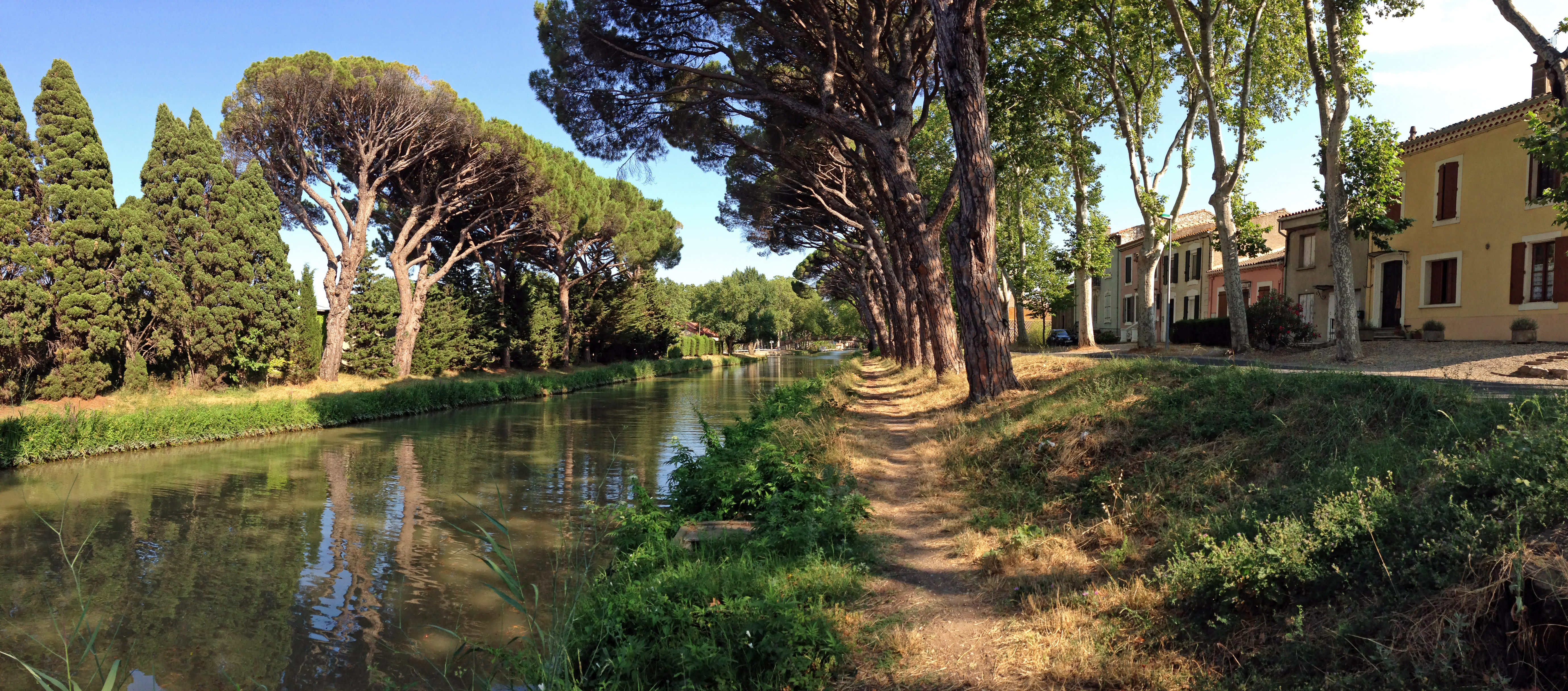
Today the ride is going through the Minervois area and its renowned vineyards which is just a short ride away from the Canal du Midi. Between Aude River and the canal, your way is punctuated with pine trees shade. Here, each village hide a treasure to discover such as the canal bridge of Orbiel. Arriving in Homps, an historic wine-exporting port, is very lively, with many shops. Here you find yourself in the heart of the Minervois area.
Meals: Breakfast
Day 5
5: Homps - Beziers
Ride along several wine villages, calling for your attention! Further on, Le Somail is one of the canal’s most attractive stops, a picture-postcard village with its port, chapel, cafes and amazing antique shops. Then, follow the canal bordered by olive-trees and vines, before reaching the bustling port of Capestang. Along your way, meet amazing civil engineering structures such as the 17th-century Malpas tunnel, built as Europe’s first-ever navigable canal tunnel. Then, admire the cascade of the 9 locks of Fonsérannes before aching Béziers.
Meals: Breakfast
Day 6
6: Beziers - Sete
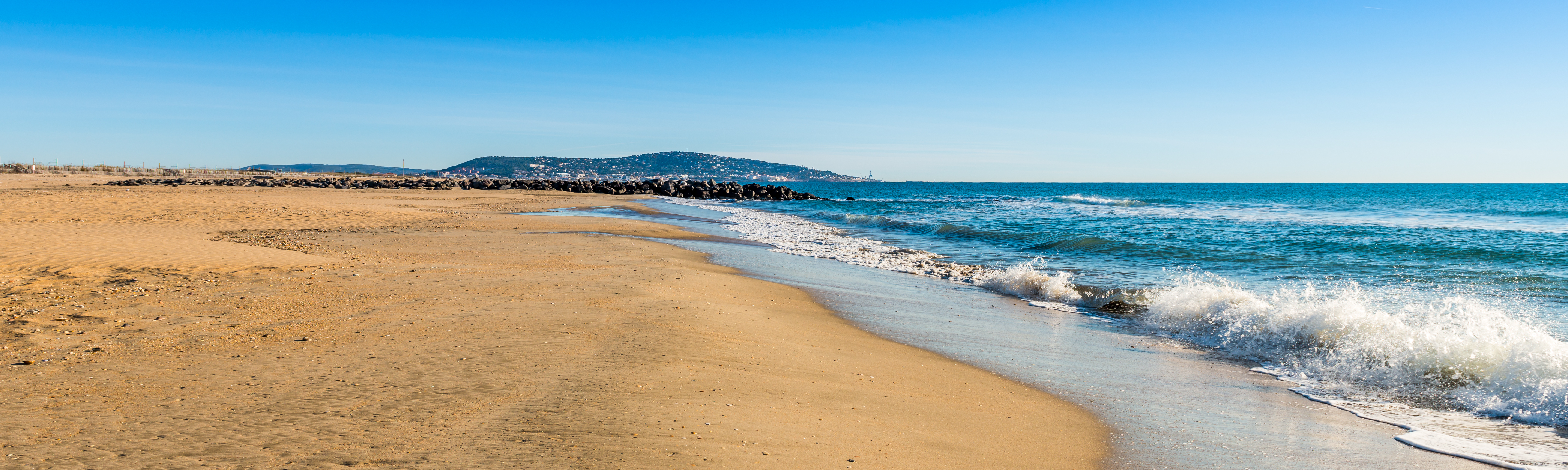
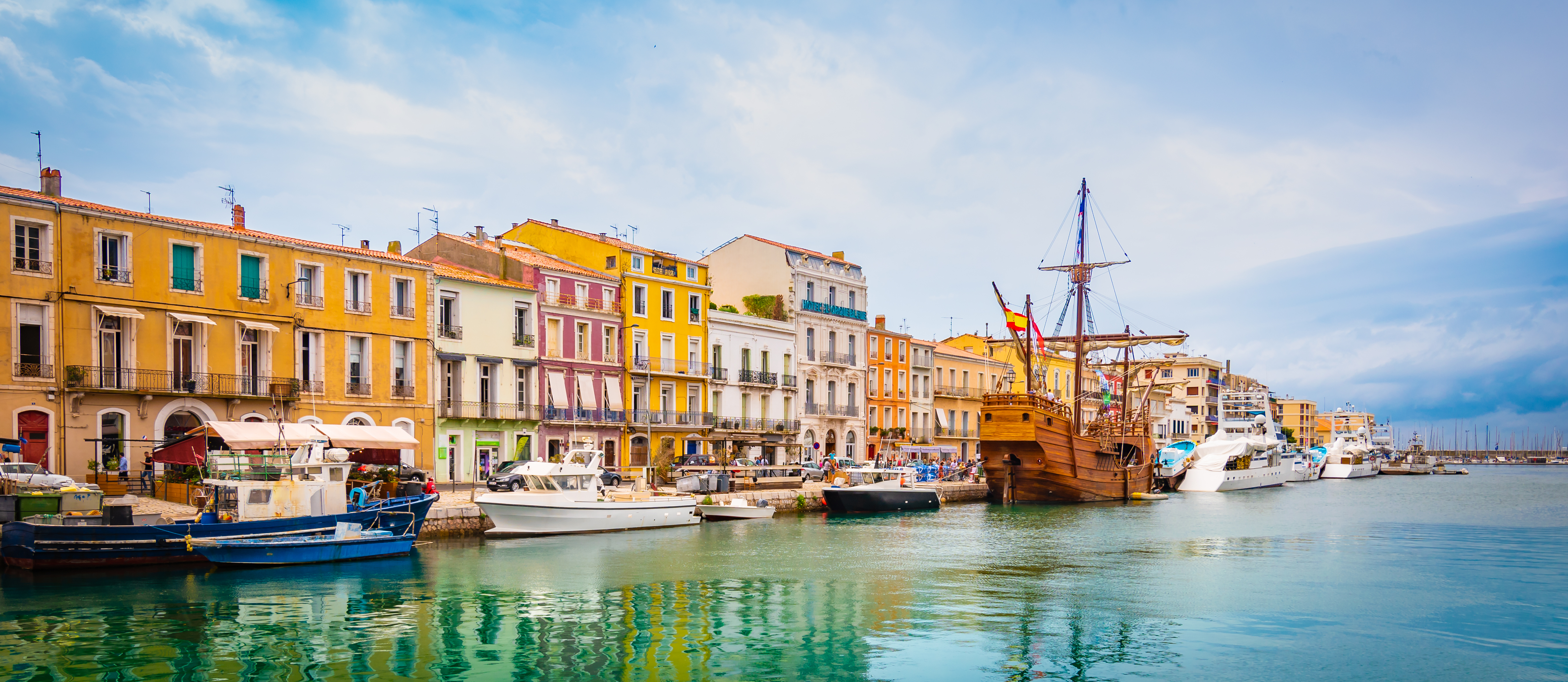
This last ride leads you to the Mediterranean! The canal guides you towards Sète and its Mediterranean atmosphere. Along your way, pass by Onglous lighthouse, where the Canal du Midi ends in the Etang de Thau. Then, arriving in Sete, you can reach the beach easily for a refreshing dip in the sea!
Meals: Breakfast
Day 7
7: Leave Sete
Today marks the end of your adventure.
Meals: Breakfast
What’s included
What’s not included
Additional information
Food
Whether you are a fan of sweet or savoury food, your stomach will thank you at the end of your stay. On the colourful local markets, you will find the finest quality products from the Mediterranean and the countryside. This region has plenty to offer to the food lovers: the seafood platters of clams, oysters and mussels; as well as Pélardon, Causses Blue, and Tome cheeses. The Petits Pâtés de Pézenas (small pastries filled with meats), the tielle (a seafood pie) from Séte, picholine olives, the famous cassoulet (bean stew casserole with pork or duck) from Castelnaudary, the Catalans Rousquilles (biscuits), and salt (and rice) from the Camargue make this a foodie’s paradise.
Canal du Midi is also an important region for winemaking, offering amateurs some real nuggets. Full-bodied, light or fruity, there is truly a world of flavors to share in here: Fitou, Corbières, Minervois, Clape, Quatourze, Cabardès, Malepère and Limoux. Nourished by the Mediterranean sun and the richness of their different wine districts, the Languedoc wines all have their own personality, whether they are reds, whites, rosés or sparkling wines. They are part of the rich cultural and culinary heritage of the region.
Spreading over 245,000 hectares, the Languedoc vineyards are one of the largest vineyards in France, as well as the oldest. From Nîmes to Aude, from Montpellier to Carcassonne, from mountains to bushland and sea, the vineyard landscapes pass by as you travel along the wine routes.
Toulouse Cité de l’Espace Visit
Before your first ride, explore Toulouse’s aerospace heritage at the Cité de l’Espace: gaze up at a towering Ariane rocket, walk through a Mir space station module, and enjoy immersive planetarium shows. Hands-on exhibits link this river city to Europe’s space industry.
It’s a vivid counterpoint to the region’s medieval stones and canal bridges, underscoring Toulouse’s dual identity: human-scale old town and high-tech hub. Best suited to day 1 afternoon or the following morning, with easy access by tram or bus. Optional at additional cost, bookable on tour.
Canal du Midi Cycle: Toulouse to Castelnaudary (Lauragais Valleys & Locks)
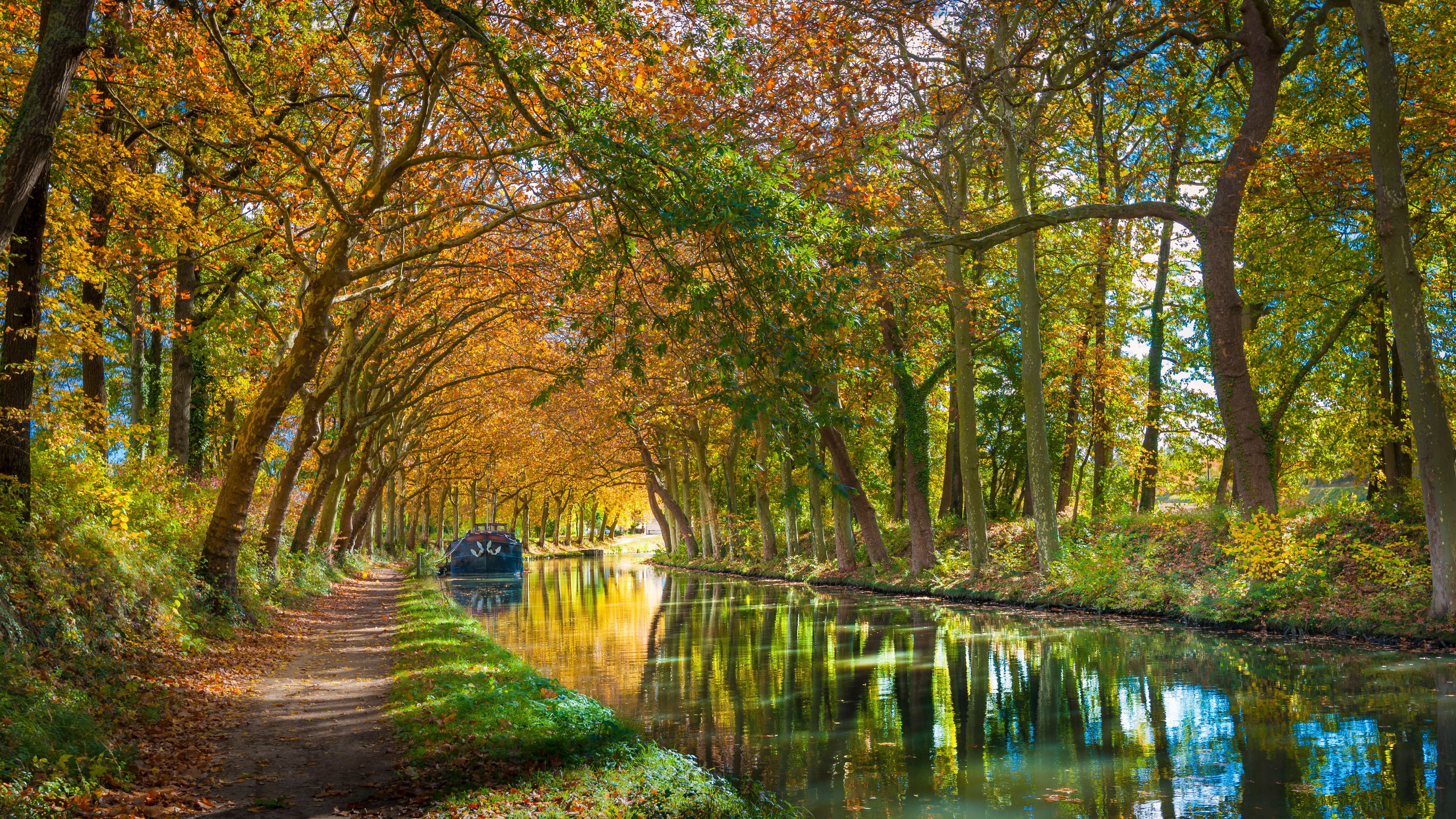
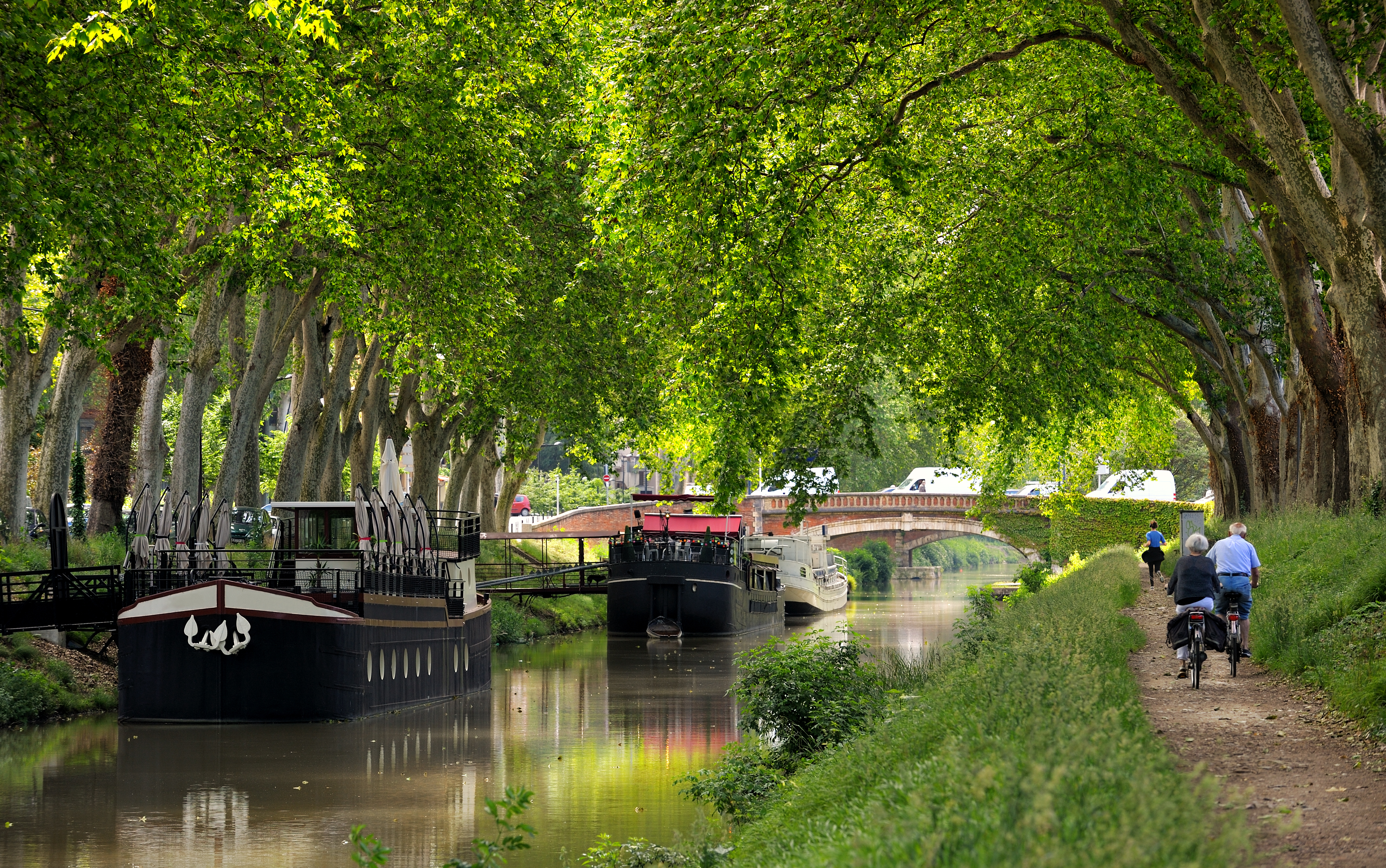
On day 2, begin your ride on the shaded towpath, leaving Toulouse for the soft hills of Lauragais. Fields of wheat and sunflowers quilt the landscape as you follow the Canal du Midi, passing stone bridges and towpaths lined by plane trees. Pause to watch a lock in action, listening to the rush of water and creak of wood as boats rise and fall.
Conceived by Pierre-Paul Riquet in the 17th century, this UNESCO-listed waterway stitched Atlantic to Mediterranean trade. Southern Gothic bell towers mark villages ahead as you roll into Castelnaudary, birthplace of cassoulet. Evening invites you to taste the regional cassoulet and wander the Grand Bassin’s quays as the sky deepens to pastel.
Canal du Midi Cycle: Castelnaudary to Carcassonne & St-Roch Lock
On day 3, depart Castelnaudary past the impressive Écluse de Saint-Roch — a multi-chamber lock that steps boats through a dramatic change in level. Settle into a quiet rhythm beside reeds and willows, then thread toward Carcassonne along the placid canal, pausing for photos and reflection as the medieval skyline sharpens ahead.
Arrive at the port below the city and look up to the Fortified City of Carcassonne, its double walls and 52 towers restored by Viollet-le-Duc. The hilltop citadel, a UNESCO World Heritage Site, once guarded routes between the Atlantic and the Mediterranean. As evening falls, wander the cobbled lanes and savor views across the Aude valley.
Minervois Vineyards Ride: Carcassonne to Homps
On day 4, leave Carcassonne for the Minervois, where vines stripe sun-baked slopes and pines cast fragrant shade. The towpath glides past sleepy ports and the elegant Pont-Canal de l’Orbiel, a canal-bridge carrying water over water. Village squares invite a quick espresso before you roll on toward lively Homps.
Shaped by limestone soils and the tramontane wind, Minervois wines carry the scent of garrigue herbs — thyme, rosemary, and broom. In the 19th century, Homps thrived as a wine-exporting port; today its quays brim with cafés and boats. Arrive mid to late afternoon, then enjoy a free evening beside the water, choosing between a swim, an apéritif, or a leisurely dinner.
Heritage Engineering Ride: Homps to Béziers via Le Somail, Malpas Tunnel & Fonserannes
On day 5, trace one of the canal’s most storied sections. Drift into Le Somail, a picture-book halt with a stone bridge, chapel, and a beloved antique bookshop. Olive groves and vines accompany you toward Capestang before the towpath narrows near the low limestone ridge of Nissan-lez-Enserune.
Here lies the Malpas Tunnel, Europe’s first navigable canal tunnel, cut in the 1670s to carry boats beneath the hill. Farther on, the 9 Locks of Fonserannes cascade toward Béziers, hometown of Riquet; it’s a fine place to pause for photos as boats stair-step down through the basins. Roll into Béziers by evening, the Orb valley spread below the cathedral.
Mediterranean Finale Ride: Béziers to Sète via Étang de Thau & Onglous Lighthouse
On day 6, the towpath carries you toward the sea as salt air and the cry of gulls announce the coast. Skirt reed beds and oyster parks before reaching the Onglous lighthouse, where the Canal du Midi merges with the broad, shimmering Étang de Thau. Continue along the water to harborfront Sète.
Sète’s canals bustle with fishing boats, and Mont Saint-Clair lifts views across the lagoon to the Mediterranean. Celebrate your journey with a stroll along the quays, a plate of tielle sétoise, or a quick swim from the sandy beaches. It’s a gentle close to a week defined by slow travel, tree-lined towpaths, and waters that link inland France to the open sea.
Carcassonne Château Comtal & Ramparts Walk
Enhance your Carcassonne evening by stepping inside the Château Comtal and walking the ramparts with panoramic views over the Aude valley and, on clear days, toward the Pyrenees. Explore towers, battlements, and museum rooms that illuminate the city’s defensive evolution.
Within these 12th–13th century walls — later restored by Viollet-le-Duc — exhibits trace Crusader-era tensions and life on the frontier between Occitania and Aragon. It’s an evocative counterpoint to seeing the Cité from below. Available on day 3 in the late afternoon or evening; optional at additional cost, bookable on tour.
Minervois Winery Visit & Tasting near Homps
Detour a few kilometers from the towpath to visit a family-run domaine and sample Minervois wines shaped by limestone terraces and the tramontane wind. Walk the cellar, learn about Carignan, Syrah, and Grenache, and taste how garrigue notes of thyme and rosemary weave into the glass.
The Minervois has supplied the canal’s ports for centuries, its vineyards a living thread of local identity and cuisine. This relaxed stop fits neatly into day 4, leaving time to roll into Homps for sunset by the quay. Optional at additional cost, bookable on tour.
Canal du Midi Barge Cruise & Lock Passage (Le Somail or Homps)
Take an hour off the saddle to glide by barge beneath plane trees, slipping through a working lock to feel the canal’s hydraulics from the water. Departures from Le Somail or Homps reveal boatman lore, stone bridges, and life along the towpath at a tranquil pace.
Seeing the canal from deck level brings Riquet’s 17th-century ingenuity into focus — a water staircase connecting the heart of Languedoc. Ideal around day 4 or day 5 at midday before continuing your ride. Optional at additional cost, bookable on tour.
Bouzigues Oyster Tasting on the Étang de Thau
Celebrate your arrival at the coast with a short detour to Bouzigues, birthplace of lagoon oyster farming. Taste freshly shucked oysters and mussels overlooking the Étang de Thau, pairing them with a chilled glass of Picpoul de Pinet as fishing boats and oyster tables dot the horizon.
Producers here perfected suspended-raft cultivation, a tradition that defines Sète’s seafood culture and the region’s easy, briny rhythm. Ideal on day 6 or the morning of day 7 before departure. Optional at additional cost, bookable on tour.
Toulouse Arrival Stroll & Pink City Highlights
Touch down in the South-West and stroll the Pink City, where rosy brick glows in late light around Place du Capitole. Wander arcaded squares, pause by the banks of the Garonne and Pont Neuf, and settle into café terraces as street life hums. On day 1, this gentle exploration sets the tone for the days of cycling to come.
Learn why Toulouse is called La Ville Rose and, time permitting, step into the Couvent des Jacobins to admire its famous “palm-tree” vault. With a blend of Renaissance hôtels particuliers and vibrant university energy, the city bridges pilgrim routes and aerospace innovation. Conclude by choosing a local bistro and enjoy a free evening to taste southwest flavors at your own pace.