Your itinerary
Day 1
Arrive in Reykjavik, Iceland
Arrive in the Icelandic capital and make your way to the designated hotel, which is included in your Charter Flight & Hotel Package. You will have the day to explore this fascinating city known for its stunning modern architecture, contemporary music and Viking history.
Day 2
Fly to Nuuk, Greenland, and Embark
After breakfast, guests and their luggage will be transferred to the airport for the charter flight to Nuuk, the capital of Greenland. Upon arrival, guests will be transferred to their ship.
Meals: Breakfast,Dinner
Day 3
At Sea: Crossing the Davis Strait
As we make our way across the Davis Strait, your Expedition Team will offer a series of polar presentations that will set the stage for the adventures ahead. You’ll learn about the storied history of the Arctic, its fascinating wildlife, geology and ecology. Our team will also keep a lookout for seabirds soaring above your ship, as well as whales that pass through these waters.
Meals: Breakfast,Lunch,Dinner
Day 4
Exploring Baffin Island Canada
The Inuktitut name for Baffin Island—the fifth-largest island in the world—is Qikiqtaaluk. It has been home to Inuit for thousands of years. The island’s English name commemorates William Baffin, who explored the region in the early 17th century while searching for the fabled Northwest Passage, long after it was inhabited by Inuit.
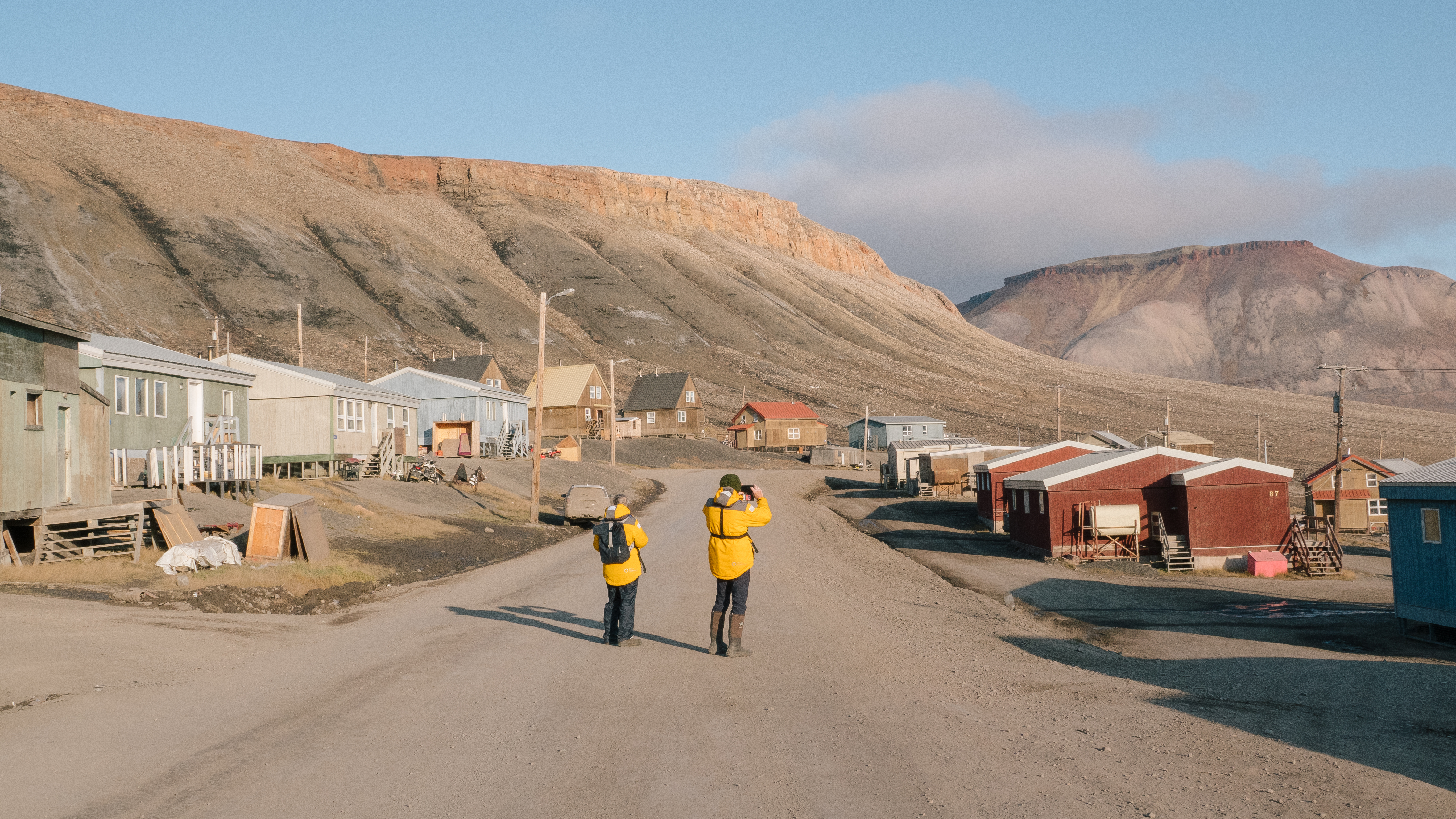
Sailing along the island’s eastern coast, each day is shaped by weather and ice conditions, making every landing distinct. Favourite destinations include Qikiqtarjuaq and Sam Ford Fjord, where towering mountains, deep fjords, vibrant tundra, and Inuit settlements define the landscape. The welcoming Inuit community of Qikiqtarjuaq—meaning “the big island” in Inuktitut— lies just north of the Arctic Circle on Broughton Island. Fondly known as “Qik” by locals, the hamlet offers sweeping views across the Davis Strait.
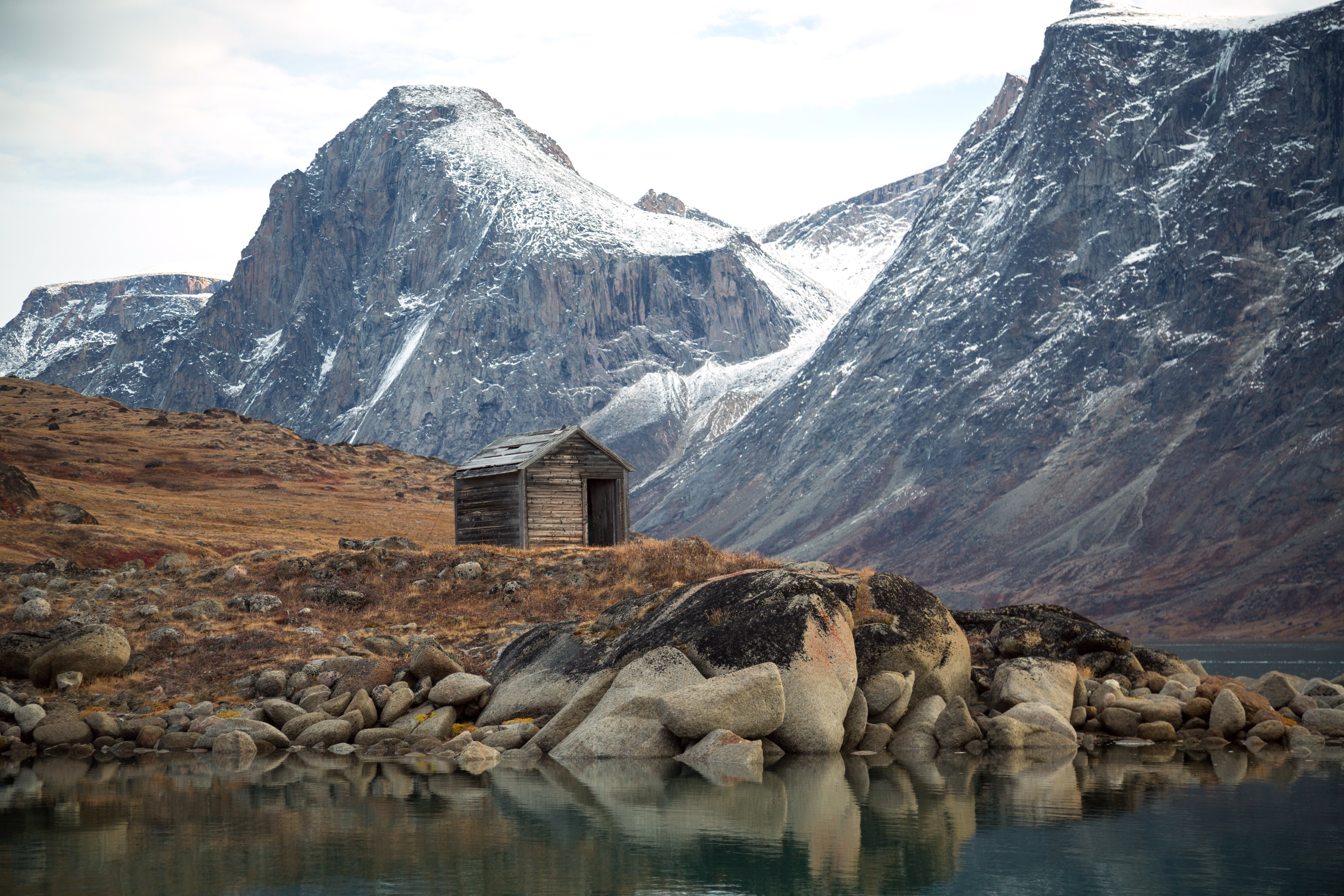
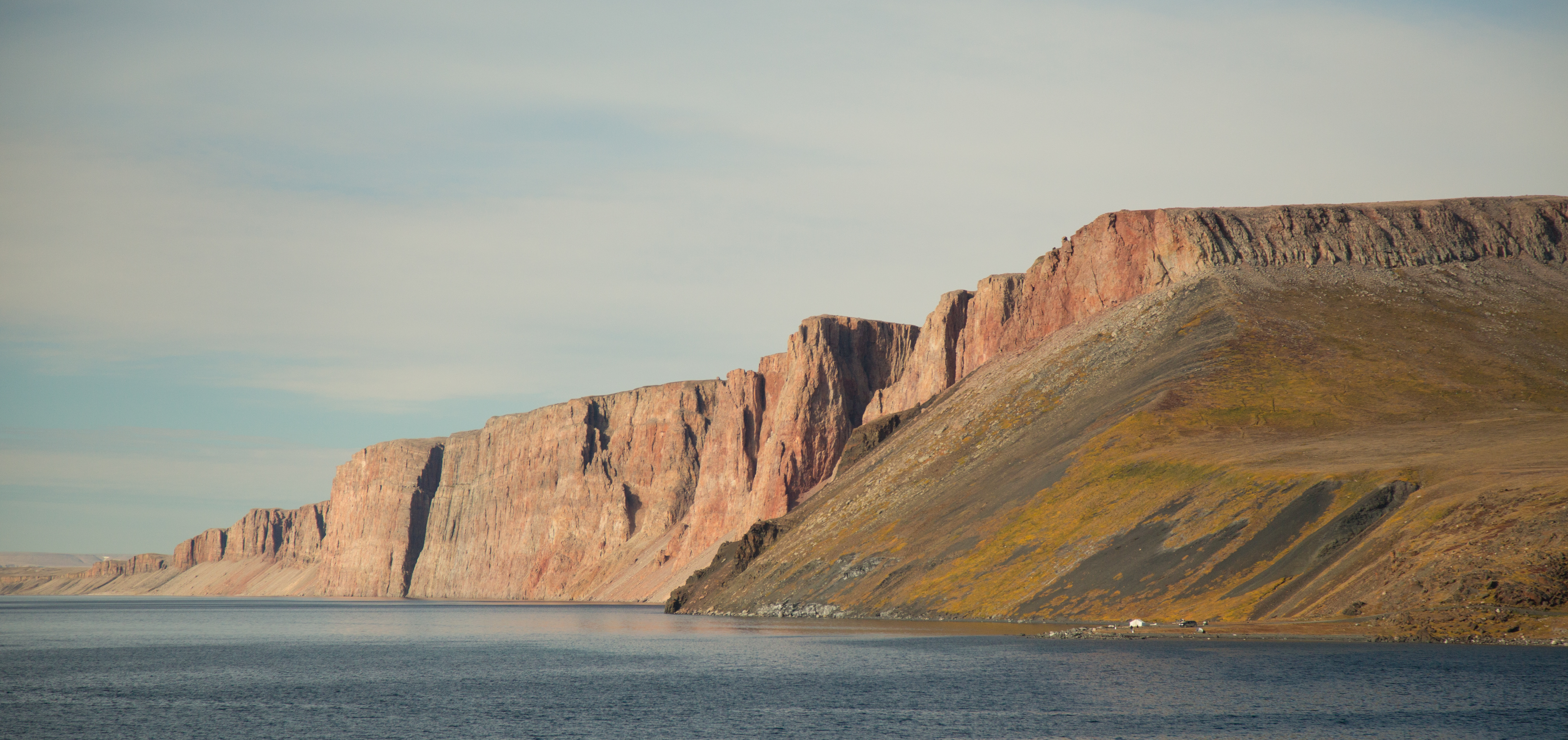
Visitors may also have opportunities to support local Inuit artisans by purchasing handcrafted artwork, jewelry, and other crafts. Farther north, well within the Arctic Circle, Sam Ford Fjord stands out as one of Baffin Island’s most dramatic Arctic destinations. A traditional Inuit hunting area, the fjord is a striking study in contrasts, where sheer granite walls rise almost straight from the ocean, reaching heights of up to 457 meters (1,500 feet).
If conditions allow, the region offers outstanding Zodiac cruising, sea kayaking, and opportunities to explore ashore. Arctic foxes may be spotted on land, while polar bears are sometimes seen during off-ship excursions. Cruising the fjord provides a powerful sense of scale: stretching approximately 110 kilometers (68 miles), Sam Ford Fjord narrows to less than 3 kilometers (2 miles) wide as it winds deeper inland.
Meals: Breakfast,Lunch,Dinner
Day 5
Exploring Baffin Island Canada
The Inuktitut name for Baffin Island—the fifth-largest island in the world—is Qikiqtaaluk. It has been home to Inuit for thousands of years. The island’s English name commemorates William Baffin, who explored the region in the early 17th century while searching for the fabled Northwest Passage, long after it was inhabited by Inuit.
Sailing along the island’s eastern coast, each day is shaped by weather and ice conditions, making every landing distinct. Favourite destinations include Qikiqtarjuaq and Sam Ford Fjord, where towering mountains, deep fjords, vibrant tundra, and Inuit settlements define the landscape. The welcoming Inuit community of Qikiqtarjuaq—meaning “the big island” in Inuktitut— lies just north of the Arctic Circle on Broughton Island. Fondly known as “Qik” by locals, the hamlet offers sweeping views across the Davis Strait.
Visitors may also have opportunities to support local Inuit artisans by purchasing handcrafted artwork, jewelry, and other crafts. Farther north, well within the Arctic Circle, Sam Ford Fjord stands out as one of Baffin Island’s most dramatic Arctic destinations. A traditional Inuit hunting area, the fjord is a striking study in contrasts, where sheer granite walls rise almost straight from the ocean, reaching heights of up to 457 meters (1,500 feet).
If conditions allow, the region offers outstanding Zodiac cruising, sea kayaking, and opportunities to explore ashore. Arctic foxes may be spotted on land, while polar bears are sometimes seen during off-ship excursions. Cruising the fjord provides a powerful sense of scale: stretching approximately 110 kilometers (68 miles), Sam Ford Fjord narrows to less than 3 kilometers (2 miles) wide as it winds deeper inland.
Meals: Breakfast,Lunch,Dinner
Day 6
Exploring Baffin Island Canada
The Inuktitut name for Baffin Island—the fifth-largest island in the world—is Qikiqtaaluk. It has been home to Inuit for thousands of years. The island’s English name commemorates William Baffin, who explored the region in the early 17th century while searching for the fabled Northwest Passage, long after it was inhabited by Inuit.
Sailing along the island’s eastern coast, each day is shaped by weather and ice conditions, making every landing distinct. Favourite destinations include Qikiqtarjuaq and Sam Ford Fjord, where towering mountains, deep fjords, vibrant tundra, and Inuit settlements define the landscape. The welcoming Inuit community of Qikiqtarjuaq—meaning “the big island” in Inuktitut— lies just north of the Arctic Circle on Broughton Island. Fondly known as “Qik” by locals, the hamlet offers sweeping views across the Davis Strait.
Visitors may also have opportunities to support local Inuit artisans by purchasing handcrafted artwork, jewelry, and other crafts. Farther north, well within the Arctic Circle, Sam Ford Fjord stands out as one of Baffin Island’s most dramatic Arctic destinations. A traditional Inuit hunting area, the fjord is a striking study in contrasts, where sheer granite walls rise almost straight from the ocean, reaching heights of up to 457 meters (1,500 feet).
If conditions allow, the region offers outstanding Zodiac cruising, sea kayaking, and opportunities to explore ashore. Arctic foxes may be spotted on land, while polar bears are sometimes seen during off-ship excursions. Cruising the fjord provides a powerful sense of scale: stretching approximately 110 kilometers (68 miles), Sam Ford Fjord narrows to less than 3 kilometers (2 miles) wide as it winds deeper inland.
Meals: Breakfast,Lunch,Dinner
Day 7
Gateway to Lancaster Sound
Located at the northeastern tip of Baffin Island, Pond Inlet (Mittimatalik) looks across Eclipse Sound to the glaciated peaks of Bylot Island, offering one of the most dramatic settings of any community in the Canadian Arctic. Mittimatalik provides a meaningful opportunity to connect with the people who have lived here for thousands of years, before the voyage turns northwest toward Lancaster Sound (Tallurutiup Imanga).
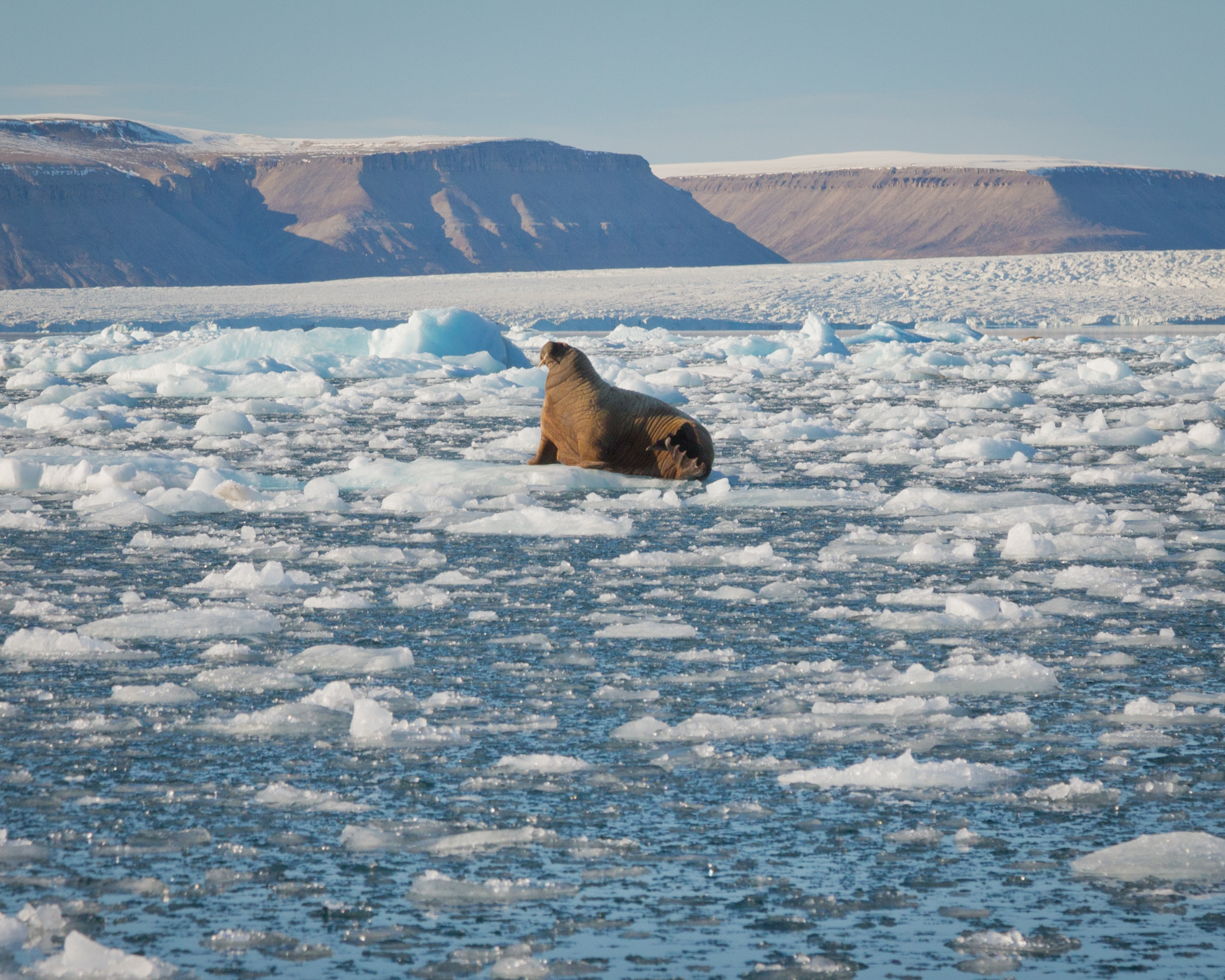
Among the Arctic’s richest marine habitats, Lancaster Sound’s ice-free waters attract whales, walruses, and seals in remarkable numbers each summer. We explore by Zodiac, scanning for iconic wildlife—and, with luck, the elusive narwhal. Polar bear sightings are also possible.
Nearby, Coburg Island’s soaring coastal cliffs, within the Nirjutiqavvik National Wildlife Area, support hundreds of thousands of nesting Brünnich’s guillemots, black-legged kittiwakes, northern fulmars, and black guillemots. At approximately 76° North off the east coast of Ellesmere Island, Cape Norton Shaw is likely the northernmost stop of the voyage. Here, multiple tidewater glaciers calve directly into iceberg-filled seas.
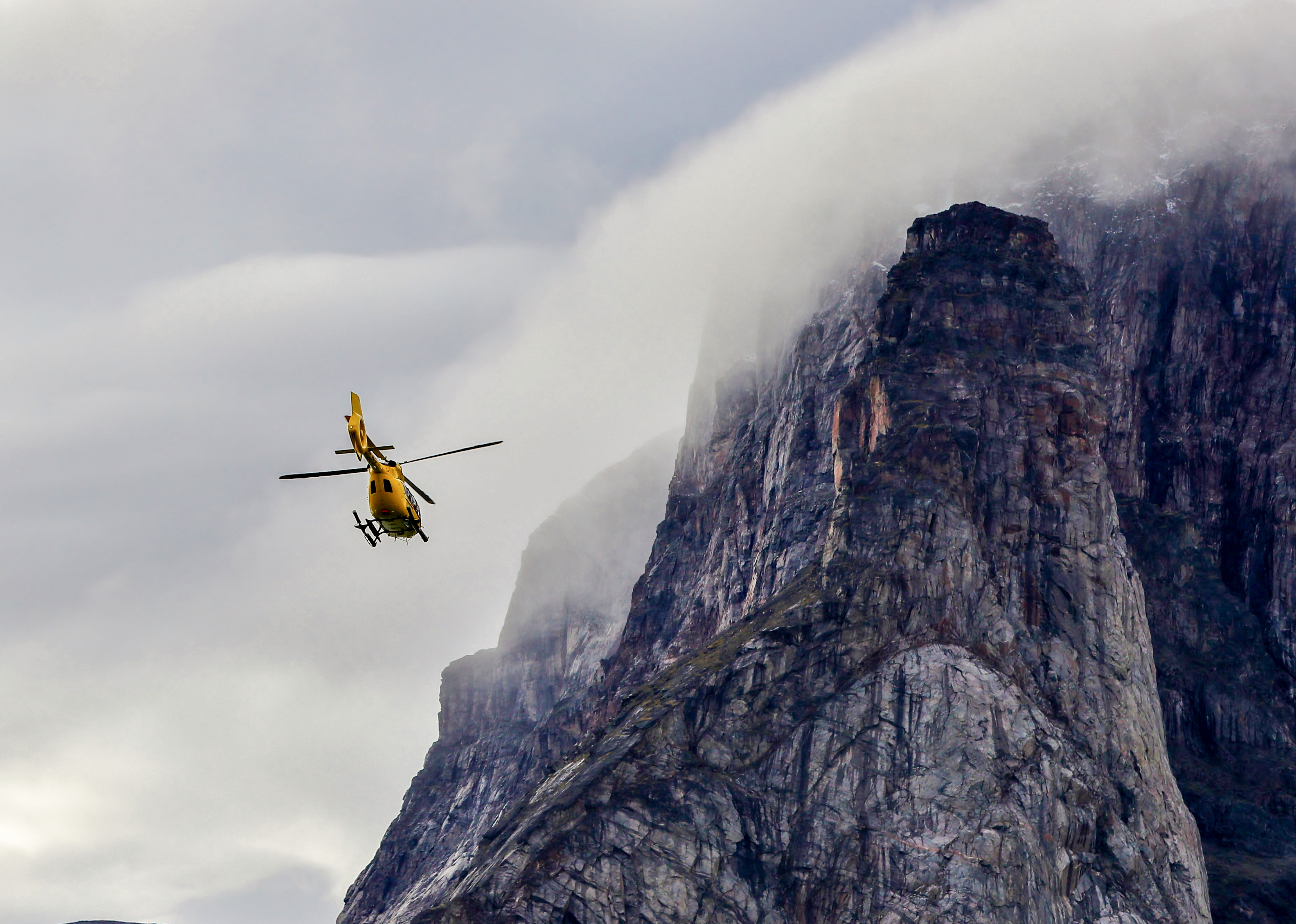
We plan a combined helicopter and Zodiac operation to explore this rarely visited coastline by land and sea. If flying conditions are unsuitable, we reroute to Grise Fjord and Craig Harbour, the site of an RCMP outpost established in 1922, closed in the 1930s, and controversially reopened at the outset of the Cold War.
On Devon Island’s southern shore, the weathered remains of a Royal Canadian Mounted Police detachment at Dundas Harbour quietly reflect Canada’s efforts to assert sovereignty in the High Arctic. The journey concludes in spectacular Croker Bay, where towering glaciated walls and calving ice deliver a sense of scale no photograph can fully convey.
Meals: Breakfast,Lunch,Dinner
Day 8
Gateway to Lancaster Sound
Located at the northeastern tip of Baffin Island, Pond Inlet (Mittimatalik) looks across Eclipse Sound to the glaciated peaks of Bylot Island, offering one of the most dramatic settings of any community in the Canadian Arctic. Mittimatalik provides a meaningful opportunity to connect with the people who have lived here for thousands of years, before the voyage turns northwest toward Lancaster Sound (Tallurutiup Imanga).
Among the Arctic’s richest marine habitats, Lancaster Sound’s ice-free waters attract whales, walruses, and seals in remarkable numbers each summer. We explore by Zodiac, scanning for iconic wildlife—and, with luck, the elusive narwhal. Polar bear sightings are also possible.
Nearby, Coburg Island’s soaring coastal cliffs, within the Nirjutiqavvik National Wildlife Area, support hundreds of thousands of nesting Brünnich’s guillemots, black-legged kittiwakes, northern fulmars, and black guillemots. At approximately 76° North off the east coast of Ellesmere Island, Cape Norton Shaw is likely the northernmost stop of the voyage. Here, multiple tidewater glaciers calve directly into iceberg-filled seas.
We plan a combined helicopter and Zodiac operation to explore this rarely visited coastline by land and sea. If flying conditions are unsuitable, we reroute to Grise Fjord and Craig Harbour, the site of an RCMP outpost established in 1922, closed in the 1930s, and controversially reopened at the outset of the Cold War.
On Devon Island’s southern shore, the weathered remains of a Royal Canadian Mounted Police detachment at Dundas Harbour quietly reflect Canada’s efforts to assert sovereignty in the High Arctic. The journey concludes in spectacular Croker Bay, where towering glaciated walls and calving ice deliver a sense of scale no photograph can fully convey.
Meals: Breakfast,Lunch,Dinner
Day 9
Gateway to Lancaster Sound
Located at the northeastern tip of Baffin Island, Pond Inlet (Mittimatalik) looks across Eclipse Sound to the glaciated peaks of Bylot Island, offering one of the most dramatic settings of any community in the Canadian Arctic. Mittimatalik provides a meaningful opportunity to connect with the people who have lived here for thousands of years, before the voyage turns northwest toward Lancaster Sound (Tallurutiup Imanga).
Among the Arctic’s richest marine habitats, Lancaster Sound’s ice-free waters attract whales, walruses, and seals in remarkable numbers each summer. We explore by Zodiac, scanning for iconic wildlife—and, with luck, the elusive narwhal. Polar bear sightings are also possible.
Nearby, Coburg Island’s soaring coastal cliffs, within the Nirjutiqavvik National Wildlife Area, support hundreds of thousands of nesting Brünnich’s guillemots, black-legged kittiwakes, northern fulmars, and black guillemots. At approximately 76° North off the east coast of Ellesmere Island, Cape Norton Shaw is likely the northernmost stop of the voyage. Here, multiple tidewater glaciers calve directly into iceberg-filled seas.
We plan a combined helicopter and Zodiac operation to explore this rarely visited coastline by land and sea. If flying conditions are unsuitable, we reroute to Grise Fjord and Craig Harbour, the site of an RCMP outpost established in 1922, closed in the 1930s, and controversially reopened at the outset of the Cold War.
On Devon Island’s southern shore, the weathered remains of a Royal Canadian Mounted Police detachment at Dundas Harbour quietly reflect Canada’s efforts to assert sovereignty in the High Arctic. The journey concludes in spectacular Croker Bay, where towering glaciated walls and calving ice deliver a sense of scale no photograph can fully convey.
Meals: Breakfast,Lunch,Dinner
Day 10
Gateway to Lancaster Sound
Located at the northeastern tip of Baffin Island, Pond Inlet (Mittimatalik) looks across Eclipse Sound to the glaciated peaks of Bylot Island, offering one of the most dramatic settings of any community in the Canadian Arctic. Mittimatalik provides a meaningful opportunity to connect with the people who have lived here for thousands of years, before the voyage turns northwest toward Lancaster Sound (Tallurutiup Imanga).
Among the Arctic’s richest marine habitats, Lancaster Sound’s ice-free waters attract whales, walruses, and seals in remarkable numbers each summer. We explore by Zodiac, scanning for iconic wildlife—and, with luck, the elusive narwhal. Polar bear sightings are also possible.
Nearby, Coburg Island’s soaring coastal cliffs, within the Nirjutiqavvik National Wildlife Area, support hundreds of thousands of nesting Brünnich’s guillemots, black-legged kittiwakes, northern fulmars, and black guillemots. At approximately 76° North off the east coast of Ellesmere Island, Cape Norton Shaw is likely the northernmost stop of the voyage. Here, multiple tidewater glaciers calve directly into iceberg-filled seas.
We plan a combined helicopter and Zodiac operation to explore this rarely visited coastline by land and sea. If flying conditions are unsuitable, we reroute to Grise Fjord and Craig Harbour, the site of an RCMP outpost established in 1922, closed in the 1930s, and controversially reopened at the outset of the Cold War.
On Devon Island’s southern shore, the weathered remains of a Royal Canadian Mounted Police detachment at Dundas Harbour quietly reflect Canada’s efforts to assert sovereignty in the High Arctic. The journey concludes in spectacular Croker Bay, where towering glaciated walls and calving ice deliver a sense of scale no photograph can fully convey.
Meals: Breakfast,Lunch,Dinner
Day 11
Heart of the Northwest Passage
As we push westward into the inner reaches of Lancaster Sound, the geography narrows and the sense of remoteness deepens. Rising from the confluence of Lancaster Sound and Barrow Strait, the sheer limestone cliffs of Prince Leopold Island form one of the most significant seabird sanctuaries in the eastern Arctic. We’ll see hundreds of thousands of birds wheeling above us as still waters stretch in every horizon, one of the defining sights of a High Arctic expedition.
At the southern tip of Somerset Island, Fort Ross marks the entrance to Bellot Strait, the narrow, current-swept channel separating Somerset Island from the Boothia Peninsula and forming a critical link in the Northwest Passage. Once a Hudson’s Bay Company trading post, Fort Ross remains one of the most evocative reminders of a time when commerce, survival, and exploration converged at the top of the world.
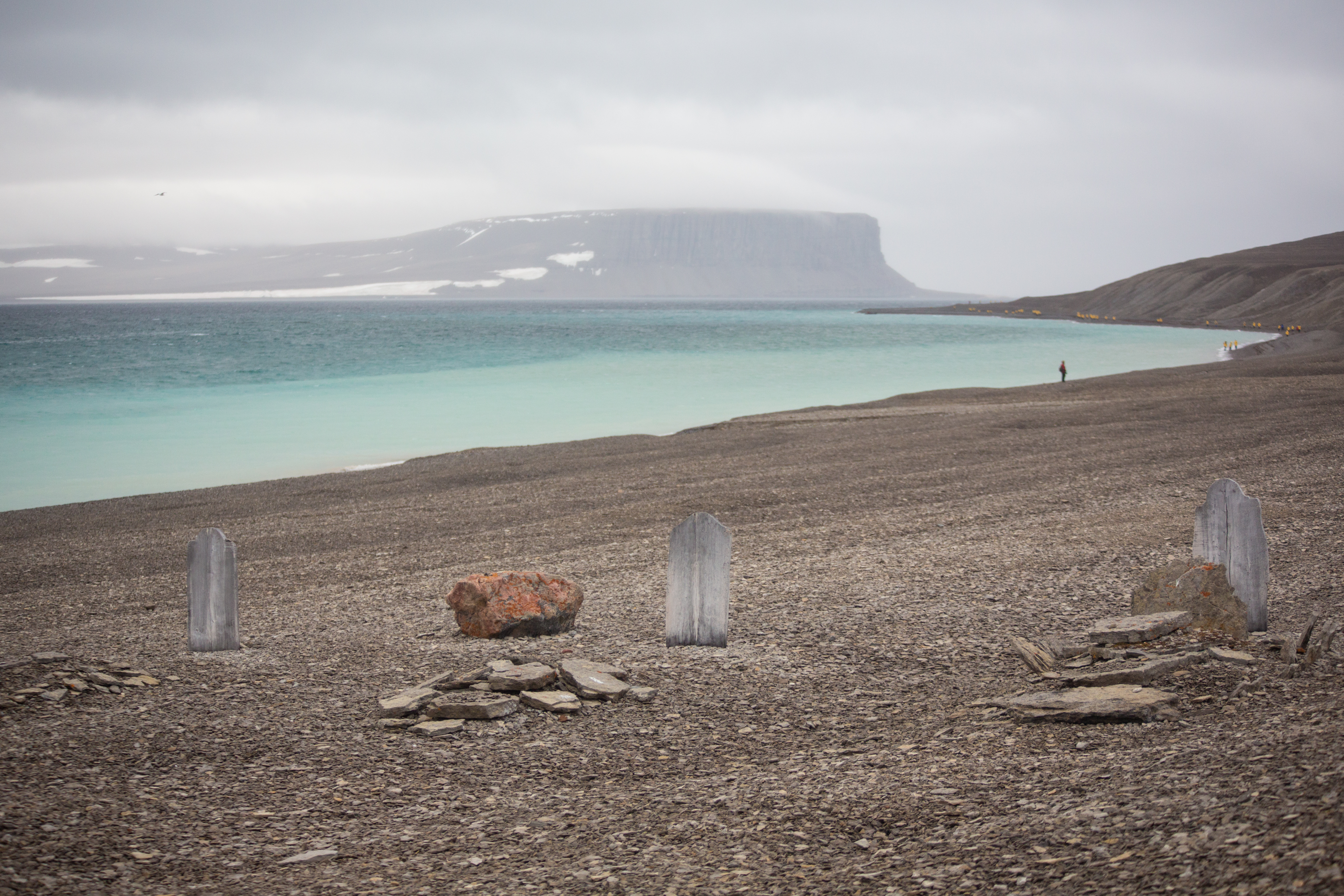
We will attempt to land at Beechey Island, a National Historic Site of Canada. Named for explorer Frederick William Beechey, the island is the final resting place of three members of Sir John Franklin’s 1845-46 Northwest Passage expedition, discovered in 1850 on a desolate raised beach. A shore visit to Radstock Bay may also be possible, home to one of the Arctic’s most impressive ancient Thule sites. Exploring the remains of subterranean houses—including whale bone supports—offers a powerful insight into how Paleo‑Inuit thrived in the Far North.
Meals: Breakfast,Lunch,Dinner
Day 12
Heart of the Northwest Passage
As we push westward into the inner reaches of Lancaster Sound, the geography narrows and the sense of remoteness deepens. Rising from the confluence of Lancaster Sound and Barrow Strait, the sheer limestone cliffs of Prince Leopold Island form one of the most significant seabird sanctuaries in the eastern Arctic. We’ll see hundreds of thousands of birds wheeling above us as still waters stretch in every horizon, one of the defining sights of a High Arctic expedition.
At the southern tip of Somerset Island, Fort Ross marks the entrance to Bellot Strait, the narrow, current-swept channel separating Somerset Island from the Boothia Peninsula and forming a critical link in the Northwest Passage. Once a Hudson’s Bay Company trading post, Fort Ross remains one of the most evocative reminders of a time when commerce, survival, and exploration converged at the top of the world.
We will attempt to land at Beechey Island, a National Historic Site of Canada. Named for explorer Frederick William Beechey, the island is the final resting place of three members of Sir John Franklin’s 1845-46 Northwest Passage expedition, discovered in 1850 on a desolate raised beach. A shore visit to Radstock Bay may also be possible, home to one of the Arctic’s most impressive ancient Thule sites. Exploring the remains of subterranean houses—including whale bone supports—offers a powerful insight into how Paleo‑Inuit thrived in the Far North.
Meals: Breakfast,Lunch,Dinner
Day 13
Heart of the Northwest Passage
As we push westward into the inner reaches of Lancaster Sound, the geography narrows and the sense of remoteness deepens. Rising from the confluence of Lancaster Sound and Barrow Strait, the sheer limestone cliffs of Prince Leopold Island form one of the most significant seabird sanctuaries in the eastern Arctic. We’ll see hundreds of thousands of birds wheeling above us as still waters stretch in every horizon, one of the defining sights of a High Arctic expedition.
At the southern tip of Somerset Island, Fort Ross marks the entrance to Bellot Strait, the narrow, current-swept channel separating Somerset Island from the Boothia Peninsula and forming a critical link in the Northwest Passage. Once a Hudson’s Bay Company trading post, Fort Ross remains one of the most evocative reminders of a time when commerce, survival, and exploration converged at the top of the world.
We will attempt to land at Beechey Island, a National Historic Site of Canada. Named for explorer Frederick William Beechey, the island is the final resting place of three members of Sir John Franklin’s 1845-46 Northwest Passage expedition, discovered in 1850 on a desolate raised beach. A shore visit to Radstock Bay may also be possible, home to one of the Arctic’s most impressive ancient Thule sites. Exploring the remains of subterranean houses—including whale bone supports—offers a powerful insight into how Paleo‑Inuit thrived in the Far North.
Meals: Breakfast,Lunch,Dinner
Day 14
Admiralty Inlet and Arctic Bay
Carved deep into northern Baffin Island, Admiralty Inlet is one of the Arctic’s longest fjords: a silent, ice-ringed channel where whale blows punctuate the stillness. Among the world’s most vital narwhal summering grounds, Zodiac cruising here may provide some of the expedition’s most unforgettable marine wildlife encounters.
The Arctic Bay area has been inhabited by Inuit for over 5,000 years. With very few visitors, the community is typically quite excited to welcome a ship. Enjoy a gathering on the outskirts of town featuring Inuit arts, cultural activities and, possibly, tastings of local cuisine shared by elders and community members.
Meals: Breakfast,Lunch,Dinner
Day 15
Admiralty Inlet and Arctic Bay
Carved deep into northern Baffin Island, Admiralty Inlet is one of the Arctic’s longest fjords: a silent, ice-ringed channel where whale blows punctuate the stillness. Among the world’s most vital narwhal summering grounds, Zodiac cruising here may provide some of the expedition’s most unforgettable marine wildlife encounters.
The Arctic Bay area has been inhabited by Inuit for over 5,000 years. With very few visitors, the community is typically quite excited to welcome a ship. Enjoy a gathering on the outskirts of town featuring Inuit arts, cultural activities and, possibly, tastings of local cuisine shared by elders and community members.
Meals: Breakfast,Lunch,Dinner
Day 16
At Sea
Enjoy the sail back across Baffin Bay where the presence of ice can lead to opportunities for polar bear sightings as well as whales and seabirds. Onboard the team will keep you engaged with presentations and wildlife watching. Guests often use sea days to take advantage of the ship’s Tundra Spa and Sauna.
Meals: Breakfast,Lunch,Dinner
Day 17
At Sea
Enjoy the sail back across Baffin Bay where the presence of ice can lead to opportunities for polar bear sightings as well as whales and seabirds. Onboard the team will keep you engaged with presentations and wildlife watching. Guests often use sea days to take advantage of the ship’s Tundra Spa and Sauna.
Meals: Breakfast,Lunch,Dinner
Day 18
Meeting the People of Sisimiut
Arriving back in Greenland, we hope to visit the community of Sisimiut, where you may enjoy locally led city tours, including a “Taste of Greenland” experience featuring samples of traditional foods. Back onboard, head to the deck to watch a traditional kayak demonstration on the water.
Meals: Breakfast,Lunch,Dinner
Day 19
Disembark at Kangerlussuaq
Today, we disembark in Kangerlussuaq, formerly known as Søndre Strømfjord, and transfer you to your charter flight to Reykjavik, where you’ll spend the night in your group hotel, both of which are included in your Charter Flight & Hotel Package.
Meals: Breakfast
Day 20
Depart Reykjavik
Today, after breakfast, make your way independently to the airport for your flight home, or continue your personal travel plans as prearranged.
Meals: Breakfast
What’s included
What’s not included
Additional information
Food
All meals while on the ship are included.
Typical meals
The ship’s galley offers good-quality service and cuisine throughout, with excellent chefs preparing international menus, including vegetarian dishes. If there is one constant on board, it is that you’ll enjoy delicious meals. While meal times may change due to landings and wildlife sightings, you’ll always be served three well-prepared meals per day. Vegetarians and vegans can be well catered for on this adventure – please inform us before departure of any special dietary requests so our local team can be well prepared.
Breakfast: Buffet style – unlimited tea and coffee, a selection of fruit juices, hot options including bacon and eggs or omelettes, a selection of bread and toast and jam/honey/marmalade, fruit and cereal.
Lunch: Three-course set meal or the occasional buffet or barbecue.
Dinner: Three courses with a starter of soup, salad or anti-pasto, a choice of three mains with at least one vegetarian and one seafood option and a dessert of sweet pudding or ice cream or fruit, tea and coffee.
Drinks: Complimentary coffee, tea, cocoa and water stations are available around the clock, while soft drinks and juices are available during meals and when the bar is open—all included in the cost of your package. Enjoy complimentary select beer, wines and select cocktails during bar service hours and dinner as part of the “Raise a Glass and Stay Connected Free” program. Premium wines and champagne are available at extra cost and can be billed to your shipboard account. The well-stocked bars on the ship are open late morning, afternoon and evening, though hours may occasionally change to accommodate the expedition schedule.
Lancaster Sound Wildlife Corridor by Zodiac (Tallurutiup Imanga)
Navigate the nutrient-rich gateway of Tallurutiup Imanga with guides who help you scan for narwhal, beluga, and bowhead whales. Ice-free in summer, these waters also host seals and walrus haul-outs along low shores and floes.
With luck, distant polar bear sightings are possible as bears patrol ice edges. Learn how converging currents, plankton blooms, and shifting pack ice create one of the Arctic’s most prolific marine habitats.
Seabird Cliffs of Prince Leopold & Coburg Islands
Approach soaring limestone cliffs alive with sound and motion as hundreds of thousands of murres, kittiwakes, and fulmars wheel overhead. At Prince Leopold Island and nearby Coburg Island—part of the Nirjutiqavvik National Wildlife Area—the spectacle of nesting colonies fills sea and sky.
Naturalists interpret breeding cycles, cliff ecology, and predator–prey dynamics while you listen to the thunder of wings and watch guillemots launch from ledges. This is among the eastern Arctic’s most dramatic wildlife scenes.
Franklin History at Beechey Island & Thule Culture at Radstock Bay
Land on a wind-scoured beach to walk to the Franklin expedition graves at Beechey Island, a National Historic Site of Canada. Amid sparse tundra and shingle, contemplate the hardships of 19th-century exploration across the fabled Passage.
Nearby at Radstock Bay, examine remnants of ancient Thule winter houses, some with whale-bone supported frames. Guides reveal Paleo-Inuit lifeways—food storage, dwellings, and seasonal travel—bringing Arctic archaeology vividly to life.
Dundas Harbour on Devon Island: RCMP Outpost Ruins
Step ashore on the world’s largest uninhabited island to see the weathered RCMP detachment at Dundas Harbour. Low, lichen-stained structures and a lonely cemetery speak to Canada’s High Arctic sovereignty efforts in a harsh climate.
Walk gently over frost-shattered ground as guides share stories of isolation, resupply, and duty in the 1920s and 30s. The story-filled ruins and stark scenery create a powerful sense of time and place.
Admiralty Inlet Narwhal Zodiac Exploration
Glide through an ice-fringed waterway renowned as a prime narwhal summering ground. From Zodiacs, watch for the flash of tusks and rolling backs, guided by experts attuned to subtle surface cues and breathing patterns.
In this hushed fjord setting, the interplay of calm seas, bergy bits, and distant amphitheater-like slopes defines the mood of Arctic solitude. Learn how sea ice, prey, and currents shape narwhal migrations and behavior.
Sisimiut Local Tour, Taste of Greenland & Kayak Demonstration
In West Greenland’s second-largest town, join a locally led tour through colorful neighborhoods and the historic harbor. Sample regional bites during a Taste of Greenland experience that highlights coastal ingredients and time-honored methods.
Back at the waterfront, watch a traditional kayak demonstration, honoring the Inuit qajaq’s sleek design and sea-hunting heritage. Hear how craftsmanship, weather, and water shaped daily life and travel along Greenland’s rugged coast.
Onboard Polar Lectures & Deck Wildlife Watch
Between landings, join expert-led lectures on Arctic history, wildlife, geology, and ice—from Inuit lifeways to epochal expeditions. Talks deepen understanding of the landscapes and cultures encountered throughout your voyage.
Out on deck, watch for whales and seabirds with naturalists who help identify species and behavior. Binoculars at the ready, you’ll link classroom insights to the living sea as migrating birds draft the ship and blows mark distant giants.
Guided Shore Landings & Tundra Walks
With your expedition team, set foot on Arctic shorelines to explore gravel beaches, raised marine terraces, and soft tundra. Short hikes reveal hardy wildflowers, patterned ground, and the quiet drama of cliffs, glaciers, and fjord headwalls.
Guides interpret permafrost, animal tracks, and seasonal changes that color the tundra with russets and golds. These landings balance scenery with natural history, offering time to absorb the subtle colors of Arctic tundra and contemplate vast, ice-carved spaces.
Sea Kayaking in Arctic Fjords
For an intimate waterline perspective, paddle a sea kayak among drift ice and sculpted bergs in sheltered bays. Glide silently past rocky headlands as birds arc overhead and jelly-clear brash ice taps the hull.
This small-group adventure delivers a silent waterline perspective that rewards patient wildlife spotting and photography. Offered at additional cost and bookable on tour, participation is weather-, safety-, and space-permitting with expert guides and gear provided.
Zodiac Cruising Among Glaciers, Fjords & Icebergs
Cruise by Zodiac beneath cathedral-like walls in places such as Sam Ford Fjord and Croker Bay. Thread through iceberg alleys, listening for the crack and sigh of ice as you idle near towering glacier faces while guides interpret the geology and sea ice.
Keep cameras ready for whales surfacing, seals on floes, and patterns of blue brash ice. The intimate, low-to-the-water vantage point invites you to pause for photos and reflection amid mirror-still fjords and sculpted ice.
Baffin Island Fjords & Qikiqtarjuaq Community Visit
Explore the eastern coast of Baffin Island and visit the Inuit hamlet of Qikiqtarjuaq, whose name in Inuktitut means “the big island.” Meet residents and support local artisans offering carvings, beadwork, and prints, framed by sweeping Davis Strait views.
Farther north, cruise a traditional hunting area where sheer granite walls rise 1,500 feet from the sea. Learn how communities thrive amid tundra, sea ice, and migrating wildlife, and appreciate the continuity of traditional hunting grounds across seasons.
Pond Inlet (Mittimatalik) Community & Bylot Island Vistas
Come ashore at Pond Inlet and meet local hosts in Mittimatalik, a community overlooking Eclipse Sound. Learn about daily life above the Arctic Circle while taking in the glaciated peaks of Bylot Island that rise beyond the water.
Hear stories of travel by qamutiik and qajaq, see traditional crafts, and understand how seasonal ice shapes culture and movement. This cultural encounter deepens appreciation for Inuit resilience and ties to land and sea.
High Arctic Helicopter Flightseeing & Wilderness Landing
Lift off to take a helicopter flightseeing ride over Greenland and Canada’s far north, tracing an ice-choked coastline where tidewater glaciers split into luminous floes. From the air, the scale of tidewater glaciers and serrated peaks comes into focus before a remote landing with your expedition team.
These short exploratory flights—often along Ellesmere and Devon Island shores—offer access to rarely visited High Arctic shores. Conditions permitting, combine aerial views with time on the ground to feel the silence of polar terrain and admire sweeping, iceberg-filled bays.