Your itinerary
Day 1
Arrive in Reykjavik, Iceland
Arrive in the Icelandic capital and make your way to the designated hotel, which is included in your Charter Flight & Hotel Package. You will have the day to explore this fascinating city known for its stunning modern architecture, contemporary music and Viking history.
Day 2
Fly to Kangerlussuaq, Greenland, and Embark
After an early breakfast at the hotel, guests will transfer together to the airport and board our private charter flight to Kangerlussuaq, Greenland. For decades, this small town, in Kangerlussuaq, formerly known as Søndre Strömfjord, was home to Greenland’s primary airport. Upon arrival, you will be transferred to the small harbor, where your Expedition Team will provide Zodiac shuttles to your awaiting ship. After a late-afternoon embarkation, we will set sail for the stunning Arctic wilderness.
Meals: Breakfast,Dinner
Day 3
At Sea: Crossing the Davis Strait
As we make our way across the Davis Strait, your Expedition Team will offer a series of polar presentations that will set the stage for the adventures ahead. You’ll learn about the storied history of the Arctic, its fascinating wildlife, geology and ecology. Our team will also keep a lookout for seabirds soaring above your ship, as well as whales that pass through these waters.
Meals: Breakfast,Lunch,Dinner
Day 4
Exploring Baffin Island Canada
The Inuktitut name for Baffin Island—the fifth-largest island in the world—is Qikiqtaaluk. It has been home to Inuit for thousands of years. The island’s English name commemorates William Baffin, who explored the region in the early 17th century while searching for the fabled Northwest Passage, long after it was inhabited by Inuit.
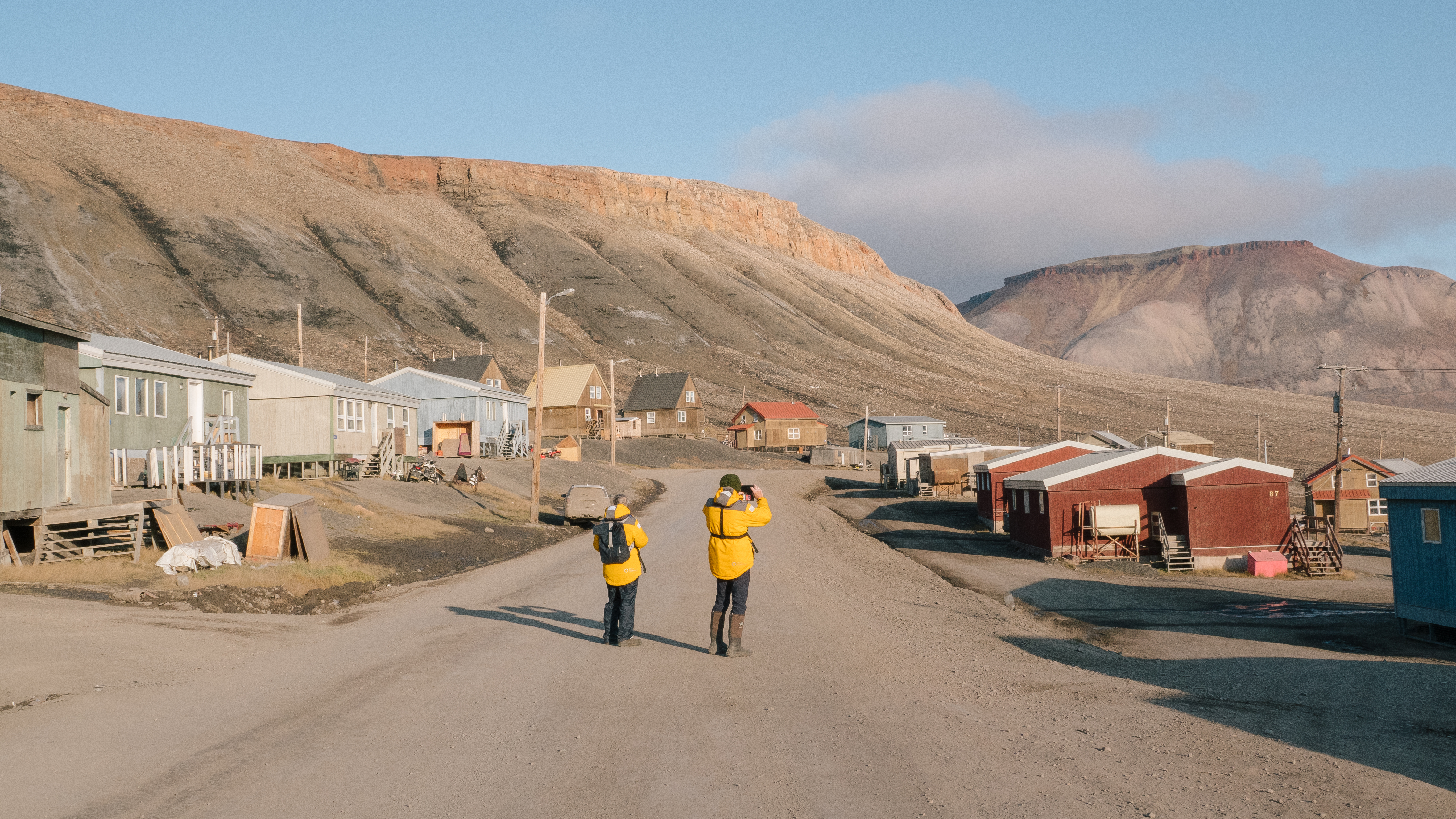
Sailing along the island’s eastern coast, each day is shaped by weather and ice conditions, making every landing distinct. Favourite destinations include Qikiqtarjuaq and Sam Ford Fjord, where towering mountains, deep fjords, vibrant tundra, and Inuit settlements define the landscape. The welcoming Inuit community of Qikiqtarjuaq—meaning “the big island” in Inuktitut— lies just north of the Arctic Circle on Broughton Island. Fondly known as “Qik” by locals, the hamlet offers sweeping views across the Davis Strait.
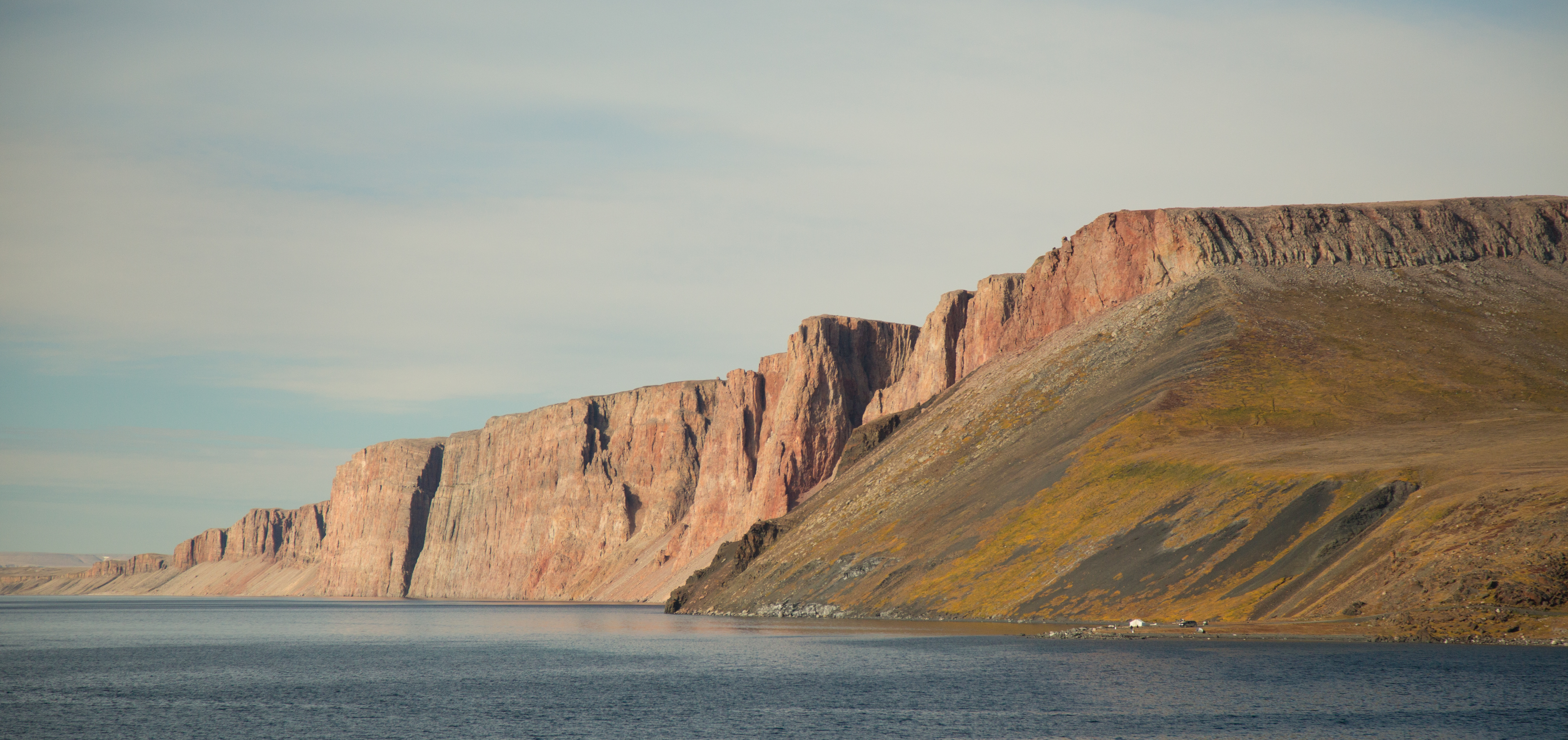
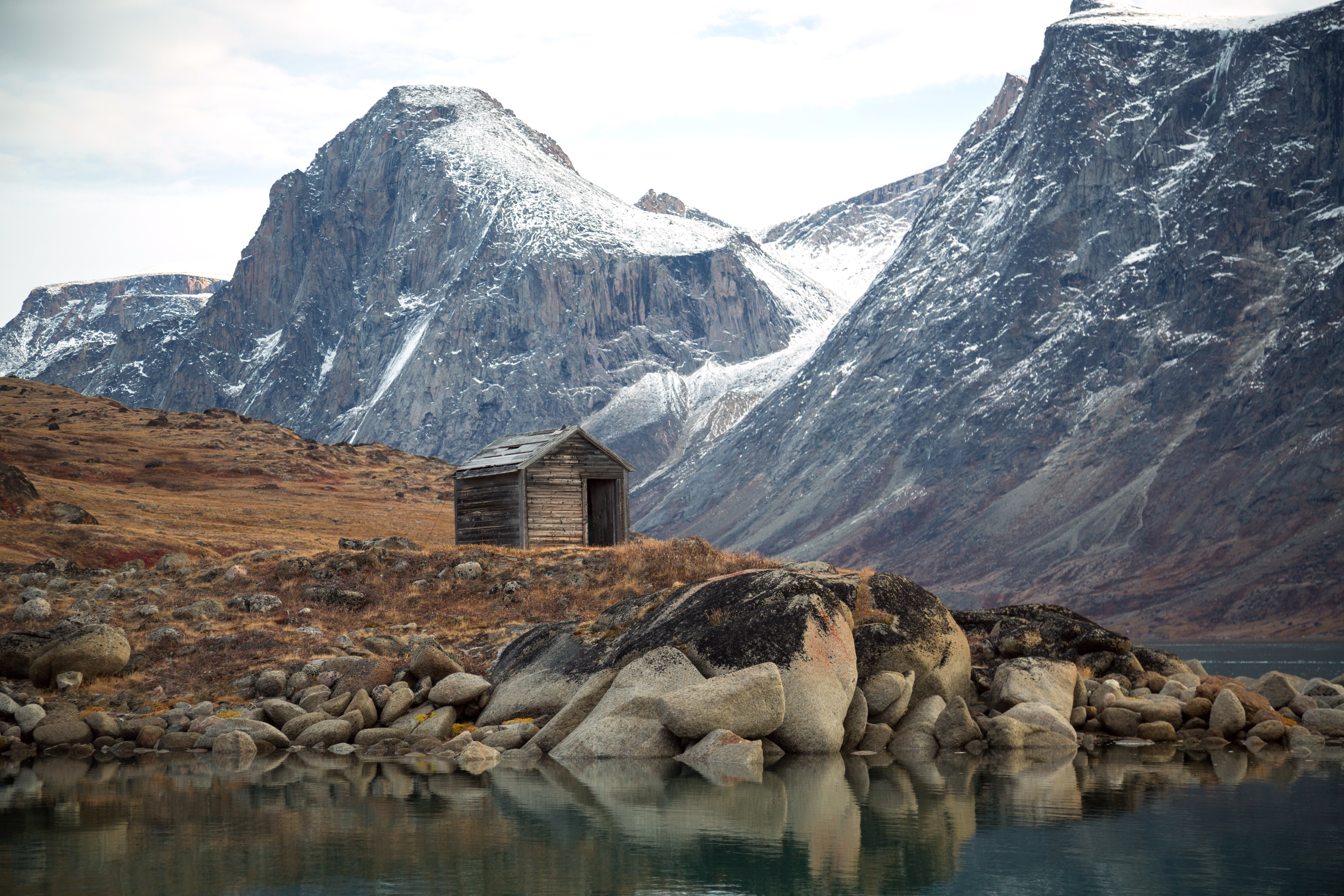
Visitors may also have opportunities to support local Inuit artisans by purchasing handcrafted artwork, jewelry, and other crafts. Farther north, well within the Arctic Circle, Sam Ford Fjord stands out as one of Baffin Island’s most dramatic Arctic destinations. A traditional Inuit hunting area, the fjord is a striking study in contrasts, where sheer granite walls rise almost straight from the ocean, reaching heights of up to 457 meters (1,500 feet).
If conditions allow, the region offers outstanding Zodiac cruising, sea kayaking, and opportunities to explore ashore. Arctic foxes may be spotted on land, while polar bears are sometimes seen during off-ship excursions. Cruising the fjord provides a powerful sense of scale: stretching approximately 110 kilometers (68 miles), Sam Ford Fjord narrows to less than 3 kilometers (2 miles) wide as it winds deeper inland.
Meals: Breakfast,Lunch,Dinner
Day 5
Exploring Baffin Island Canada
The Inuktitut name for Baffin Island—the fifth-largest island in the world—is Qikiqtaaluk. It has been home to Inuit for thousands of years. The island’s English name commemorates William Baffin, who explored the region in the early 17th century while searching for the fabled Northwest Passage, long after it was inhabited by Inuit.
Sailing along the island’s eastern coast, each day is shaped by weather and ice conditions, making every landing distinct. Favourite destinations include Qikiqtarjuaq and Sam Ford Fjord, where towering mountains, deep fjords, vibrant tundra, and Inuit settlements define the landscape. The welcoming Inuit community of Qikiqtarjuaq—meaning “the big island” in Inuktitut— lies just north of the Arctic Circle on Broughton Island. Fondly known as “Qik” by locals, the hamlet offers sweeping views across the Davis Strait.
Visitors may also have opportunities to support local Inuit artisans by purchasing handcrafted artwork, jewelry, and other crafts. Farther north, well within the Arctic Circle, Sam Ford Fjord stands out as one of Baffin Island’s most dramatic Arctic destinations. A traditional Inuit hunting area, the fjord is a striking study in contrasts, where sheer granite walls rise almost straight from the ocean, reaching heights of up to 457 meters (1,500 feet).
If conditions allow, the region offers outstanding Zodiac cruising, sea kayaking, and opportunities to explore ashore. Arctic foxes may be spotted on land, while polar bears are sometimes seen during off-ship excursions. Cruising the fjord provides a powerful sense of scale: stretching approximately 110 kilometers (68 miles), Sam Ford Fjord narrows to less than 3 kilometers (2 miles) wide as it winds deeper inland.
Meals: Breakfast,Lunch,Dinner
Day 6
Exploring Baffin Island Canada
The Inuktitut name for Baffin Island—the fifth-largest island in the world—is Qikiqtaaluk. It has been home to Inuit for thousands of years. The island’s English name commemorates William Baffin, who explored the region in the early 17th century while searching for the fabled Northwest Passage, long after it was inhabited by Inuit.
Sailing along the island’s eastern coast, each day is shaped by weather and ice conditions, making every landing distinct. Favourite destinations include Qikiqtarjuaq and Sam Ford Fjord, where towering mountains, deep fjords, vibrant tundra, and Inuit settlements define the landscape. The welcoming Inuit community of Qikiqtarjuaq—meaning “the big island” in Inuktitut— lies just north of the Arctic Circle on Broughton Island. Fondly known as “Qik” by locals, the hamlet offers sweeping views across the Davis Strait.
Visitors may also have opportunities to support local Inuit artisans by purchasing handcrafted artwork, jewelry, and other crafts. Farther north, well within the Arctic Circle, Sam Ford Fjord stands out as one of Baffin Island’s most dramatic Arctic destinations. A traditional Inuit hunting area, the fjord is a striking study in contrasts, where sheer granite walls rise almost straight from the ocean, reaching heights of up to 457 meters (1,500 feet).
If conditions allow, the region offers outstanding Zodiac cruising, sea kayaking, and opportunities to explore ashore. Arctic foxes may be spotted on land, while polar bears are sometimes seen during off-ship excursions. Cruising the fjord provides a powerful sense of scale: stretching approximately 110 kilometers (68 miles), Sam Ford Fjord narrows to less than 3 kilometers (2 miles) wide as it winds deeper inland.
Meals: Breakfast,Lunch,Dinner
Day 7
Gateway to Lancaster Sound
Located at the northeastern tip of Baffin Island, Pond Inlet (Mittimatalik) looks across Eclipse Sound to the glaciated peaks of Bylot Island, offering one of the most dramatic settings of any community in the Canadian Arctic. Mittimatalik provides a meaningful opportunity to connect with the people who have lived here for thousands of years, before the voyage turns northwest toward Lancaster Sound (Tallurutiup Imanga).
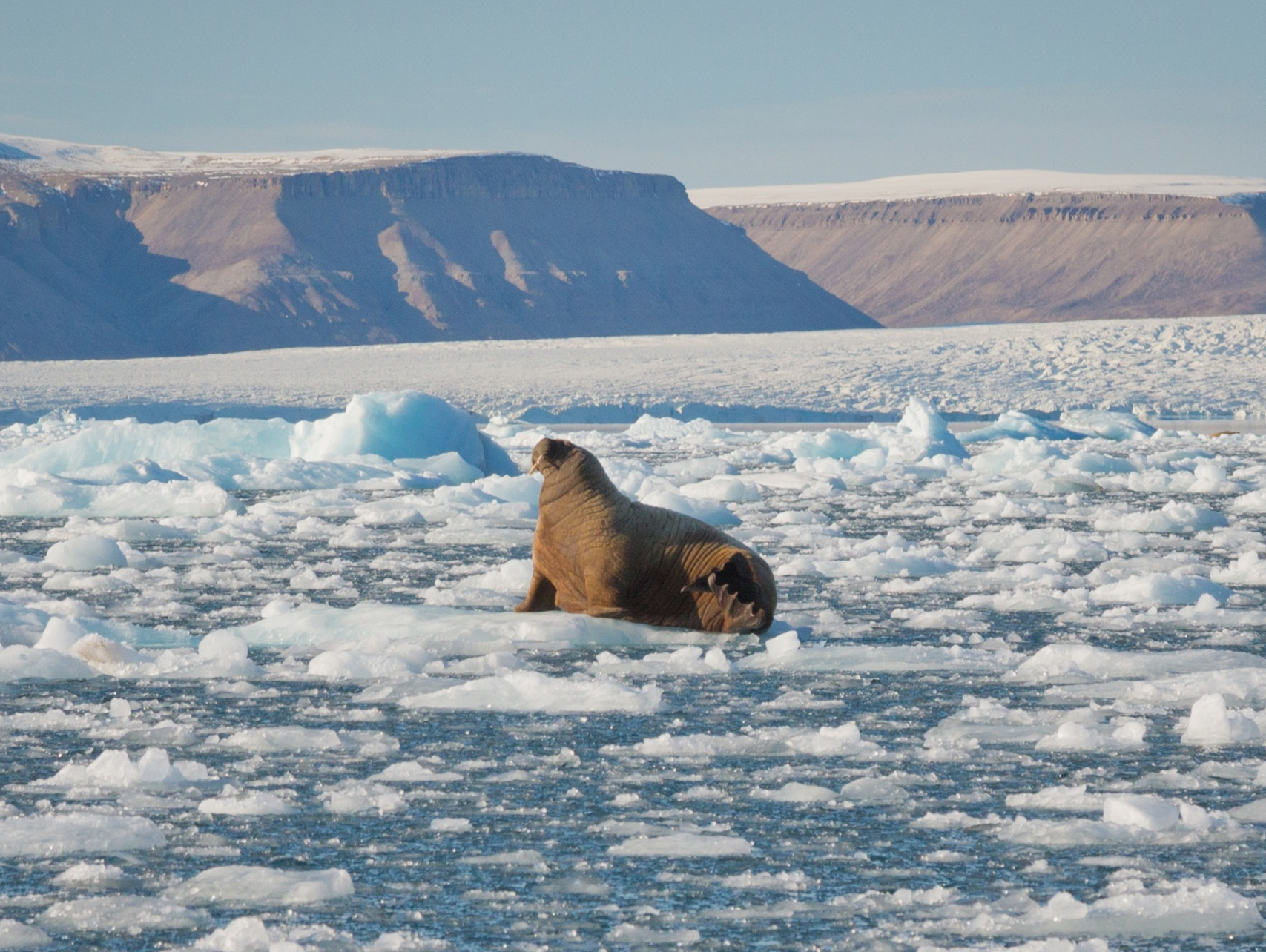
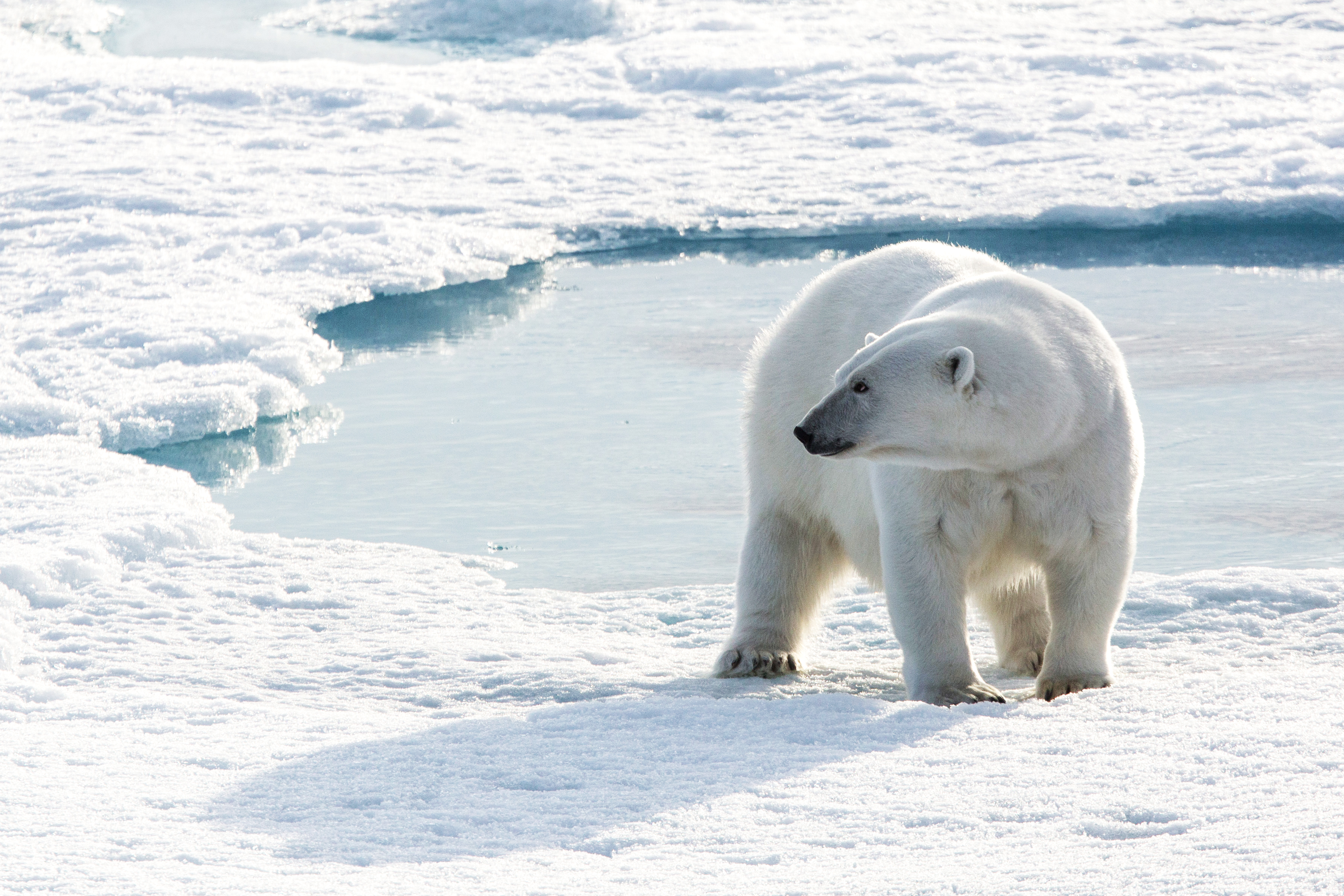
Among the Arctic’s richest marine habitats, Lancaster Sound’s ice-free waters attract whales, walruses, and seals in remarkable numbers each summer. We explore by Zodiac, scanning for iconic wildlife—and, with luck, the elusive narwhal. Polar bear sightings are also possible.
Nearby, Coburg Island’s soaring coastal cliffs, within the Nirjutiqavvik National Wildlife Area, support hundreds of thousands of nesting Brünnich’s guillemots, black-legged kittiwakes, northern fulmars, and black guillemots. At approximately 76° North off the east coast of Ellesmere Island, Cape Norton Shaw is likely the northernmost stop of the voyage. Here, multiple tidewater glaciers calve directly into iceberg-filled seas.
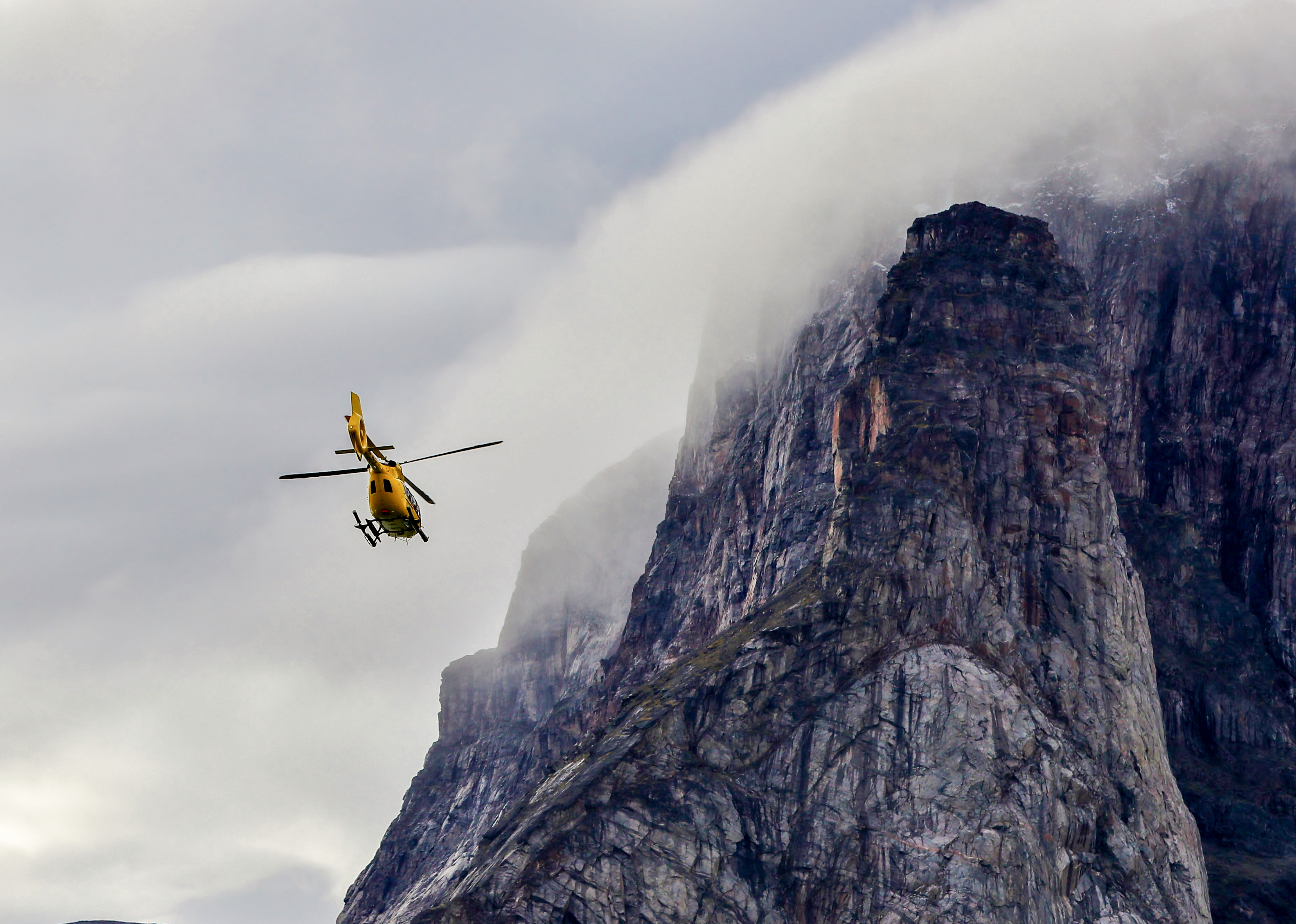
We plan a combined helicopter and Zodiac operation to explore this rarely visited coastline by land and sea. If flying conditions are unsuitable, we reroute to Grise Fjord and Craig Harbour, the site of an RCMP outpost established in 1922, closed in the 1930s, and controversially reopened at the outset of the Cold War.
On Devon Island’s southern shore, the weathered remains of a Royal Canadian Mounted Police detachment at Dundas Harbour quietly reflect Canada’s efforts to assert sovereignty in the High Arctic. The journey concludes in spectacular Croker Bay, where towering glaciated walls and calving ice deliver a sense of scale no photograph can fully convey.
Meals: Breakfast,Lunch,Dinner
Day 8
Gateway to Lancaster Sound
Located at the northeastern tip of Baffin Island, Pond Inlet (Mittimatalik) looks across Eclipse Sound to the glaciated peaks of Bylot Island, offering one of the most dramatic settings of any community in the Canadian Arctic. Mittimatalik provides a meaningful opportunity to connect with the people who have lived here for thousands of years, before the voyage turns northwest toward Lancaster Sound (Tallurutiup Imanga).
Among the Arctic’s richest marine habitats, Lancaster Sound’s ice-free waters attract whales, walruses, and seals in remarkable numbers each summer. We explore by Zodiac, scanning for iconic wildlife—and, with luck, the elusive narwhal. Polar bear sightings are also possible.
Nearby, Coburg Island’s soaring coastal cliffs, within the Nirjutiqavvik National Wildlife Area, support hundreds of thousands of nesting Brünnich’s guillemots, black-legged kittiwakes, northern fulmars, and black guillemots. At approximately 76° North off the east coast of Ellesmere Island, Cape Norton Shaw is likely the northernmost stop of the voyage. Here, multiple tidewater glaciers calve directly into iceberg-filled seas.
We plan a combined helicopter and Zodiac operation to explore this rarely visited coastline by land and sea. If flying conditions are unsuitable, we reroute to Grise Fjord and Craig Harbour, the site of an RCMP outpost established in 1922, closed in the 1930s, and controversially reopened at the outset of the Cold War.
On Devon Island’s southern shore, the weathered remains of a Royal Canadian Mounted Police detachment at Dundas Harbour quietly reflect Canada’s efforts to assert sovereignty in the High Arctic. The journey concludes in spectacular Croker Bay, where towering glaciated walls and calving ice deliver a sense of scale no photograph can fully convey.
Meals: Breakfast,Lunch,Dinner
Day 9
Gateway to Lancaster Sound
Located at the northeastern tip of Baffin Island, Pond Inlet (Mittimatalik) looks across Eclipse Sound to the glaciated peaks of Bylot Island, offering one of the most dramatic settings of any community in the Canadian Arctic. Mittimatalik provides a meaningful opportunity to connect with the people who have lived here for thousands of years, before the voyage turns northwest toward Lancaster Sound (Tallurutiup Imanga).
Among the Arctic’s richest marine habitats, Lancaster Sound’s ice-free waters attract whales, walruses, and seals in remarkable numbers each summer. We explore by Zodiac, scanning for iconic wildlife—and, with luck, the elusive narwhal. Polar bear sightings are also possible.
Nearby, Coburg Island’s soaring coastal cliffs, within the Nirjutiqavvik National Wildlife Area, support hundreds of thousands of nesting Brünnich’s guillemots, black-legged kittiwakes, northern fulmars, and black guillemots. At approximately 76° North off the east coast of Ellesmere Island, Cape Norton Shaw is likely the northernmost stop of the voyage. Here, multiple tidewater glaciers calve directly into iceberg-filled seas.
We plan a combined helicopter and Zodiac operation to explore this rarely visited coastline by land and sea. If flying conditions are unsuitable, we reroute to Grise Fjord and Craig Harbour, the site of an RCMP outpost established in 1922, closed in the 1930s, and controversially reopened at the outset of the Cold War.
On Devon Island’s southern shore, the weathered remains of a Royal Canadian Mounted Police detachment at Dundas Harbour quietly reflect Canada’s efforts to assert sovereignty in the High Arctic. The journey concludes in spectacular Croker Bay, where towering glaciated walls and calving ice deliver a sense of scale no photograph can fully convey.
Meals: Breakfast,Lunch,Dinner
Day 10
Gateway to Lancaster Sound
Located at the northeastern tip of Baffin Island, Pond Inlet (Mittimatalik) looks across Eclipse Sound to the glaciated peaks of Bylot Island, offering one of the most dramatic settings of any community in the Canadian Arctic. Mittimatalik provides a meaningful opportunity to connect with the people who have lived here for thousands of years, before the voyage turns northwest toward Lancaster Sound (Tallurutiup Imanga).
Among the Arctic’s richest marine habitats, Lancaster Sound’s ice-free waters attract whales, walruses, and seals in remarkable numbers each summer. We explore by Zodiac, scanning for iconic wildlife—and, with luck, the elusive narwhal. Polar bear sightings are also possible.
Nearby, Coburg Island’s soaring coastal cliffs, within the Nirjutiqavvik National Wildlife Area, support hundreds of thousands of nesting Brünnich’s guillemots, black-legged kittiwakes, northern fulmars, and black guillemots. At approximately 76° North off the east coast of Ellesmere Island, Cape Norton Shaw is likely the northernmost stop of the voyage. Here, multiple tidewater glaciers calve directly into iceberg-filled seas.
We plan a combined helicopter and Zodiac operation to explore this rarely visited coastline by land and sea. If flying conditions are unsuitable, we reroute to Grise Fjord and Craig Harbour, the site of an RCMP outpost established in 1922, closed in the 1930s, and controversially reopened at the outset of the Cold War.
On Devon Island’s southern shore, the weathered remains of a Royal Canadian Mounted Police detachment at Dundas Harbour quietly reflect Canada’s efforts to assert sovereignty in the High Arctic. The journey concludes in spectacular Croker Bay, where towering glaciated walls and calving ice deliver a sense of scale no photograph can fully convey.
Meals: Breakfast,Lunch,Dinner
Day 11
Heart of the Northwest Passage
As we push westward into the inner reaches of Lancaster Sound, the geography narrows and the sense of remoteness deepens. Rising from the confluence of Lancaster Sound and Barrow Strait, the sheer limestone cliffs of Prince Leopold Island form one of the most significant seabird sanctuaries in the eastern Arctic. We’ll see hundreds of thousands of birds wheeling above us as still waters stretch in every horizon, one of the defining sights of a High Arctic expedition.
At the southern tip of Somerset Island, Fort Ross marks the entrance to Bellot Strait, the narrow, current-swept channel separating Somerset Island from the Boothia Peninsula and forming a critical link in the Northwest Passage. Once a Hudson’s Bay Company trading post, Fort Ross remains one of the most evocative reminders of a time when commerce, survival, and exploration converged at the top of the world.
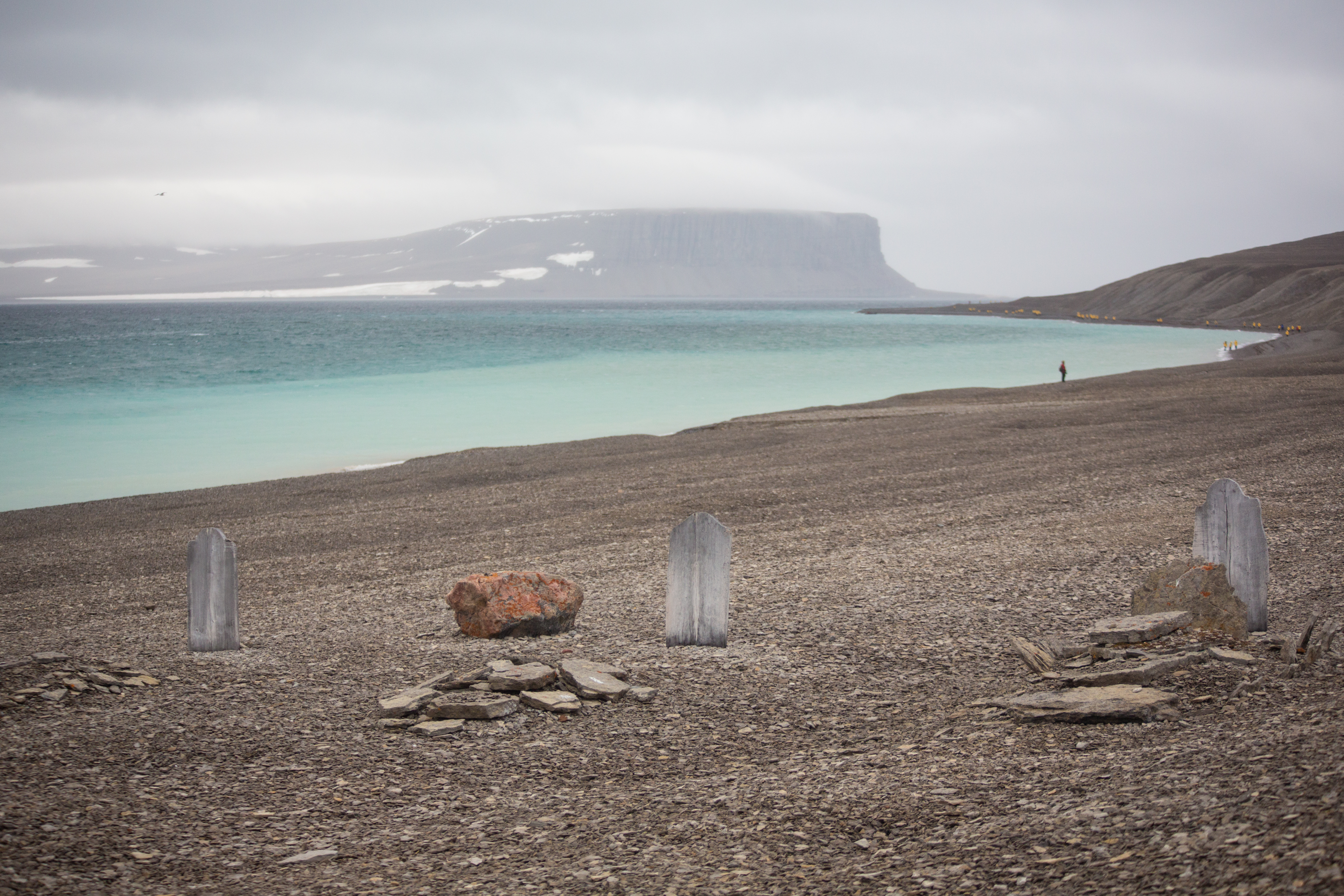
We will attempt to land at Beechey Island, a National Historic Site of Canada. Named for explorer Frederick William Beechey, the island is the final resting place of three members of Sir John Franklin’s 1845-46 Northwest Passage expedition, discovered in 1850 on a desolate raised beach. A shore visit to Radstock Bay may also be possible, home to one of the Arctic’s most impressive ancient Thule sites. Exploring the remains of subterranean houses—including whale bone supports—offers a powerful insight into how Paleo‑Inuit thrived in the Far North.
Meals: Breakfast,Lunch,Dinner
Day 12
Heart of the Northwest Passage
As we push westward into the inner reaches of Lancaster Sound, the geography narrows and the sense of remoteness deepens. Rising from the confluence of Lancaster Sound and Barrow Strait, the sheer limestone cliffs of Prince Leopold Island form one of the most significant seabird sanctuaries in the eastern Arctic. We’ll see hundreds of thousands of birds wheeling above us as still waters stretch in every horizon, one of the defining sights of a High Arctic expedition.
At the southern tip of Somerset Island, Fort Ross marks the entrance to Bellot Strait, the narrow, current-swept channel separating Somerset Island from the Boothia Peninsula and forming a critical link in the Northwest Passage. Once a Hudson’s Bay Company trading post, Fort Ross remains one of the most evocative reminders of a time when commerce, survival, and exploration converged at the top of the world.
We will attempt to land at Beechey Island, a National Historic Site of Canada. Named for explorer Frederick William Beechey, the island is the final resting place of three members of Sir John Franklin’s 1845-46 Northwest Passage expedition, discovered in 1850 on a desolate raised beach. A shore visit to Radstock Bay may also be possible, home to one of the Arctic’s most impressive ancient Thule sites. Exploring the remains of subterranean houses—including whale bone supports—offers a powerful insight into how Paleo‑Inuit thrived in the Far North.
Meals: Breakfast,Lunch,Dinner
Day 13
Heart of the Northwest Passage
As we push westward into the inner reaches of Lancaster Sound, the geography narrows and the sense of remoteness deepens. Rising from the confluence of Lancaster Sound and Barrow Strait, the sheer limestone cliffs of Prince Leopold Island form one of the most significant seabird sanctuaries in the eastern Arctic. We’ll see hundreds of thousands of birds wheeling above us as still waters stretch in every horizon, one of the defining sights of a High Arctic expedition.
At the southern tip of Somerset Island, Fort Ross marks the entrance to Bellot Strait, the narrow, current-swept channel separating Somerset Island from the Boothia Peninsula and forming a critical link in the Northwest Passage. Once a Hudson’s Bay Company trading post, Fort Ross remains one of the most evocative reminders of a time when commerce, survival, and exploration converged at the top of the world.
We will attempt to land at Beechey Island, a National Historic Site of Canada. Named for explorer Frederick William Beechey, the island is the final resting place of three members of Sir John Franklin’s 1845-46 Northwest Passage expedition, discovered in 1850 on a desolate raised beach. A shore visit to Radstock Bay may also be possible, home to one of the Arctic’s most impressive ancient Thule sites. Exploring the remains of subterranean houses—including whale bone supports—offers a powerful insight into how Paleo‑Inuit thrived in the Far North.
Meals: Breakfast,Lunch,Dinner
Day 14
Admiralty Inlet and Arctic Bay
Carved deep into northern Baffin Island, Admiralty Inlet is one of the Arctic’s longest fjords: a silent, ice-ringed channel where whale blows punctuate the stillness. Among the world’s most vital narwhal summering grounds, Zodiac cruising here may provide some of the expedition’s most unforgettable marine wildlife encounters.
The Arctic Bay area has been inhabited by Inuit for over 5,000 years. With very few visitors, the community is typically quite excited to welcome a ship. Enjoy a gathering on the outskirts of town featuring Inuit arts, cultural activities and, possibly, tastings of local cuisine shared by elders and community members.
Meals: Breakfast,Lunch,Dinner
Day 15
Admiralty Inlet and Arctic Bay
Carved deep into northern Baffin Island, Admiralty Inlet is one of the Arctic’s longest fjords: a silent, ice-ringed channel where whale blows punctuate the stillness. Among the world’s most vital narwhal summering grounds, Zodiac cruising here may provide some of the expedition’s most unforgettable marine wildlife encounters.
The Arctic Bay area has been inhabited by Inuit for over 5,000 years. With very few visitors, the community is typically quite excited to welcome a ship. Enjoy a gathering on the outskirts of town featuring Inuit arts, cultural activities and, possibly, tastings of local cuisine shared by elders and community members.
Meals: Breakfast,Lunch,Dinner
Day 16
At Sea
Enjoy the sail back across Baffin Bay where the presence of ice can lead to opportunities for polar bear sightings as well as whales and seabirds. Onboard the team will keep you engaged with presentations and wildlife watching. Guests often use sea days to take advantage of the ship’s Tundra Spa and Sauna.
Meals: Breakfast,Lunch,Dinner
Day 17
At Sea
Enjoy the sail back across Baffin Bay where the presence of ice can lead to opportunities for polar bear sightings as well as whales and seabirds. Onboard the team will keep you engaged with presentations and wildlife watching. Guests often use sea days to take advantage of the ship’s Tundra Spa and Sauna.
Meals: Breakfast,Lunch,Dinner
Day 18
Meeting the People of Sisimiut
Arriving back in Greenland, we hope to visit the community of Sisimiut, where you may enjoy locally led city tours, including a “Taste of Greenland” experience featuring samples of traditional foods. Back onboard, head to the deck to watch a traditional kayak demonstration on the water.
Meals: Breakfast,Lunch,Dinner
Day 19
Disembark at Kangerlussuaq
Today, we disembark in Kangerlussuaq, formerly known as Søndre Strömfjord, and transfer you to your charter flight to Reykjavik, where you’ll spend the night in your group hotel, both of which are included in your Charter Flight and Hotel Package.
Meals: Breakfast
Day 20
Depart Reykjavik
Today, after breakfast, make your way independently to the airport for your flight home, or continue your personal travel plans as prearranged.
Meals: Breakfast
What’s included
What’s not included
Additional information
Food
All meals while on the ship are included.
Typical meals
The ship’s galley offers good-quality service and cuisine throughout, with excellent chefs preparing international menus, including vegetarian dishes. If there is one constant on board, it is that you’ll enjoy delicious meals. While meal times may change due to landings and wildlife sightings, you’ll always be served three well-prepared meals per day. Vegetarians and vegans can be well catered for on this adventure – please inform us before departure of any special dietary requests so our local team can be well prepared.
Breakfast: Buffet style – unlimited tea and coffee, a selection of fruit juices, hot options including bacon and eggs or omelettes, a selection of bread and toast and jam/honey/marmalade, fruit and cereal.
Lunch: Three-course set meal or the occasional buffet or barbecue.
Dinner: Three courses with a starter of soup, salad or anti-pasto, a choice of three mains with at least one vegetarian and one seafood option and a dessert of sweet pudding or ice cream or fruit, tea and coffee.
Drinks: Complimentary coffee, tea, cocoa and water stations are available around the clock, while soft drinks and juices are available during meals and when the bar is open—all included in the cost of your package. Enjoy complimentary select beer, wines and select cocktails during bar service hours and dinner as part of the “Raise a Glass and Stay Connected Free” program. Premium wines and champagne are available at extra cost and can be billed to your shipboard account. The well-stocked bars on the ship are open late morning, afternoon and evening, though hours may occasionally change to accommodate the expedition schedule.
Lancaster Sound Wildlife Zodiac Safari (Tallurutiup Imanga)
Join a Zodiac safari into Tallurutiup Imanga (Lancaster Sound), one of the Arctic’s richest marine habitats. Cruise ice-fringed waters as whales, walruses, and seals feed in nutrient-laden currents, with the possibility of encountering iconic Arctic wildlife at close yet respectful range.
Guides interpret seasonal movements and ecology while you scan the pack for polar bears and, with luck, narwhal slicing the surface. The Sound’s productivity under the midnight sun makes every moment charged with anticipation.
Coburg Island Seabird Cliffs, Nirjutiqavvik NWA
Cruise beneath Coburg Island’s soaring coastal cliffs inside the protected Nirjutiqavvik National Wildlife Area. Hundreds of thousands of Brunnich’s guillemots, kittiwakes, fulmars, and black guillemots wheel overhead, their calls mingling with surf and wind.
Naturalists explain how cold currents and polynyas support immense colonies in summer. Watch the sky darken with birds returning to ledges—a kinetic portrait of Arctic avian life in one of the region’s most vital sanctuaries.
Helicopter & Zodiac Exploration of Cape Norton Shaw
Access a rarely seen coastline on a combined helicopter and Zodiac operation around Cape Norton Shaw, near 76° North. From the air and the water, witness tidewater glaciers calving into iceberg-littered seas, with blue crevasses and icefalls etched against stark headlands.
This multi-angle exploration reveals sea-ice patterns, glacier tongues, and rocky nunataks otherwise unreachable. Operations are weather-dependent, adding a spirit of true expedition to an already dramatic High Arctic setting.
Dundas Harbour RCMP Post, Devon Island
Walk among the weathered remains at Dundas Harbour, a former Royal Canadian Mounted Police outpost on Devon Island. Low buildings, graves, and scattered relics sit against open tundra and sea, a stark testament to patrols once asserting High Arctic sovereignty.
Guides share the site’s stories—from interwar operations to Cold War reoccupations—placing human endeavor within a landscape where isolation, ice, and endurance shaped every decision.
Croker Bay Glacier Cruise, Devon Island
Cruise into Croker Bay where towering glaciated walls pour down to the sea. Drift at a safe distance to watch calving ice thunder into turquoise water, sending ripples through floes dotted with resting birds and seals.
Listen for the crack and sigh of shifting ice and learn how glaciers sculpted this polar landscape. The mirror-like bay and shattered bergs offer superb photography and a tangible feel for Arctic scale.
Prince Leopold Island Seabird Sanctuary
Approach Prince Leopold Island, where sheer limestone cliffs host one of the Arctic’s largest seabird sanctuary colonies. Still waters and vertical rock faces frame endless aerial movement as guillemots and kittiwakes commute between ledges and open sea.
Expedition staff interpret feeding cycles and breeding dynamics, highlighting why this confluence of Lancaster Sound and Barrow Strait sustains such abundance during the brief polar summer.
Fort Ross & Bellot Strait Transit
Visit Fort Ross, a former Hudson’s Bay Company trading post, and position for the current-swept Bellot Strait, the slender channel linking Somerset Island and the Boothia Peninsula. The setting evokes the commercial and exploratory ambitions that once pulsed through the Northwest Passage.
Learn how tidal forces, ice, and narrow topography create challenging navigation, and why this strait became such a crucial connector in Arctic mapping and trade.
Beechey Island Franklin Expedition Graves
Step ashore at Beechey Island, a National Historic Site, to visit the simple graves of three men from the Franklin expedition of 1845–46. Bleak beaches, scattered timbers, and biting wind lend gravity to this poignant stop.
Guides trace search efforts and shifting theories that surround the expedition’s fate. The lonely setting invites quiet reflection on ambition, hardship, and the human cost of polar exploration.
Radstock Bay Thule Archaeological Site
Explore Radstock Bay, home to exceptional Thule sites where semi-subterranean houses still show whale bone supports. Walk carefully among low outlines and middens preserved by permafrost and cold, dry air.
Archaeology interprets ancient lifeways—seal hunting, communal living, and seasonal movement—revealing how Paleo-Inuit communities engineered warmth and resilience at the edge of the polar sea.
Admiralty Inlet Narwhal Zodiac Cruise
Navigate by inflatable along Admiralty Inlet, one of the Arctic’s longest fjords and prime narwhal summering grounds. Quiet Zodiac cruising maximizes chances to hear blows and glimpse tail flukes against an ice-ringed horizon.
Naturalists explain how bathymetry and currents funnel nutrient-rich waters here, supporting marine mammals and seabirds. The serenity and scale of the inlet heighten every sighting.
Arctic Bay Cultural Gathering & Local Tastings
Join residents of Arctic Bay for a gathering that showcases Inuit arts, storytelling, and community pride. Sample tastings of local cuisine shared by elders, learning how traditional foods sustain culture and health in the North.
With over 5,000 years of habitation in the region, hosts offer context on language, hunting, and seasonal rhythms, creating a warm, rarely offered window into everyday Arctic life.
Sisimiut Locally Led City Tour & “Taste of Greenland”
Explore Sisimiut on a locally led city tour that traces colorful waterfronts, historic quarters, and modern workshops before a curated Taste of Greenland introduces traditional foods and flavors.
Guides share stories of kayak heritage, fishing, and industry set against mountain-backed harbor views. Culinary samples and conversation bring Greenlandic identity into sharp, delicious focus.
Traditional Greenlandic Kayak Demonstration
Gather on deck to watch a traditional kayak demonstration as experts maneuver the Greenlandic qajaq with precision, showcasing rolls, rescues, and elegant strokes refined over centuries.
Commentary links rolling techniques to historic hunting on frigid seas and the evolution of skin-on-frame designs. The performance connects athletic grace with cultural ingenuity.
Onboard Polar Lectures & Wildlife Watch
Deepen your understanding with expert polar presentations on Arctic history and ecology, geology, and wildlife identification. Engaging talks turn the passing seascape into a living classroom.
Join the team on deck to scan horizons for seabirds and marine mammals, practicing fieldcraft with binoculars and spotting scopes. Shared sightings and real-time interpretation enrich every sea day.
Sea Kayaking in Arctic Fjords (Weather Permitting)
Glide quietly on a guided sea kayaking outing, threading through brash ice and along sculpted coastlines of ice-dotted fjords. Stable craft and small groups create an intimate vantage at water level.
This is an optional, limited-capacity activity at additional cost, bookable on tour. Offered only when conditions and permits allow, it rewards paddlers with close-to-the-water perspectives and serene, camera-ready moments.
Qikiqtarjuaq Community Visit & Inuit Artisans
Visit Qikiqtarjuaq on Broughton Island to connect with a welcoming Inuit community framed by sweeping views across the Davis Strait. Meet residents, hear contemporary perspectives on life north of the Arctic Circle, and appreciate a landscape where sea and mountains converge.
Support local artists by browsing carvings, jewelry, and textiles that reflect generations of skill. Conversations with hosts reveal cultural continuity and resilience in a place shaped by sea ice, seasonal migration, and close-knit traditions.
Mittimatalik (Pond Inlet) Community & Eclipse Sound Views
Explore Mittimatalik (Pond Inlet), looking across Eclipse Sound to the glaciated peaks of Bylot Island. Stroll the hamlet with local hosts and gain insight into daily life in one of the Canadian Arctic’s most dramatically sited communities.
Learn how Inuit culture has adapted to shifting sea ice and modern pressures while maintaining strong ties to hunting, language, and family networks. Storytelling and panoramic scenery combine for a meaningful cultural encounter.
Sam Ford Fjord Zodiac Cruise, Baffin Island
Experience a thrilling Zodiac cruise through Sam Ford Fjord, where sheer granite walls soar more than 1,500 feet straight from glassy water. Sculpted bergy bits drift past as the narrow fjord funnels wind and light, revealing shifting textures on ice and stone.
Discover a traditional Inuit hunting area stretching roughly 110 kilometers, narrowing to less than three. Scan shoreline and floes for wildlife and absorb the powerful sense of scale that defines this remote Arctic seascape.