Your itinerary
Day 1
Day 1: Begin Your Journey Over Dinner in Madrid
On your first evening in Madrid, you follow broad avenues lined with ornate façades and wrought-iron balconies as street lamps cast a soft golden glow across carved stonework. On your way to dinner, you may catch the scent of garlic and paprika from cafes and restaurant kitchens. You’ll join your Travel Director and fellow travellers at a local restaurant, sharing plates of typical madrileño food as you meet the people you’ll travel with over the next 15 days.
Meals: Dinner
Day 2
Day 2: Explore Madrid’s Old Quarter and Prado
With your Local Specialist, you’ll drive through Madrid’s narrow, winding lanes beneath granite arches and into arcaded squares, passing high convent walls, red brick and grey slate. As the route curls through the Old Quarter, you hear how Mayrit began as a ninth-century fortress and later became the seat of the Spanish court. Inside the Prado Museum, an art historian leads you through Velázquez’s silvered light and Goya’s dark intensity. Titian glows with luminous colour, while Rubens fills the canvas with muscular drama. You move nearer to the canvases, tracing brushstrokes that become satin, skin, smoke and sky.
Meals: Breakfast
Day 3
Day 3: Medieval Spain: Segovia to Salamanca
In Segovia, your Local Specialist leads you through the medieval streets, where patterned sgraffito curls across façades and Romanesque towers punctuate the rooftops. At the Alcázar, you pause beneath conical turrets poised above two river valleys, where wooded slopes descend towards ribbons of water below. Then you look along the aqueduct’s two-tiered sweep, its unmortared blocks stacked with astonishing precision. Heading west, you watch Ávila’s battlements and round towers encircle the old city like a pale stone crown. In Salamanca, voices echo beneath Plaza Mayor’s Baroque colonnades as you study the carved medallions overhead. Beyond the square, you admire cathedral pinnacles and the intricate stonework of the 16th-century university buildings, washed in sandstone shades of honey and rose.
Meals: Breakfast
Day 4
Day 4: Northern Portugal: Porto and the Douro
Crossing into Portugal, you’ll arrive in Porto, where tiled buildings line the steep banks of the Douro. In Vila Nova de Gaia, you enter the wine stores and pass cask after cask, the faint scent of oak deepening along the corridors. You lift each glass, breathe in its aroma and taste tawny and vintage Ports side by side, comparing their colour, depth and finish. Returning to Porto, you follow the riverfront past multicoloured houses and churches covered in blue-and-white azulejos. Ahead, the double-decked iron span of Luiz I Bridge curves across the Douro, linking Porto with Gaia.
Meals: Breakfast,Dinner
Day 5
Day 5: Journey Through Fátima, Óbidos and Lisbon
At Fátima, you’ll enter the great prayer area, where candle flames flicker beside the Chapel of Apparitions and pilgrims pause as they run rosaries through their fingers. Within Óbidos’s walls, whitewashed houses trimmed in blue and yellow crowd winding passageways, with flowers tumbling from windowsills. You sip locally made ginjinha, letting the sweet-tart warmth of sour cherry rest on your tongue before continuing to Lisbon. This evening, you may choose an Optional Experience at a family-run restaurant, sharing traditional Portuguese seafood as the city settles into night.
Meals: Breakfast
Day 6
Day 6: Lisbon Highlights: Baixa, Belém and Beyond
Travelling through Lisbon’s spacious Lower Town, you’ll pass hand-set black-and-white calçada mosaics on the way to Pombal Square with your Local Specialist. You’ll taste Pastéis de Belém, biting through its crisp pastry into silky custard, made to a secret recipe guarded since 1837. Nearby, the Monument to the Discoveries rises like a caravel setting out to sea, while Belém Tower’s limestone battlements stand at the river’s edge. Inside the National Coach Museum, you admire royal gala vehicles from the 16th to the 19th centuries, rich with gilded carvings, painted panels and deep red velvet. Your afternoon is free, or you may choose an Optional Experience along the Portuguese Riviera to Cascais and Estoril, where surfers ride the Atlantic waves and grand hotels frequented by royalty.
Meals: Breakfast
Day 7
Day 7: Journey From the Algarve to Seville
Crossing into the Algarve, you pause for lunch in a coastal town, where you may notice intricately pierced chimneys rising from terracotta roofs. Over lunch, you sit among whitewashed walls, tiled doorways and carved wooden shutters. Beyond the Spanish border, you watch cork-oak meadows unfurl into broad plains beneath an open sky. By late afternoon, you arrive in Seville beside the Guadalquivir, with the evening yours to enjoy.
Meals: Breakfast
Day 8
Day 8: Gothic Grandeur and Flamenco: Seville in Full
Enjoy a relaxed start, or choose between two Optional Experiences: admire the architectural elegance of Pilatos Palace, or explore the Alcázar of Seville and the graceful pavilions of nearby Plaza América. Later, your Local Specialist leads you through Santa Cruz’s shaded alleys and orange-tree plazas. Inside Seville Cathedral, the world’s largest Gothic cathedral, you lift your gaze through ranks of stone columns to ribbed vaults and jewel-coloured glass, then stand before the tomb of Christopher Columbus. In the evening, your MAKE TRAVEL MATTER Experience is a private flamenco lesson, where guitar notes fill the studio, handclaps mark the beat and you learn the sweeps and turns of the traditional Spanish dance. Then watch flamenco take over the room in a passionate live performance.
Meals: Breakfast
Day 9
Day 9: Explore Gibraltar and the Costa del Sol
At Gibraltar, a British Overseas Territory at the southern tip of the Iberian Peninsula, you explore the limestone Rock with your Local Specialist. Inside St Michael’s Cave, the cavern answers each sound with a low echo as stalactites and stalagmites glow around you. Along the Costa del Sol, the Mediterranean slips in and out of sight between palms, marinas and pale resort hotels as you travel through coastal enclaves long associated with film stars and luxury holidays.
Meals: Breakfast
Day 10
Day 10: Enjoy a Leisurely Costa del Sol Day
With the Costa del Sol yours for the day, you can swim in the glistening blue-green Mediterranean, follow the promenade or choose a table near the shore, where the scent of grilled fish, lemon and olive oil drifts from local restaurants. You might also head to Málaga, Picasso’s birthplace, where family paintings and 19th-century furnishings fill the rooms of his childhood home.
Meals: Breakfast,Dinner
Day 11
Day 11: Andalucía’s Heart: Alfarnatejo and Granada
Among the mountains of Alfarnatejo, you’ll arrive in a village of fewer than 500 people, where pale houses surround the 18th-century Iglesia del Santo Cristo de Cabrilla. At the region’s oldest olive grove, you visit a rural mill and taste a selection of oils soaked into thick, locally made farmhouse bread. In small groups, you enter a local family’s home for lunch, passing dishes of fresh regional produce around the table and sharing the flavours of Andalucía with your hosts. In Granada, your Local Specialist leads you through the Alhambra, a 13th-century Moorish citadel of intimate courtyards, flowing fountains and stone carved into patterns as delicate as lace.
Meals: Breakfast,Lunch
Day 12
Day 12: Valencia Highlights: Old City and Paella
Entering Valencia, you’ll pass the Old City’s ancient gates before the white curves of the City of Arts and Sciences shimmer across long pools of water. In your free time, you might visit the Cathedral and El Miguelete, listening to its great bell mark the hour above the rooftops, or sit with a drink as cafe conversation fills the square. At a family-run restaurant in the Old City, you meet the chef and follow the cooking demonstration as a rich, savoury aroma rises from the wide paella pan. At dinner, you taste the finished dish, warm from the pan.
Meals: Breakfast,Dinner
Day 13
Day 13: Castle, Cellars and Coast: Barcelona Bound
North along the coast, you reach Peñíscola, where a Templar castle crowns a rocky headland and the Mediterranean spreads beneath its pale walls. You may recognise its ramparts from the film El Cid. At Sant Sadurní d’Anoia, you descend into the cava bodegas, where cool vaulted cellars stretch beneath the town and bottles rest in long, shadowed rows. Over a light lunch, you lift a glass and taste cava, its fine bubbles bright on your tongue as you learn how the wine gains its sparkle. Then the journey continues along the Costa Dorada to Barcelona.
Meals: Breakfast,Lunch
Day 14
Day 14: Explore Barcelona and Gaudí’s Sagrada Família
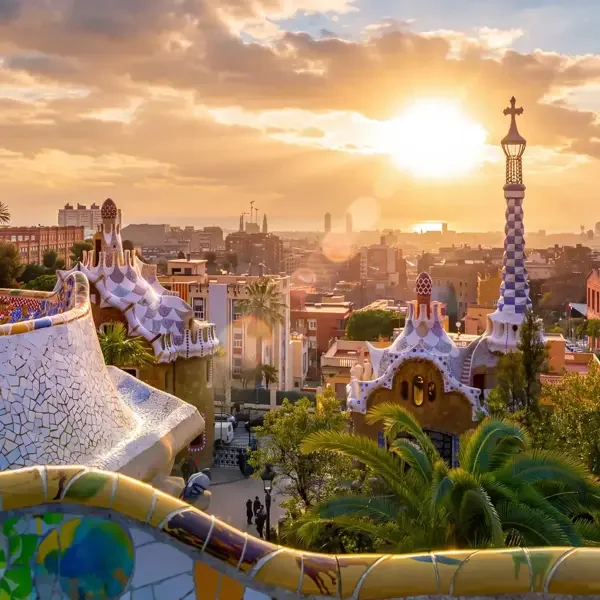
With your Local Specialist, you’ll travel along Passeig de Gràcia, where sculptural street lamps rise beside Modernist buildings whose wrought-iron balconies twist into intricate patterns above coloured tiles and carved stone. Through the Eixample district, you reach Gaudí’s Sagrada Família*. Inside, you wander between giant columns branching like trees, then lift your gaze to soaring vaults as stained-glass colour spills across the central nave. At a local restaurant, join your fellow travellers for dinner, raising a glass to new friendships and two weeks across the Iberian Peninsula. *As construction of the Sagrada Família moves closer to completion, access may occasionally be restricted due to special masses, pilgrim visits or official ceremonies. If tickets are unavailable during your tour, you’ll visit the Hospital de Sant Pau, a remarkable example of Catalan Art Nouveau designed by Domènech i Montaner. You’ll then join your Local Specialist to admire the extraordinary exterior of Gaudí’s basilica.
Meals: Breakfast,Dinner
Day 15
Day 15: Say Farewell to Spain and Portugal
After 15 days across Spain and Portugal, you transfer from Barcelona to Madrid with new friendships, memories of grand cities, shared tables and extraordinary art.
Meals: Breakfast
What’s included
What’s not included
Additional information
Dining Summary
- 5 Dinner (D)
- 14 Breakfast (B)
- 2 Lunch (L)
How You'll Travel
- Business class coach with extended leg room
- Top-rated dining, from farm-to-table to local restaurants
- 4 & 5-star stays
Authentic Dining
- Madrid: Join your Travel Director at 18:00 for dinner in a local restaurant and get to know your fellow travellers over a beautiful evening of delicious food and wine.
- Vila Nova de Gaia: Visit the wine cellars of Vila Nova de Gaia, the centre of port ageing and storage since the 18th century. You’ll learn how barrel conditions, blending practices and long-standing shipper traditions define styles such as Ruby, Tawny and Vintage. Examine the link between Douro Valley production and the export houses established along this southern bank of the Douro River.
- Lisbon: In Belém, try pastéis de Belém: crisp layers of pastry encasing custard complete with a dusting of cinnamon. See how the pastries follow a closely guarded recipe, and are still prepared in the same bakery that has produced them since 1837.
- Torremolinos: Visit a rural mill outside Torremolinos to taste olive oils pressed from olives grown on trees that have stood in this region for generations. Try a few varieties with freshly baked bread and hear how harvest timing, soil and tree age influence the flavour.
- Alfarnatejo: Share a home-cooked lunch with a local family in Alfarnatejo. Expect simple Andalusian dishes, seasonal ingredients and an easy conversation around the table. It’s a chance to see how meals are prepared and shared in this part of rural Spain, and to hear stories about the town from the people who live there.
- Valencia: Spend time with a chef in a family-run kitchen to see how Valencian paella is built from its base — the heat of the pan, the saffron stock, the type of rice and the order ingredients go in. Afterwards, sit down to eat the finished paella, tasting the layered flavour and socarrat crust you’ve just watched being made.
- Barcelona: In Sant Sadurní d’Anoia, you’ll visit a local bodega set among the vineyards that have supplied cava houses since the 19th century. A light lunch is paired with a tasting of cavas made using the traditional method, showing how bottle fermentation and ageing on the lees influence the wine’s structure and character.
- Barcelona: Your final evening brings the group together around the table in Barcelona. It’s a chance to share dinner in the Catalan capital, reminisce over the days you’ve travelled and mark the end of your journey across Spain and Portugal with one last meal together.
Premium Experience
- Madrid: Visit the Prado Museum with an art historian who places key works within their historical setting. With your historian’s expert guidance, you’ll examine paintings by Velázquez, Goya, Titian and Rubens, noting their connection to royal patronage and the broader European tradition. Learn how the museum, founded in 1819, became a principal repository for Spain’s royal collections and major works from across the continent.
- Granada: Visit the Alhambra Palace with a Local Specialist and walk through its courtyards, carved plasterwork and palace rooms from the Nasrid period. You’ll see how water channels, gardens and intricate detail define the complex, and how this hilltop site shaped Granada’s cultural and political story for centuries.
Segovia Historic Center, Alcázar and Roman Aqueduct Walk
In Segovia, join a guided walk through medieval streets adorned with sgraffito facades before you view the Alcázar, poised above two river valleys. Continue to examine the Roman aqueduct, its unmortared granite blocks rising in a double tier across the city.
Set at the crossroads of Roman, medieval and royal Spain, Segovia’s Old Town and Aqueduct are UNESCO-listed for good reason—an open-air lesson in engineering prowess and power expressed through stone.
Ávila City Walls Photo Stop
Pause beyond Segovia to pause for photos and reflection at the fabled ramparts of Ávila’s medieval walls, a near-complete enceinte of towers and battlements crowning a Castilian hilltop.
Raised between the 11th and 12th centuries, these granite defenses encircle churches, convents and quiet lanes, preserving one of Spain’s most evocative silhouettes—an enduring symbol of faith and fortification on the high meseta.
Salamanca Historic Center & University District Walk
Explore Salamanca’s center with a Local Specialist, stepping beneath the arcades of Plaza Mayor before tracing student life through courtyards of the University of Salamanca. Admire facades alive with Plateresque carving in the city’s warm sandstone.
One of Europe’s earliest universities, Salamanca fostered scholars from the 13th century onward. Its architecture and academic spirit lend the town a golden hue at dusk and a hum of conversation year-round.
Port Wine Cellars Tasting in Vila Nova de Gaia
Cross the Douro to visit the wine cellars of Vila Nova de Gaia, the historic home of port shippers since the 18th century. Among oak casks and cool corridors, sample port wines—Ruby, Tawny and Vintage—comparing aroma, color and finish.
Learn how steep Douro Valley vineyards, barrel aging and blending traditions shape style and character. This guided tasting decodes a fortified classic deeply tied to Porto’s maritime and mercantile past.
Porto’s Ribeira Walk & Dom Luís I Bridge Views
Walk Porto’s Ribeira waterfront where azulejo-clad churches and stacked, colorful houses lean toward the river. Across the water, the double-decker span of the Dom Luís I Bridge sweeps between Porto and Gaia.
Designed by engineer Théophile Seyrig, the ironwork arch frames boats and tiled facades in ever-shifting light. The steep lanes, laundry lines and café chatter reveal a working city in constant dialogue with the Douro.
Fátima Sanctuary and Chapel of the Apparitions
Explore the Sanctuary of Fátima, a major pilgrimage site since 1917. Walk the broad esplanade to the Basilica of Our Lady of the Rosary and pause at the Chapel of the Apparitions, where candles flicker beside votive offerings.
The complex’s measured spaces and white stone evoke a quiet, contemplative mood. Your visit touches on both religious devotion and the social history that transformed Fátima into a symbol of faith for millions.
Óbidos Walled Town Walk & Ginjinha Tasting
Walk the medieval walls of Óbidos and wind through lanes of whitewashed houses trimmed in blue and yellow. In a tiny shopfront, sample ginjinha, the region’s sour-cherry liqueur traditionally poured into small cups.
Granted as a royal wedding gift in the 13th century and layered over Roman roots, Óbidos charms with flower-filled windows, intimate chapels and views that seem made for painters and poets alike.
Lisbon Baixa & Belém Highlights with National Coach Museum
Explore the Baixa district rebuilt after the 1755 earthquake, then continue riverside to Belém Tower and the Monument to the Discoveries. Along the way, visit the National Coach Museum to see gilded ceremonial carriages and taste Pastéis de Belém fresh from the oven.
From Pombaline town planning to maritime monuments, Lisbon’s story unfolds in stone, sails and pastry. Your Local Specialist connects urban design to empire, and craftsmanship to courtly ceremony.
Seville Cathedral Entry & Santa Cruz Quarter Walk
In Seville, join a guided walk through Santa Cruz, a maze of courtyards, orange trees and tiny plazas. Then step inside Seville Cathedral, the world’s largest Gothic church, to gaze up at ribbed vaults and view the Giralda, once the minaret of an Almohad mosque.
This layered site reveals how faith and architecture intertwined as Islamic, Mudéjar and Christian aesthetics shaped Andalusia’s most storied city.
MAKE TRAVEL MATTER: Flamenco Lesson and Performance in Seville
At the Cristina Heeren Foundation, learn a few flamenco steps as guitar, palmas and cante set the tempo. After your private introduction, watch a live performance that channels the art’s intensity and grace.
Your visit supports training for young artists and aligns with SDG 4: Quality Education, preserving a living Andalusian tradition through structured study in guitar, singing and dance.
Rock of Gibraltar Tour with St. Michael’s Cave
With a Local Specialist, explore the Rock of Gibraltar, one of the mythic Pillars of Hercules. Descend into St. Michael’s Cave, where stalactites and stalagmites glow in vaulted chambers, and see the Barbary Apes that roam the Upper Rock.
Views stretch to the meeting of the Atlantic and Mediterranean. British, Spanish and Moorish influences converge here, etched into fortifications, place names and maritime lore.
Alfarnatejo Olive Mill Visit & Home-Hosted Lunch
In a whitewashed mountain village, visit a rural olive mill to learn how harvest timing and tree age influence flavor, then sample extra-virgin olive oils with rustic bread. Afterwards, share a home-hosted lunch with a local family.
Simple Andalusian dishes, seasonal produce and warm conversation reveal rhythms of rural life that rarely appear on city itineraries—hospitality grounded in tradition and everyday pride.
Alhambra Palace and Generalife Gardens Guided Tour
Explore the Alhambra with a Local Specialist, wandering Nasrid palaces where carved stucco ripples like lace and water murmurs through courtyards. Then stroll the Generalife gardens, a hilltop retreat of rills, cypresses and fragrant blooms.
Rising above Granada since the 13th century, this Moorish citadel embodies a world of geometry, poetry and measured light—an enduring testament to Andalusia’s Islamic golden age.
Valencia Old City Orientation & Paella Demonstration Dinner
Gain your bearings in Valencia’s Old City, noting medieval gateways and lively squares before settling into a family-run kitchen to watch a paella demonstration unfold in a wide, gleaming pan.
As saffron stock simmers and socarrat forms, you’ll taste authentic Valencian paella—a dish born of huerta fields and Albufera’s shores—paired with stories of rice, fire and patience from the chef.
Peñíscola Castle Stop & Old Town Stroll
See Peñíscola’s 14th-century castle rising from a limestone headland that divides the coast. Walk the cobbled lanes within the old walls as the Mediterranean shimmers below.
Once held by the Knights Templar and later a papal stronghold, the fortress has starred on screen in epic cinema. Sea breezes, whitewashed houses and sweeping ramparts set a cinematic stage of their own.
Cava Cellars of Sant Sadurní d’Anoia with Light Lunch
In the Penedès heartland, visit the cava cellars of Sant Sadurní d’Anoia. Descend into cool tunnels where bottles rest on lees, then sample traditional-method cavas whose fine bubbles reveal aging and blend.
A light lunch pairs local flavors with the region’s signature sparkler. From riddling racks to disgorgement, you’ll connect each step of craftsmanship to what you taste in the glass.
Barcelona City Highlights & Sagrada Família Entry
Explore Barcelona with a Local Specialist, tracing Passeig de Gràcia’s Modernista facades and the crisp Eixample grid before you enter the Sagrada Família. Inside, soaring columns branch like trees as stained-glass light washes the nave.
Gaudí’s evolving basilica distills nature into structure and color. On some departures, interior access may be replaced by an in-depth visit to the Hospital de Sant Pau with an exterior viewing of the basilica.
Barcelona Farewell Dinner
Gather in the Catalan capital to raise a glass with your fellow travellers and share a farewell dinner. Expect seasonal produce, Mediterranean flavors and a touch of Barcelona’s creative spirit at the table.
It’s a relaxed, celebratory close to two weeks across Iberia—time to trade stories, compare favorite moments and savor the city’s evening atmosphere one last time.
Lisbon Traditional Seafood Dinner (Optional)
One evening, book an optional traditional seafood dinner at a family-run tasca. From fresh clams to taste dishes like cataplana simmered with herbs and peppers, the menu celebrates Portugal’s Atlantic pantry.
Local wines and easy conversation round out the experience. This additional-cost outing is bookable on tour and showcases Lisbon’s beloved habit of lingering over simple ingredients cooked with care.
Portuguese Riviera: Cascais & Estoril (Optional)
Explore the Portuguese Riviera on a coastal excursion to stroll Cascais’ waterfront and see Estoril’s grand avenues and gardens. Atlantic swells, sandy coves and stately villas frame a leisurely escape from the city.
Once a royal refuge and wartime haven, the area blends beach life with Belle Époque elegance. This additional-cost experience is bookable on tour and typically includes time for photos and a seaside pause.
Seville Royal Alcázar & Plaza de América (Optional)
Visit the Royal Alcázar of Seville on an optional guided tour, admiring Mudéjar tiles, carved ceilings and perfumed patios. Continue to admire Plaza de América, with elegant 1929 pavilions set beside leafy gardens.
From Islamic palace to Christian court, the Alcázar distills centuries of Andalusian artistry. This additional-cost experience is bookable on tour and deepens your architectural view of the city.
Seville’s Casa de Pilatos (Optional)
Discover Casa de Pilatos, a Renaissance-Mudéjar palace filled with sculpture, tapestries and azulejos. Wander tiled courtyards and intimate gardens where fountains cool the air and stonework glows in patterned detail.
This ducal residence reveals a private side of Sevillian grandeur. The additional-cost visit is bookable on tour and rewards lovers of design and decorative arts with layered textures and quiet corners.
Málaga Visit & Picasso Birthplace Museum (Optional)
Consider a coastal jaunt to visit Málaga’s historic center, from cathedral facades to café-lined squares, and step inside Picasso’s Birthplace Museum to see period rooms and early works tied to the artist’s formative years.
Port promenades, palm-fringed avenues and a buoyant Andalusian mood frame this additional-cost outing, bookable on tour, that blends art history with a taste of everyday Málaga life.
Operated By
Insight Vacations
Madrid Welcome Dinner in the Old Quarter
Begin your journey in the capital as you meet your Travel Director and companions to share a welcome dinner at a well-loved local restaurant. Expect seasonal tapas and Castilian favorites paired with Spanish wines as the evening glow settles over arcaded plazas and wrought-iron balconies.
Set within historic Habsburg Madrid, this convivial first night offers a tasteful primer on madrileño dining culture—unhurried courses, lively conversation and the city’s talent for turning simple ingredients into richly satisfying dishes.
Madrid Old Quarter Orientation
Join a guided walk through the compact lanes of Habsburg Madrid, where terracotta facades, cobbles and arcades frame daily life. Trace the evolution from a ninth-century fortress to royal capital as you pass intimate squares and traditional taverns near grand civic buildings.
Hear how the street grid, markets and monasteries shaped the early city. Highlights often include emblematic corners around Plaza Mayor, revealing a layered urban story that still anchors Madrid’s historic heart.
Prado Museum Masterpieces with an Art Historian
Step inside the Prado Museum with an expert guide to stand before works by Velázquez, Goya, Titian and Rubens. Move closer to study brushwork that becomes satin, skin and shadow, and learn how royal patronage shaped one of Europe’s great collections.
Founded in 1819, the Prado charts Spanish and European art from Renaissance to Romanticism. Your historian frames each canvas within its era, deepening appreciation for technique, symbolism and the politics behind the picture.