Your itinerary
Day 1
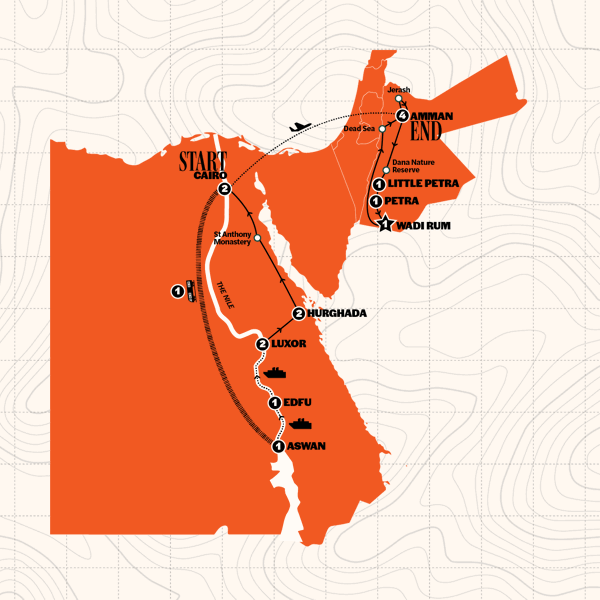
Day 1: Cairo
Welcome to Egypt. Head out for a welcome dinner at a local restaurant and get to know the group.
Meals: Dinner
Day 2
Day 2: Cairo to Overnight Train
Take a guided tour of the Pyramids, the Sphinx and the Valley Temple, then visit the Grand Egyptian Museum. Board the overnight train to Aswan and have a simple dinner onboard.
Meals: Breakfast,Dinner
Day 3
Day 3: Nile Cruise (Aswan)
Arrive in Aswan and stroll along the Nile, then take a traditional wooden felucca ride. Board the Nile cruise, which will be home for the next three nights.
Meals: Breakfast,Lunch,Dinner
Day 4
Day 4: Nile Cruise (Aswan to Edfu)
Choose an optional visit to Abu Simbel or explore Aswan at your own pace. Sail to Kom Ombo and visit its temple, or stay aboard the boat, which has a pool. In the afternoon, sail toward Edfu.
Meals: Breakfast,Lunch,Dinner
Day 5
Day 5: Nile Cruise (Edfu to Luxor)
Sail toward Luxor. Explore the historic town, then enjoy a free evening.
Meals: Breakfast,Lunch,Dinner
Day 6
Day 6: Luxor
Visit the Valley of the Kings, the Colossi of Memnon and Hatshepsut Temple. Take an included bike tour of Luxor’s West Bank with local guides. An optional guided tour of Karnak and Luxor Temples is available.
Meals: Breakfast
Day 7
Day 7: Luxor to Hurghada
Travel from Luxor to Hurghada, stopping at a Bedouin settlement for a jeep safari and traditional lunch. Arrive in Hurghada, a beach town on the Red Sea.
Meals: Breakfast,Lunch
Day 8
Day 8: Hurghada
Spend the morning at leisure: take an optional Red Sea cruise, snorkel, sunbathe or relax. Later, leave Hurghada and make your way back toward Cairo.
Meals: Breakfast
Day 9
Day 9: Hurghada to Cairo via St Anthony Monastery
Travel from Hurghada through desert landscapes to St Anthony Monastery, set in a desert oasis. Stop for lunch at a local restaurant before continuing to Cairo. If the church is closed for religious holidays, take a walk around town instead. Check in on arrival; the evening is free.
Meals: Breakfast,Lunch
Day 10
Day 10: Cairo to Amman
Fly from Cairo to Amman. Meet the group and head out for dinner at a local restaurant.
Meals: Breakfast,Dinner
Day 11
Day 11: Amman
After breakfast, take a city tour with a Local Guide, visiting the Citadel, Amphitheatre and Archaeological Museum. Visit the Iraq Al-Amir Women Association for a hands-on local activity and lunch.
Meals: Breakfast,Lunch
Day 12
Day 12: Amman via Jerash
Travel north from Amman and explore Jerash. Have lunch at Bait Al-Khairat, then return to Amman in the afternoon for free time.
Meals: Breakfast,Lunch
Day 13
Day 13: Amman to Little Petra via Dana Nature Reserve
Travel south and hike the Shaq Al-Reesh Trail through Dana Nature Reserve. Have a packed lunch during the walk. Continue to Little Petra and settle in at Ammarine Camp for a Bedouin-style dinner and an overnight stay in the desert.
Meals: Breakfast,Lunch,Dinner
Day 14
Day 14: Little Petra to Petra
After breakfast, hike the backdoor route from Little Petra into Petra, then continue exploring the site and enter through the main gates.
Meals: Breakfast
Day 15
Day 15: Petra to Wadi Rum
After breakfast, travel south from Petra. Take a two-hour Bedouin jeep ride through Wadi Rum, stopping at Siq Um Tawaqi, ancient inscriptions and viewpoints. Have dinner and spend the night at a desert camp.
Meals: Breakfast,Dinner
Day 16
Day 16: Wadi Rum to Amman via Dead Sea
After breakfast, drive north from Wadi Rum. Stop at a resort by the Dead Sea for lunch and time to float, then return to Amman. Optional dinner at a local restaurant.
Meals: Breakfast,Lunch
Day 17
Day 17: Amman
Breakfast in Amman; the Jordan portion of the trip comes to an end.
Meals: Breakfast
What’s included
What’s not included
Additional information
Cairo Welcome Dinner
Share a welcome dinner at a local Cairo restaurant and meet the travellers joining you across Egypt and Jordan. It is a relaxed chance to exchange introductions over a meal rather than a formal sightseeing event.
Cairo’s dining tables offer a first taste of the capital’s sociable energy. The restaurant and menu are not specified, but the shared meal and conversation make this an included start to the journey.
Pyramids of Giza, Great Sphinx & Valley Temple
Explore the Pyramids of Giza, Great Sphinx and Valley Temple on a guided visit across the Giza Plateau. Your Trip Manager shares the stories behind these monumental royal tombs, their construction and the beliefs that shaped them.
Stand before the limestone pyramids built for Old Kingdom pharaohs and see the Sphinx beside the surviving remains of their ceremonial landscape. Ancient engineering and ideas about the afterlife give this visit depth beyond its familiar skyline.
Grand Egyptian Museum
Visit the Grand Egyptian Museum near the Giza Plateau for a close look at Egypt’s ancient past. Explore displays of artefacts that bring pharaonic craftsmanship, daily life and royal ceremony into focus, including treasures associated with Tutankhamun.
Designed on a vast scale to house and interpret Egypt’s archaeological collections, the museum offers a different perspective from the monuments outside: objects made, used and treasured by people who lived within that history.
Aswan Felucca Sail
Sail the Nile at Aswan aboard a traditional wooden felucca. Sit back as the boat catches the breeze and watch river life unfold along the banks, with a quieter, water-level view of the city.
Feluccas have long been part of travel on the Nile. Their simple design and unhurried movement make this a distinctive way to experience Aswan’s relationship with the river, away from the pace of the streets and larger cruise vessels.
Three-Night Nile Cruise
Cruise the Nile for three nights between Aswan and Luxor, with river views and a sun deck aboard your vessel. Watch cultivated banks, riverside settlements and open stretches of water from a comfortable base as the landscape changes around you.
The Nile has connected the towns and temples of Upper Egypt for millennia. Spending several nights on the water gives you time to notice the contrast between green riverbanks and the desert beyond, rather than seeing the river only in passing.
Temple of Kom Ombo
Visit the Temple of Kom Ombo beside the Nile and explore its unusually symmetrical, double-temple layout. One side honours Sobek, the crocodile god, while the other is dedicated to the falcon-headed Horus the Elder.
Paired courts and sanctuaries reveal how two cults shared one sacred site. Look closely at the carved walls for a sense of the rituals and imagery of ancient Egyptian religion. The temple visit is included; travellers may instead choose to remain aboard the cruise boat.
Bedouin Desert Jeep Safari & Traditional Lunch
Ride by 4×4 across open desert terrain and visit a Bedouin settlement on the journey towards Hurghada. The off-road outing combines wide desert views with an opportunity to learn about local life from your hosts.
Gather for a traditional barbecue lunch as part of the visit. The meal and conversation give the safari a cultural dimension alongside the movement and scenery: a chance to spend time in a desert setting rather than simply drive through it.
Monastery of St Anthony
Visit the Monastery of St Anthony, set in a desert oasis near Egypt’s Red Sea coast. Explore the historic complex and its quiet courtyards, surrounded by the stark landscape that has shaped its sense of seclusion for centuries.
Founded in the fourth century, the monastery is closely associated with the early Christian monastic tradition. Ancient walls amid open desert make the setting distinctive. If the church is closed for a religious holiday, the planned visit is replaced by a walk around town.
Iraq Al-Amir Women’s Co-operative Visit & Lunch
Visit the Iraq Al-Amir Women’s Co-operative Society for a hands-on local activity and a lunch of Jordanian specialities. Learn about the work of this TreadRight-supported organisation and the opportunities it creates for women in the community.
The visit centres on skills, food and personal connection rather than sightseeing alone. Spending time at the co-operative offers insight into how local initiatives support women’s financial independence while sharing traditions with visitors.
Ancient City of Jerash
Explore the ancient city of Jerash, walking among colonnaded streets and monumental remains. See landmarks including Hadrian’s Arch, the Oval Forum and the Corinthian columns of the Temple of Artemis.
Jerash flourished under Roman rule, and its surviving urban spaces make the scale of that city tangible. Stone-paved routes and ceremonial architecture offer more than isolated ruins: they let you picture how people moved, gathered and worshipped here.
Bedouin-Style Dinner at Little Petra
Gather for a Bedouin-style dinner at Ammarine Camp near Little Petra, sharing local flavours around the table. This hosted meal brings a communal element to the desert-camp stay.
With sandstone country nearby and a quieter setting than Jordan’s cities, the experience is as much about its surroundings as its food. A shared table beneath desert skies offers a chance to settle into the atmosphere and connect with fellow travellers.
Dead Sea Float & Resort Lunch
Pause at the Holiday Inn Dead Sea for lunch and time in the water. Lean back and float in the exceptionally salty lake, an experience that feels quite different from an ordinary swim.
Set in the Jordan Rift Valley, the Dead Sea is known for its high salinity and low-lying shores. Effortless floating against a stark landscape is the defining moment of this included stop, with resort facilities providing a comfortable base for the visit.
Red Sea Cruise from Hurghada
Choose an optional cruise on the Red Sea from Hurghada for views of the coast from the water. A boat outing offers a different perspective on this seaside destination, away from its beaches and waterfront streets.
The Red Sea’s clear water and desert-backed shoreline give the cruise its scenic appeal. Specific stops and onboard activities are not detailed in the itinerary, so this is best compared as a time-on-the-water experience. It is at additional cost and bookable on tour.
Operated By
Contiki
Dining Summary
- 8 Dinner (D)
- 16 Breakfast (B)
- 9 Lunch (L)
Included Experience
- Cairo: Visit Egypt’s most iconic ancient sites in one stop: the Pyramids of Giza, the Great Sphinx, and the Valley Temple. Your Trip Manager will guide you around the plateau, sharing the stories behind how these monuments were built and what they meant to the people who created them. Think: pharaoh power to afterlife beliefs and the engineering that still impresses today.
- Cairo: The world’s largest archaeological museum complex is no joke. You’ll find 100,000 artifacts here (including King Tut’s ENTIRE treasure collection). You don’t wanna miss this one…
- Aswan: Spend a few nights aboard a river cruise – with views out over the Nile and a sun deck on board.
- Aswan: Sit back and chill as you drift down the famous river on a traditional felucca sailing boat
- Kom Ombo: Explore this seriously cool double temple with a perfectly symmetrical layout. One side is dedicated to Sobek (the crocodile god), the other to Horus (the falcon god) — two temples in one, and twice the ancient intrigue.
- Luxor: Grab your camera and explore one of the world’s most famous archaeological sites. See the tomb of Tutankhamun from the outside (with the option to add on exploring it from the inside!) and many other Egyptian pharaohs.
- Hurghada: Check out these towering Pharaoh statues. They’ve stood guard since 1350 BC, even surviving natural disasters. And apparently one even ‘sings’ in the wind.
- Luxor: Get ready to see Luxor on two wheels. We’ll cruise past epic monuments and historic spots with stories that bring the place to life. The best bit? You’ll meet local youth communities along the way, so you can swap hellos, hear real stories, and ride away with more than just photos
- Hurghada: Buckle up for a 4×4 ride across open desert terrain, chasing big views and off-road thrills. You’ll visit a Bedouin settlement to learn about local life, then refuel with a barbecue lunch served up the traditional way. Sand, stories, and seriously good feeds.
- Cairo: Step into history with a visit to the 4th-century Monastery of St Anthony, set in a desert oasis that feels worlds away from everything. Ancient walls, quiet courtyards, and wide-open desert all around — peaceful, powerful, and seriously atmospheric.
- Amman: Explore Amman with a Local Guide, taking in the Citadel and Archaeological Museum before stepping inside the city’s ancient Amphitheatre and Folklore Museum. A solid intro to the layers, stories, and everyday rhythm of Jordan’s capital.
- Amman: Visit the TreadRight-supported Iraq Al-Amir Women’s Co-operative Society to see the work they are doing to make local women financially independent. Plus, you’ll enjoy a delicious lunch of local specialties.
- Jerash: Get your Indiana Jones hat on and tour this ancient city. See the 2nd Century Hadrian’s Arch, Corinthian Columns at Temple of Artemis and the Oval Forum Colonnade.
- Jerash: Sit down to a home-style Jordanian meal featuring dishes like maglouba, mansaf, kabsah, and imsakhan made with locally grown sumac, all served family-style. The restored stone house dates back to 1881 and once brought the local community together. Today, it’s a women-led social enterprise supporting local women and young people through food and community collaboration. Expect generous flavours, shared stories, and a setting rooted in heritage, empowerment, and connection.
- Dana Nature Reserve: Head out on an easy hike through the Dana Nature Reserve, following the Shaq Al-Reesh Trail for a few relaxed hours. Expect winding paths through rocky canyons, wide valley views, and plenty of chances to slow down and take it all in. Easygoing, scenic, and well worth the steps.
- Petra: Hike from Little Petra into Petra via the quieter backdoor route, following desert paths framed by sandstone cliffs and wide-open views. A slower, more scenic approach that builds the anticipation before stepping into the main site.
- Petra: It’s an archaeology treasure trove! Grab your camera and get to know the ‘rose city’: one of the seven Wonders of the World.
- Wadi Rum: Settle in for a desert stay with proper comfort at Amber Camp. Think: spacious rooms with aircon, private bathrooms and your very own balcony for those mountain-and-sand views. Plus, there’s a sun terrace and garden space.
- Wadi Rum: Explore Wadi Rum by 4×4 on a two-hour Bedouin-led jeep ride, weaving through desert landscapes and stopping at places like Siq Um Tawaqi, ancient rock inscriptions, and iconic viewpoints along the way. Big spaces, deep history, and desert scenes that don’t need a filter.
- Dead Sea: We’ll stop at the Holiday Inn Dead Sea for lunch and time to float in the salty water. No swimming skills required — just lean back, relax, and enjoy one of the strangest, most relaxing dips out there.
Luxor West Bank: Valley of the Kings, Colossi of Memnon & Hatshepsut Temple
Explore the Valley of the Kings, stop at the Colossi of Memnon and visit Hatshepsut’s mortuary temple on Luxor’s West Bank. These sites trace the royal landscape of ancient Thebes, from tombs cut into the hills to monuments built for public remembrance.
See the seated statues that once fronted Amenhotep III’s temple and Hatshepsut’s terraces rising against limestone cliffs. At the Valley of the Kings, the tomb of Tutankhamun can be viewed from outside; entry to that tomb is a separate optional add-on.
Luxor West Bank Bike Tour
Cycle Luxor’s West Bank with local guides, passing historic sites and neighbourhoods at a pace that lets you take in your surroundings. The route pairs views of the area’s monumental heritage with a closer look at everyday life.
Meet members of local youth communities along the way and hear stories that place the ancient landscape in a present-day setting. Conversation as well as cycling is central to this included experience, offering a more personal perspective on Luxor.
Amman Citadel, Museums & Roman Theatre Tour
Join a Local Guide for a tour of Amman, taking in the hilltop Citadel and Archaeological Museum, the Roman Theatre and the Folklore Museum. Each stop reveals a different part of the Jordanian capital’s long history.
From the Citadel’s layers of ancient settlement to the theatre carved into the downtown hillside, the city’s landmarks sit within a busy modern capital. Historic sites and local interpretation make this a useful introduction to Amman’s past and present.
Bait Al-Khairat Jordanian Lunch
Sit down to a family-style Jordanian meal at Bait Al-Khairat in the Jerash area. Home-style dishes may include maglouba, mansaf, kabsah or imsakhan, bringing local flavours and the custom of sharing food around one table into focus.
The setting is a restored stone house dating from 1881. Today, this women-led social enterprise supports local women and young people through food and community collaboration, giving the lunch a connection to the place beyond its menu.
Dana Nature Reserve: Shaq Al-Reesh Trail
Walk the Shaq Al-Reesh Trail in Dana Nature Reserve on an easygoing hike of a few hours. Follow paths through rocky canyons and pause for broad views across the valleys of southern Jordan.
The reserve protects a varied landscape, and travelling on foot makes its changing rock, contours and sense of space easier to appreciate. Rugged canyon scenery at a relaxed pace is the appeal here, with time to look around rather than hurry through.
Little Petra Backdoor Hike & Petra Visit
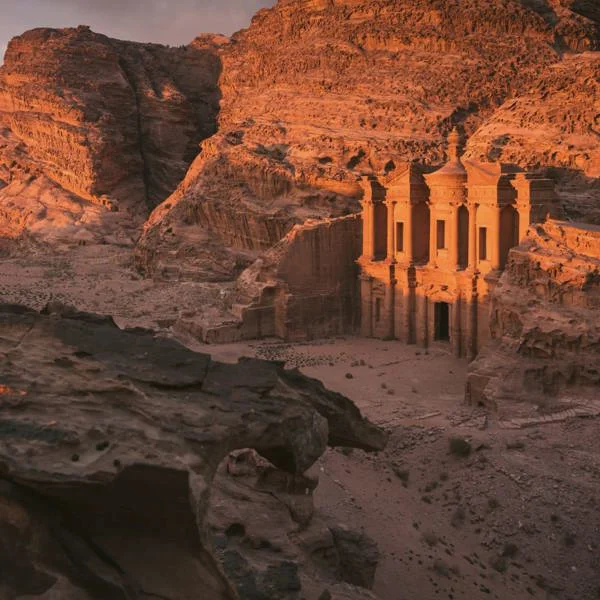
Hike from Little Petra towards Petra by the quieter backdoor route, following desert paths framed by sandstone cliffs and wide views. Explore Petra’s main archaeological site as part of the visit, taking time to absorb the scale and detail of the rock-cut city.
Carved and developed by the Nabataeans, Petra was a centre of regional trade. Its rose-coloured stone and monumental facades reward both the scenic approach and time spent among the remains.
Wadi Rum Bedouin-Led 4x4 Tour
Explore Wadi Rum on a two-hour Bedouin-led jeep ride, travelling through broad desert valleys and stopping at sites such as Siq Um Tawaqi, ancient rock inscriptions and viewpoints. The 4×4 route reaches landscapes that would take far longer to cross on foot.
Sandstone mountains, open sand and traces left by earlier inhabitants give the protected desert its character. Local guidance and stops among the rock formations turn the drive into a closer encounter with Wadi Rum’s scenery and history.
Wadi Rum Desert Camp Stay
Spend a night at Amber Camp in Wadi Rum, with dinner in a desert setting and time to take in the surrounding mountains and sand. The listed accommodation features air-conditioned rooms, private bathrooms and balconies, plus shared outdoor space.
As daylight fades, the camp offers a different experience of Wadi Rum from the jeep ride: desert stillness and views beneath the night sky. It is an included overnight stay with a distinctive setting, rather than an additional excursion.
Abu Simbel Temple Visit
Choose an optional visit to Abu Simbel from Aswan to see the monumental rock-cut temples of Ramesses II and Nefertari. The colossal seated statues at the entrance make an immediate impression against the desert landscape.
The temples were relocated in the twentieth century to protect them from the rising waters created by the Aswan High Dam. This excursion offers a closer look at both ancient royal ambition and modern preservation. It is at additional cost and bookable on tour.
Tutankhamun’s Tomb Entry
Add entry to Tutankhamun’s tomb during the visit to Luxor’s Valley of the Kings. The included West Bank excursion allows you to see the tomb from outside; this optional add-on takes you inside the burial place of the young pharaoh.
Its discovery in 1922 brought worldwide attention to the valley and the objects buried with Egypt’s rulers. For travellers especially interested in that story, stepping into the tomb itself offers a more focused encounter. Entry is at additional cost and bookable on tour.
Karnak & Luxor Temples Guided Tour
Join an optional guided tour of Karnak and Luxor Temples to explore two of ancient Thebes’ major sacred sites. Walk among Karnak’s monumental columns and see Luxor Temple’s surviving courts and stonework with a guide to explain their significance.
The temples developed over many centuries as rulers added to the city’s religious landscape. Grand ceremonial spaces and carved detail make this an appealing addition for travellers who want more time with Luxor’s antiquities. It is at additional cost and bookable on tour.