Your itinerary
Day 1
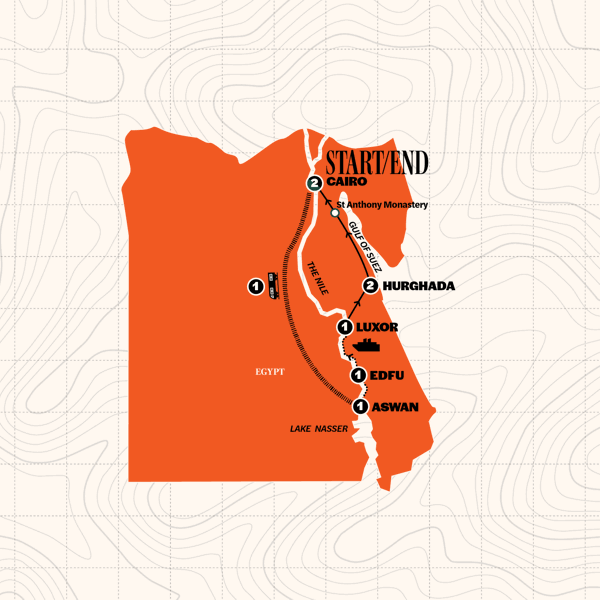
Day 1: Cairo
Welcome to Egypt. Meet the group over dinner at a local restaurant.
Meals: Dinner
Day 2
Day 2: Cairo to Overnight Train
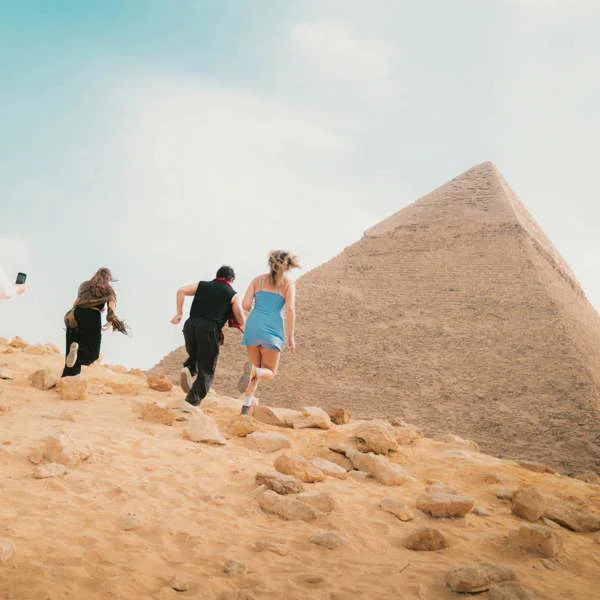
Take a guided tour of the Pyramids, the Sphinx and the Valley Temple, then visit the Grand Egyptian Museum. Board the overnight train to Aswan and have a simple dinner onboard.
Meals: Breakfast,Dinner
Day 3
Day 3: Nile Cruise (Aswan)
Arrive in Aswan, stroll along the Nile and sail on a traditional wooden felucca. Later, board the Nile cruise for the first of three nights.
Meals: Breakfast,Lunch,Dinner
Day 4
Day 4: Nile Cruise (Aswan to Edfu)
Choose an optional visit to Abu Simbel or explore Aswan at your own pace. Sail to Kom Ombo, where you can visit its temple or stay aboard the boat. In the afternoon, continue sailing toward Edfu.
Meals: Breakfast,Lunch,Dinner
Day 5
Day 5: Nile Cruise (Edfu to Luxor)
Sail from Edfu toward Luxor and begin exploring the town’s history on arrival. The evening is free.
Meals: Breakfast,Lunch,Dinner
Day 6
Day 6: Luxor
Explore the Valley of the Kings, stop at the Colossi of Memnon and visit Hatshepsut Temple, with the order guided by the weather. Take an included bike tour of Luxor’s West Bank with local guides. An optional guided tour of Karnak and Luxor Temples is also available.
Meals: Breakfast
Day 7
Day 7: Luxor to Hurghada
Travel from Luxor to Hurghada. Along the way, stop at a Bedouin settlement for a jeep safari and traditional lunch.
Meals: Breakfast,Lunch
Day 8
Day 8: Hurghada
Spend the morning on an optional Red Sea cruise, snorkelling, sunbathing or relaxing. Later, say goodbye to Hurghada’s beaches as the itinerary describes making the way back.
Meals: Breakfast
Day 9
Day 9: Hurghada to Cairo via St Anthony Monastery
Leave Hurghada and travel through the desert to St Anthony Monastery. If the church is closed for religious holidays, take a walk around town instead. Stop for lunch at a local restaurant, then continue to Cairo and check in. Shop for fresh ingredients and take a hands-on falafel cooking class. The evening is free for dinner, a walk or time with the group.
Meals: Breakfast,Lunch
Day 10
Day 10: Cairo
Have a final breakfast and say goodbye to the group.
Meals: Breakfast
What’s included
What’s not included
Additional information
Dining Summary
- 5 Dinner (D)
- 9 Breakfast (B)
- 5 Lunch (L)
FAQs
- Cairo: Just 16. Yep — this is a small group Egypt tour with a tight-knit crew of 18–35s. So it’s super easy to click, hang out, and actually get to know each other.
- Cairo: If you love a social trip with a tight-knit crew, you’ll fit right in. With max 16 travellers, there’s heaps of time to connect, share the big moments, and actually feel like you’re exploring Egypt with mates (yes, you’ll remember everyone’s name).
A smaller group also keeps things smooth — easier to weave through markets, move around without the chaos, and sometimes unlock extra-special experiences and stays that just work better with a crew this size. Ideal if you like the freedom of travelling solo, with built-in mates along the way.
Included Experience
- Cairo: Visit Egypt’s most iconic ancient sites in one stop: the Pyramids of Giza, the Great Sphinx, and the Valley Temple. Your Trip Manager will guide you around the plateau, sharing the stories behind how these monuments were built and what they meant to the people who created them. Think: pharaoh power to afterlife beliefs and the engineering that still impresses today.
- Cairo: The world’s largest archaeological museum complex is no joke. You’ll find 100,000 artifacts here (including King Tut’s ENTIRE treasure collection). You don’t wanna miss this one…
- Aswan: Spend a few nights aboard a river cruise – with views out over the Nile and a sun deck on board.
- Aswan: Sit back and chill as you drift down the famous river on a traditional felucca sailing boat
- Kom Ombo: Explore this seriously cool double temple with a perfectly symmetrical layout. One side is dedicated to Sobek (the crocodile god), the other to Horus (the falcon god) — two temples in one, and twice the ancient intrigue.
- Luxor: Grab your camera and explore one of the world’s most famous archaeological sites. See the tomb of Tutankhamun from the outside (with the option to add on exploring it from the inside!) and many other Egyptian pharaohs.
- Hurghada: Check out these towering Pharaoh statues. They’ve stood guard since 1350 BC, even surviving natural disasters. And apparently one even ‘sings’ in the wind.
- Luxor: Get ready to see Luxor on two wheels. We’ll cruise past epic monuments and historic spots with stories that bring the place to life. The best bit? You’ll meet local youth communities along the way, so you can swap hellos, hear real stories, and ride away with more than just photos
- Hurghada: Buckle up for a 4×4 ride across open desert terrain, chasing big views and off-road thrills. You’ll visit a Bedouin settlement to learn about local life, then refuel with a barbecue lunch served up the traditional way. Sand, stories, and seriously good feeds.
- Cairo: Step into history with a visit to the 4th-century Monastery of St Anthony, set in a desert oasis that feels worlds away from everything. Ancient walls, quiet courtyards, and wide-open desert all around — peaceful, powerful, and seriously atmospheric.
- Cairo: Roll up your sleeves and join a seasoned local home cook for a hands-on Egyptian food adventure. You’ll kick things off at a buzzing local market, picking out fresh ingredients for a classic lunch. Back in the kitchen, you’ll learn to make taamiya (Egypt’s take on falafel) from scratch, while getting the lowdown on local cheeses, basterma and tehina from someone who knows it best. Then comes the best bit — sitting down together to enjoy the feast you’ve created, soaking up that laid-back, family-style Egyptian meal
Operated By
Contiki
Cairo Welcome Dinner
Meet your small group over a welcome dinner at a local restaurant in Cairo. Sharing a meal offers a relaxed introduction to fellow travellers and a chance to settle into the rhythm of the city.
With no more than 16 travellers, there is room for conversation around the table. It is a hosted start to the journey, centred on food and new connections rather than a formal sightseeing programme.
Pyramids of Giza, Great Sphinx & Valley Temple
Explore the Giza Plateau with your Trip Manager, taking in the Pyramids of Giza, Great Sphinx and Valley Temple. Hear how these monuments expressed royal power and ancient Egyptian beliefs about the afterlife.
Stand beneath pyramids built as pharaonic tombs and see the limestone Sphinx guarding the plateau. The Valley Temple adds another perspective on the rituals surrounding burial, making this more than a distant view of Egypt’s most recognisable skyline.
Grand Egyptian Museum Visit
Visit the Grand Egyptian Museum near the Giza pyramids for a close look at Egypt’s ancient material culture. Explore displays of statues, funerary objects and royal treasures, including objects associated with Tutankhamun’s collection.
The museum brings artefacts from different eras together in a purpose-built setting. Seeing the workmanship up close gives texture to the stories of pharaohs and everyday life encountered at Egypt’s archaeological sites.
Traditional Felucca Sail in Aswan
Sail the Nile aboard a traditional wooden felucca in Aswan. Sit low to the water as the boat catches the breeze, with riverbanks, islands and passing boats shaping the view.
Feluccas have long been part of life on the Nile. Their quiet, unhurried movement offers a different perspective from a larger cruise vessel: the sounds and pace of the river become as memorable as the scenery.
Three-Night Nile Cruise
Spend three nights cruising the Nile between Aswan and Luxor, with a sun deck for watching the riverbanks pass. The voyage takes in the scenery around Kom Ombo and Edfu, combining time on the water with opportunities to explore ashore.
The Nile has linked Egypt’s settlements for millennia. From the deck, palm-lined banks and riverside life offer a changing view of the landscape that sustained ancient civilisation.
Temple of Kom Ombo
Visit the Temple of Kom Ombo beside the Nile and explore its unusual double design. Its paired spaces honour Sobek, the crocodile god, and Horus, the falcon-headed god.
Look for the symmetry that sets this Ptolemaic-era temple apart from many others in Egypt. Its riverside position and surviving carved reliefs connect ancient worship with the landscape travellers can still see from the cruise. Travellers may choose to remain aboard instead.
Valley of the Kings
Explore the Valley of the Kings on Luxor’s West Bank, where New Kingdom rulers were buried in tombs cut into the desert hills. Visit the site and see the location of Tutankhamun’s tomb from outside.
Unlike the pyramids, these royal burial places were concealed within the rock. Their setting reveals a different approach to protecting a pharaoh’s journey into the afterlife. Entry to Tutankhamun’s tomb is a separate optional add-on.
Colossi of Memnon
Stop at the Colossi of Memnon on Luxor’s West Bank and see two monumental seated statues of Amenhotep III. Standing in open fields, they mark the site of a vast mortuary temple that once rose behind them.
Weathering and ancient earthquakes changed the statues over the centuries. One became famous in antiquity for a sound heard at dawn, giving these towering guardians a place in both Egyptian and later travellers’ stories.
Mortuary Temple of Hatshepsut
Visit the Mortuary Temple of Hatshepsut at Deir el-Bahari on Luxor’s West Bank. See its broad terraces and colonnades set against the steep limestone cliffs.
Hatshepsut ruled as pharaoh during Egypt’s New Kingdom, and the temple reflects the scale of her ambitions. Its architecture draws the eye into the desert escarpment, while its surviving reliefs offer glimpses of the reign and ceremonies it was built to commemorate.
Guided Luxor West Bank Bike Tour
Cycle Luxor’s West Bank with local guides, passing historic sites and monuments at a pace that leaves room to notice the life around them. The ride pairs archaeological surroundings with a more immediate view of the neighbourhoods beyond the major sites.
Meet members of local youth communities along the way and hear perspectives rooted in present-day Luxor. It is a chance to experience the West Bank as a lived-in place, not only an ancient landscape.
Desert 4x4 Safari & Bedouin Settlement Visit
Ride across open desert terrain by 4×4 and visit a Bedouin settlement between Luxor and Hurghada. The jeep safari brings expansive views of the arid landscape, while the settlement visit offers an introduction to local ways of life.
Share a traditional barbecue lunch as part of the experience. The combination of off-road travel, conversation and food gives this desert stop a purpose beyond breaking up the journey.
Monastery of St Anthony
Visit the Monastery of St Anthony, a historic Coptic Christian monastery set near the Red Sea amid desert mountains. Walk within its walls and take in the contrast between quiet courtyards and the vast landscape outside.
Associated with St Anthony, a founding figure of Christian monasticism, the site traces its origins to the fourth century. The visit is subject to religious-holiday closures; if the church is closed, a walk around town replaces it.
Cairo Market Visit & Egyptian Falafel Cooking Class
Shop for fresh ingredients at a Cairo market before joining a local home cook for a hands-on class. Learn to prepare taamiya, Egypt’s version of falafel, and sit down together to enjoy what you have made.
The market-to-kitchen format connects familiar street food with the ingredients and techniques behind it. Conversation about foods such as tahini, local cheeses and basterma adds a personal view of Egyptian cooking and the family-style table.
Abu Simbel Temples
Choose an excursion to Abu Simbel from Aswan to see the colossal rock-cut temples of Ramesses II and Nefertari. The seated figures at the entrance give a sense of the scale of this ancient royal monument.
The temples were moved to higher ground in the 1960s to protect them from the waters of Lake Nasser, adding a modern conservation story to their ancient history. This optional experience is at additional cost and bookable on tour.
Tutankhamun’s Tomb Entry
Step inside Tutankhamun’s tomb in Luxor’s Valley of the Kings rather than viewing its location only from outside. The compact burial chambers offer a close encounter with the resting place of a pharaoh whose discovery drew worldwide attention.
Howard Carter’s 1922 find transformed public understanding of ancient Egyptian royal burial. This is a separate add-on to the included Valley of the Kings visit, at additional cost and bookable on tour.
Guided Karnak & Luxor Temples Tour
Join an optional guided tour of Karnak and Luxor Temples to explore two major sacred sites on Luxor’s East Bank. At Karnak, take in the immense columns and courts; at Luxor Temple, see a ceremonial complex closely tied to the ancient city.
Both sites were shaped by generations of rulers and played roles in festivals honouring the gods of Thebes. The guide provides context for their scale and symbolism. This tour is at additional cost and bookable on tour.
Red Sea Cruise from Hurghada
Take an optional cruise on the Red Sea from Hurghada for a view of Egypt’s coast from the water. Spend time aboard looking back towards the shoreline and out across the clear sea.
Hurghada offers a coastal contrast to the Nile Valley and the desert sites elsewhere on the trip. This outing is a choice for travellers who would rather explore by boat than spend the time on shore. It is at additional cost and bookable on tour.