Your itinerary

Day 1
Arrive in Buenos Aires, Argentina
You may arrive in Buenos Aires at any time during Day 1 of your itinerary. Upon arriving in this splendid city, known for its architecture and rich European heritage, you will independently transfer to your group hotel.
Day 2
Fly to Ushuaia and embark
After an early breakfast at the hotel, the group will transfer to the airport and board our private charter flight to Ushuaia, Argentina. Upon arrival, you will be transferred from the airport to a central downtown location to have some time on your own to explore this quaint port town before making your way to the pier. After a late afternoon embarkation, you will sail along the historic Beagle Channel, which transects the Tierra del Fuego archipelago in the extreme south of South America. Expect an air of anticipation as you depart—the next land you see will be the Antarctic!
Meals: Breakfast,Lunch,Dinner
Day 3
Crossing the Drake: A Polar Rite of Passage
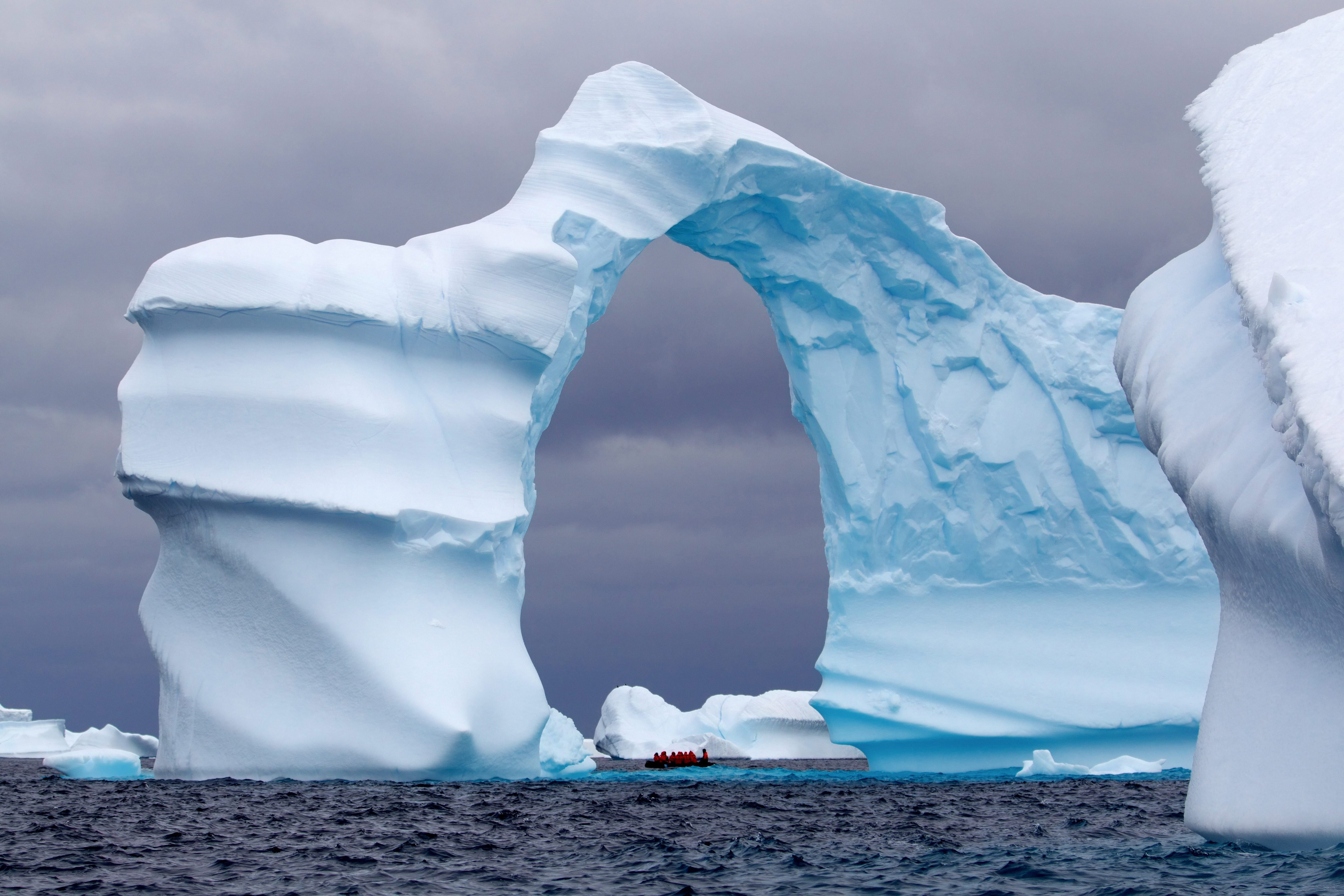
Crossing the legendary 800-km stretch of water is a must-do for many travellers. Prepare yourself for dramatic seascapes as you stand on the deck of Ultramarine and gaze at the water stretching beyond the distant horizon. Be on the lookout for dolphins, whales, and seabirds, especially albatrosses, petrels and skuas as they glide over the sometimes rough waters. As the ship approaches the Antarctic Peninsula, keep your eyes peeled for your first glimpse of towering, multi-shaped icebergs.
Meals: Breakfast,Lunch,Dinner
Day 4
At Sea With Polar Experts
Today we cross the Antarctic Convergence, moving into the biological Antarctic, where the warmer waters of the sub-Antarctic meet the cold Antarctic. Your days at sea are filled with presentations led by your Expedition Team on photography, wildlife, glaciology, and history. In between presentations, spend time on deck looking for wildlife or chatting with your shipmates over a drink at the bar.
Meals: Breakfast,Lunch,Dinner
Day 5
Explore the Weddell Sea by Water, Land, & Air
Helicopter operations in Antarctica are acutely weather-dependent. We have designed this itinerary so we can spend time each day in stunning locations that allow us to enjoy helicopter opportunities if the weather allows and, alternately, to maximize your experience of Antarctic wildlife, ice and landscapes when flying conditions are not favourable. Each day on the Antarctic Peninsula will showcase the flexibility and technical prowess of our industry-leading expedition team, pilots and crew.
As Ultramarine gains access to the Antarctic Peninsula, our team will look for opportunities to experience Antarctica beyond the coast and over the expansive glacial terrain of the last great wilderness.
Together, Antarctic Sound, Erebus and Terror Gulf and the north-western Weddell Sea are the theatre of this venture. Initially we plan to sail into Antarctic Sound where we will visit two towering geological features:
Madder Cliffs on Joinville Island, and Brown Bluff on the most northerly tip of the Antarctic Continent. Our goal is to visit large Adélie penguin colonies in this area by Zodiac. Gentoo penguins and seals also frequently roam this coast. There will be time to marvel at the impressive topography, namely the 678 metre (2,225-foot) volcanic rock cliffs at Brown Bluff- though, if weather allows, we may pivot from our marine operations and embark on our first flightseeing experience of the voyage. What you will have just seen from sea, you will now experience from the sky as you gaze over the vastness of Antarctica with the perspective of a snow petrel.
Continuing through Antarctic Sound and into Erebus and Terror Gulf, located on the tip of the southeast side of the Antarctic Peninsula, Ultramarine will be positioned to maximize both helicopter and Zodiac excursions. The James Ross Island group, which comprises several Islands, offers myriad opportunities to explore historically relevant sites that were discovered by the Swedish Antarctic Expedition of 1901-04. Upon landing, we plan to hike to a summit to view an Adélie penguin colony, as well as the northern Weddell Sea. If the tide is low, there may be grounded bergs in the shallow waters— a surreal sight you’re unlikely to encounter on many polar expeditions. These islands, highly valued for their geological significance, are home to fossil finds, ventifacts (ancient rocks polished smooth over time by wind and grains of sand) and the remains of the KT Boundary, which marks the transition between the Cretaceous Period (dinosaurs and reptiles) and the Tertiary Period (mammals). Our goal is to provide opportunities for you to see ventifacts up close, to better appreciate the significance of wind erosion-by sand or ice particles— over long periods of time. These ventifacts provide valuable information about the climatic history and prevailing wind patterns of the region.
As already mentioned, atmospheric conditions influence when and where we fly-on any day of our voyage-at any of the superb locations in the region.
When not flying, we’ll shift our focus from geology to wildlife. For instance, we could Zodiac cruise to Devil Island and head out on a hike that will allow participants to appreciate the twin towering cones of ash and hardened lava that rises from a bay on the north shore of Vega Island. Alternatively, we may aim for renowned Paulet Island, home to one of the largest Adélie penguin rookeries in the area, as well as the historic hut built by members of the Swedish Antarctic Expedition of 1901-04. A cross marks the grave site of Ole Wennersgaard, a member of the crew.
Another potential destination for helicopter operations includes the dramatic headland on the north-eastern tip of Joinville island. One of the first features you’ll see as we approach the island by air is, of course, the distinct rocky headland sticking out of the rugged, icy landscape. This prominent landmark has proven useful for navigation and exploration over the years.
Expect a dramatic finale to the helicopter-focused segment of the expedition as we prepare to return back across the Drake Passage. While our team has devised multiple back-up plans-crucial on any polar expedition- our ultimate goal at this point is a heli-flightseeing excursion to Livingston Island, home of the most spectacular mountains of the South Shetland Islands. Among the towering peaks you’ll see from air are the Tangra Mountains (stretching 32 kilometres long by 8.5 kilometres wide), Mount Friesland (rising to 1,700 metres/ 5,578 feet) , Bowles Ridge and Pliska Ridge (667 metres/2,188 feet).
Another landing option is Deception Island. Along with waddling penguins and lounging seals, you can also see the rusting remnants of long-ago whaling operations on the beach. The landscape of Deception Island often presents opportunities for longer walks to striking vistas. The stark contrast between snow and dark volcanic sand, and the geothermic steam along the shoreline gives this location an atmospheric feel.
Meals: Breakfast,Lunch,Dinner
Day 6
Explore the Weddell Sea by Water, Land, & Air
Helicopter operations in Antarctica are acutely weather-dependent. We have designed this itinerary so we can spend time each day in stunning locations that allow us to enjoy helicopter opportunities if the weather allows and, alternately, to maximize your experience of Antarctic wildlife, ice and landscapes when flying conditions are not favourable. Each day on the Antarctic Peninsula will showcase the flexibility and technical prowess of our industry-leading expedition team, pilots and crew.
As Ultramarine gains access to the Antarctic Peninsula, our team will look for opportunities to experience Antarctica beyond the coast and over the expansive glacial terrain of the last great wilderness.
Together, Antarctic Sound, Erebus and Terror Gulf and the north-western Weddell Sea are the theatre of this venture. Initially we plan to sail into Antarctic Sound where we will visit two towering geological features:
Madder Cliffs on Joinville Island, and Brown Bluff on the most northerly tip of the Antarctic Continent. Our goal is to visit large Adélie penguin colonies in this area by Zodiac. Gentoo penguins and seals also frequently roam this coast. There will be time to marvel at the impressive topography, namely the 678 metre (2,225-foot) volcanic rock cliffs at Brown Bluff- though, if weather allows, we may pivot from our marine operations and embark on our first flightseeing experience of the voyage. What you will have just seen from sea, you will now experience from the sky as you gaze over the vastness of Antarctica with the perspective of a snow petrel.
Continuing through Antarctic Sound and into Erebus and Terror Gulf, located on the tip of the southeast side of the Antarctic Peninsula, Ultramarine will be positioned to maximize both helicopter and Zodiac excursions. The James Ross Island group, which comprises several Islands, offers myriad opportunities to explore historically relevant sites that were discovered by the Swedish Antarctic Expedition of 1901-04. Upon landing, we plan to hike to a summit to view an Adélie penguin colony, as well as the northern Weddell Sea. If the tide is low, there may be grounded bergs in the shallow waters— a surreal sight you’re unlikely to encounter on many polar expeditions. These islands, highly valued for their geological significance, are home to fossil finds, ventifacts (ancient rocks polished smooth over time by wind and grains of sand) and the remains of the KT Boundary, which marks the transition between the Cretaceous Period (dinosaurs and reptiles) and the Tertiary Period (mammals). Our goal is to provide opportunities for you to see ventifacts up close, to better appreciate the significance of wind erosion-by sand or ice particles— over long periods of time. These ventifacts provide valuable information about the climatic history and prevailing wind patterns of the region.
As already mentioned, atmospheric conditions influence when and where we fly-on any day of our voyage-at any of the superb locations in the region.
When not flying, we’ll shift our focus from geology to wildlife. For instance, we could Zodiac cruise to Devil Island and head out on a hike that will allow participants to appreciate the twin towering cones of ash and hardened lava that rises from a bay on the north shore of Vega Island. Alternatively, we may aim for renowned Paulet Island, home to one of the largest Adélie penguin rookeries in the area, as well as the historic hut built by members of the Swedish Antarctic Expedition of 1901-04. A cross marks the grave site of Ole Wennersgaard, a member of the crew.
Another potential destination for helicopter operations includes the dramatic headland on the north-eastern tip of Joinville island. One of the first features you’ll see as we approach the island by air is, of course, the distinct rocky headland sticking out of the rugged, icy landscape. This prominent landmark has proven useful for navigation and exploration over the years.
Expect a dramatic finale to the helicopter-focused segment of the expedition as we prepare to return back across the Drake Passage. While our team has devised multiple back-up plans-crucial on any polar expedition- our ultimate goal at this point is a heli-flightseeing excursion to Livingston Island, home of the most spectacular mountains of the South Shetland Islands. Among the towering peaks you’ll see from air are the Tangra Mountains (stretching 32 kilometres long by 8.5 kilometres wide), Mount Friesland (rising to 1,700 metres/ 5,578 feet) , Bowles Ridge and Pliska Ridge (667 metres/2,188 feet).
Another landing option is Deception Island. Along with waddling penguins and lounging seals, you can also see the rusting remnants of long-ago whaling operations on the beach. The landscape of Deception Island often presents opportunities for longer walks to striking vistas. The stark contrast between snow and dark volcanic sand, and the geothermic steam along the shoreline gives this location an atmospheric feel.
Meals: Breakfast,Lunch,Dinner
Day 7
Explore the Weddell Sea by Water, Land, & Air
Helicopter operations in Antarctica are acutely weather-dependent. We have designed this itinerary so we can spend time each day in stunning locations that allow us to enjoy helicopter opportunities if the weather allows and, alternately, to maximize your experience of Antarctic wildlife, ice and landscapes when flying conditions are not favourable. Each day on the Antarctic Peninsula will showcase the flexibility and technical prowess of our industry-leading expedition team, pilots and crew.
As Ultramarine gains access to the Antarctic Peninsula, our team will look for opportunities to experience Antarctica beyond the coast and over the expansive glacial terrain of the last great wilderness.
Together, Antarctic Sound, Erebus and Terror Gulf and the north-western Weddell Sea are the theatre of this venture. Initially we plan to sail into Antarctic Sound where we will visit two towering geological features:
Madder Cliffs on Joinville Island, and Brown Bluff on the most northerly tip of the Antarctic Continent. Our goal is to visit large Adélie penguin colonies in this area by Zodiac. Gentoo penguins and seals also frequently roam this coast. There will be time to marvel at the impressive topography, namely the 678 metre (2,225-foot) volcanic rock cliffs at Brown Bluff- though, if weather allows, we may pivot from our marine operations and embark on our first flightseeing experience of the voyage. What you will have just seen from sea, you will now experience from the sky as you gaze over the vastness of Antarctica with the perspective of a snow petrel.
Continuing through Antarctic Sound and into Erebus and Terror Gulf, located on the tip of the southeast side of the Antarctic Peninsula, Ultramarine will be positioned to maximize both helicopter and Zodiac excursions. The James Ross Island group, which comprises several Islands, offers myriad opportunities to explore historically relevant sites that were discovered by the Swedish Antarctic Expedition of 1901-04. Upon landing, we plan to hike to a summit to view an Adélie penguin colony, as well as the northern Weddell Sea. If the tide is low, there may be grounded bergs in the shallow waters— a surreal sight you’re unlikely to encounter on many polar expeditions. These islands, highly valued for their geological significance, are home to fossil finds, ventifacts (ancient rocks polished smooth over time by wind and grains of sand) and the remains of the KT Boundary, which marks the transition between the Cretaceous Period (dinosaurs and reptiles) and the Tertiary Period (mammals). Our goal is to provide opportunities for you to see ventifacts up close, to better appreciate the significance of wind erosion-by sand or ice particles— over long periods of time. These ventifacts provide valuable information about the climatic history and prevailing wind patterns of the region.
As already mentioned, atmospheric conditions influence when and where we fly-on any day of our voyage-at any of the superb locations in the region.
When not flying, we’ll shift our focus from geology to wildlife. For instance, we could Zodiac cruise to Devil Island and head out on a hike that will allow participants to appreciate the twin towering cones of ash and hardened lava that rises from a bay on the north shore of Vega Island. Alternatively, we may aim for renowned Paulet Island, home to one of the largest Adélie penguin rookeries in the area, as well as the historic hut built by members of the Swedish Antarctic Expedition of 1901-04. A cross marks the grave site of Ole Wennersgaard, a member of the crew.
Another potential destination for helicopter operations includes the dramatic headland on the north-eastern tip of Joinville island. One of the first features you’ll see as we approach the island by air is, of course, the distinct rocky headland sticking out of the rugged, icy landscape. This prominent landmark has proven useful for navigation and exploration over the years.
Expect a dramatic finale to the helicopter-focused segment of the expedition as we prepare to return back across the Drake Passage. While our team has devised multiple back-up plans-crucial on any polar expedition- our ultimate goal at this point is a heli-flightseeing excursion to Livingston Island, home of the most spectacular mountains of the South Shetland Islands. Among the towering peaks you’ll see from air are the Tangra Mountains (stretching 32 kilometres long by 8.5 kilometres wide), Mount Friesland (rising to 1,700 metres/ 5,578 feet) , Bowles Ridge and Pliska Ridge (667 metres/2,188 feet).
Another landing option is Deception Island. Along with waddling penguins and lounging seals, you can also see the rusting remnants of long-ago whaling operations on the beach. The landscape of Deception Island often presents opportunities for longer walks to striking vistas. The stark contrast between snow and dark volcanic sand, and the geothermic steam along the shoreline gives this location an atmospheric feel.
Meals: Breakfast,Lunch,Dinner
Day 8
Explore the Weddell Sea by Water, Land, & Air
Helicopter operations in Antarctica are acutely weather-dependent. We have designed this itinerary so we can spend time each day in stunning locations that allow us to enjoy helicopter opportunities if the weather allows and, alternately, to maximize your experience of Antarctic wildlife, ice and landscapes when flying conditions are not favourable. Each day on the Antarctic Peninsula will showcase the flexibility and technical prowess of our industry-leading expedition team, pilots and crew.
As Ultramarine gains access to the Antarctic Peninsula, our team will look for opportunities to experience Antarctica beyond the coast and over the expansive glacial terrain of the last great wilderness.
Together, Antarctic Sound, Erebus and Terror Gulf and the north-western Weddell Sea are the theatre of this venture. Initially we plan to sail into Antarctic Sound where we will visit two towering geological features:
Madder Cliffs on Joinville Island, and Brown Bluff on the most northerly tip of the Antarctic Continent. Our goal is to visit large Adélie penguin colonies in this area by Zodiac. Gentoo penguins and seals also frequently roam this coast. There will be time to marvel at the impressive topography, namely the 678 metre (2,225-foot) volcanic rock cliffs at Brown Bluff- though, if weather allows, we may pivot from our marine operations and embark on our first flightseeing experience of the voyage. What you will have just seen from sea, you will now experience from the sky as you gaze over the vastness of Antarctica with the perspective of a snow petrel.
Continuing through Antarctic Sound and into Erebus and Terror Gulf, located on the tip of the southeast side of the Antarctic Peninsula, Ultramarine will be positioned to maximize both helicopter and Zodiac excursions. The James Ross Island group, which comprises several Islands, offers myriad opportunities to explore historically relevant sites that were discovered by the Swedish Antarctic Expedition of 1901-04. Upon landing, we plan to hike to a summit to view an Adélie penguin colony, as well as the northern Weddell Sea. If the tide is low, there may be grounded bergs in the shallow waters— a surreal sight you’re unlikely to encounter on many polar expeditions. These islands, highly valued for their geological significance, are home to fossil finds, ventifacts (ancient rocks polished smooth over time by wind and grains of sand) and the remains of the KT Boundary, which marks the transition between the Cretaceous Period (dinosaurs and reptiles) and the Tertiary Period (mammals). Our goal is to provide opportunities for you to see ventifacts up close, to better appreciate the significance of wind erosion-by sand or ice particles— over long periods of time. These ventifacts provide valuable information about the climatic history and prevailing wind patterns of the region.
As already mentioned, atmospheric conditions influence when and where we fly-on any day of our voyage-at any of the superb locations in the region.
When not flying, we’ll shift our focus from geology to wildlife. For instance, we could Zodiac cruise to Devil Island and head out on a hike that will allow participants to appreciate the twin towering cones of ash and hardened lava that rises from a bay on the north shore of Vega Island. Alternatively, we may aim for renowned Paulet Island, home to one of the largest Adélie penguin rookeries in the area, as well as the historic hut built by members of the Swedish Antarctic Expedition of 1901-04. A cross marks the grave site of Ole Wennersgaard, a member of the crew.
Another potential destination for helicopter operations includes the dramatic headland on the north-eastern tip of Joinville island. One of the first features you’ll see as we approach the island by air is, of course, the distinct rocky headland sticking out of the rugged, icy landscape. This prominent landmark has proven useful for navigation and exploration over the years.
Expect a dramatic finale to the helicopter-focused segment of the expedition as we prepare to return back across the Drake Passage. While our team has devised multiple back-up plans-crucial on any polar expedition- our ultimate goal at this point is a heli-flightseeing excursion to Livingston Island, home of the most spectacular mountains of the South Shetland Islands. Among the towering peaks you’ll see from air are the Tangra Mountains (stretching 32 kilometres long by 8.5 kilometres wide), Mount Friesland (rising to 1,700 metres/ 5,578 feet) , Bowles Ridge and Pliska Ridge (667 metres/2,188 feet).
Another landing option is Deception Island. Along with waddling penguins and lounging seals, you can also see the rusting remnants of long-ago whaling operations on the beach. The landscape of Deception Island often presents opportunities for longer walks to striking vistas. The stark contrast between snow and dark volcanic sand, and the geothermic steam along the shoreline gives this location an atmospheric feel.
Meals: Breakfast,Lunch,Dinner
Day 9
Explore the Weddell Sea by Water, Land, & Air
Helicopter operations in Antarctica are acutely weather-dependent. We have designed this itinerary so we can spend time each day in stunning locations that allow us to enjoy helicopter opportunities if the weather allows and, alternately, to maximize your experience of Antarctic wildlife, ice and landscapes when flying conditions are not favourable. Each day on the Antarctic Peninsula will showcase the flexibility and technical prowess of our industry-leading expedition team, pilots and crew.
As Ultramarine gains access to the Antarctic Peninsula, our team will look for opportunities to experience Antarctica beyond the coast and over the expansive glacial terrain of the last great wilderness.
Together, Antarctic Sound, Erebus and Terror Gulf and the north-western Weddell Sea are the theatre of this venture. Initially we plan to sail into Antarctic Sound where we will visit two towering geological features:
Madder Cliffs on Joinville Island, and Brown Bluff on the most northerly tip of the Antarctic Continent. Our goal is to visit large Adélie penguin colonies in this area by Zodiac. Gentoo penguins and seals also frequently roam this coast. There will be time to marvel at the impressive topography, namely the 678 metre (2,225-foot) volcanic rock cliffs at Brown Bluff- though, if weather allows, we may pivot from our marine operations and embark on our first flightseeing experience of the voyage. What you will have just seen from sea, you will now experience from the sky as you gaze over the vastness of Antarctica with the perspective of a snow petrel.
Continuing through Antarctic Sound and into Erebus and Terror Gulf, located on the tip of the southeast side of the Antarctic Peninsula, Ultramarine will be positioned to maximize both helicopter and Zodiac excursions. The James Ross Island group, which comprises several Islands, offers myriad opportunities to explore historically relevant sites that were discovered by the Swedish Antarctic Expedition of 1901-04. Upon landing, we plan to hike to a summit to view an Adélie penguin colony, as well as the northern Weddell Sea. If the tide is low, there may be grounded bergs in the shallow waters— a surreal sight you’re unlikely to encounter on many polar expeditions. These islands, highly valued for their geological significance, are home to fossil finds, ventifacts (ancient rocks polished smooth over time by wind and grains of sand) and the remains of the KT Boundary, which marks the transition between the Cretaceous Period (dinosaurs and reptiles) and the Tertiary Period (mammals). Our goal is to provide opportunities for you to see ventifacts up close, to better appreciate the significance of wind erosion-by sand or ice particles— over long periods of time. These ventifacts provide valuable information about the climatic history and prevailing wind patterns of the region.
As already mentioned, atmospheric conditions influence when and where we fly-on any day of our voyage-at any of the superb locations in the region.
When not flying, we’ll shift our focus from geology to wildlife. For instance, we could Zodiac cruise to Devil Island and head out on a hike that will allow participants to appreciate the twin towering cones of ash and hardened lava that rises from a bay on the north shore of Vega Island. Alternatively, we may aim for renowned Paulet Island, home to one of the largest Adélie penguin rookeries in the area, as well as the historic hut built by members of the Swedish Antarctic Expedition of 1901-04. A cross marks the grave site of Ole Wennersgaard, a member of the crew.
Another potential destination for helicopter operations includes the dramatic headland on the north-eastern tip of Joinville island. One of the first features you’ll see as we approach the island by air is, of course, the distinct rocky headland sticking out of the rugged, icy landscape. This prominent landmark has proven useful for navigation and exploration over the years.
Expect a dramatic finale to the helicopter-focused segment of the expedition as we prepare to return back across the Drake Passage. While our team has devised multiple back-up plans-crucial on any polar expedition- our ultimate goal at this point is a heli-flightseeing excursion to Livingston Island, home of the most spectacular mountains of the South Shetland Islands. Among the towering peaks you’ll see from air are the Tangra Mountains (stretching 32 kilometres long by 8.5 kilometres wide), Mount Friesland (rising to 1,700 metres/ 5,578 feet) , Bowles Ridge and Pliska Ridge (667 metres/2,188 feet).
Another landing option is Deception Island. Along with waddling penguins and lounging seals, you can also see the rusting remnants of long-ago whaling operations on the beach. The landscape of Deception Island often presents opportunities for longer walks to striking vistas. The stark contrast between snow and dark volcanic sand, and the geothermic steam along the shoreline gives this location an atmospheric feel.
Meals: Breakfast,Lunch,Dinner
Day 10
At Sea Day: Rejuvenate and Relax on Ultramarine
Take some time, as we journey back across the 800-kilometre Drake Passage, to relax after your off-ship adventures.
Ultramarine is home to Tundra Spa, where you can book a soothing facial treatment or massage. Additionally, you can also relax in the sauna with floor-to-ceiling windows that keep you connected to the polar seas while you rejuvenate indoors.
Meals: Breakfast,Lunch,Dinner
Day 11
At Sea Day
Your polar learning isn’t over. Join our on-board experts as they continue to share their vast polar expertise through scheduled presentations in our Ambassador Theatre. The state-of-the-art, high-resolution LED screen wall in the main theatre ensures high-definition viewing of presentations from your Expedition Team from any angle. This is an excellent opportunity to ask any lingering questions you have about any aspect of your Antarctic experiences.
Meals: Breakfast,Lunch,Dinner
Day 12
Disembark in Ushuaia and fly to Buenos Aires
Iou will arrive in Ushuaia in the morning and disembark after breakfast. The mandatory transfer package includes a taste of Patagonia with a Tierra del Fuego National Park tour before transferring to the airport for the return group charter flight to Buenos Aires.
Meals: Breakfast
What’s included
What’s not included
Additional information
Food
All meals while on the ship are included.
Typical meals
The ship’s galley offers good-quality service and cuisine throughout, with excellent chefs preparing international menus, including vegetarian dishes. If there is one constant on board, it is that you’ll enjoy delicious meals. While meal times may change due to landings and wildlife sightings, you’ll always be served three well-prepared meals per day. Vegetarians and vegans can be well catered for on this adventure – please inform us before departure of any special dietary requests so our local team can be well prepared.
Breakfast: Buffet style – unlimited tea and coffee, a selection of fruit juices, hot options including bacon and eggs or omelettes, a selection of bread and toast and jam/honey/marmalade, fruit and cereal.
Lunch: Three-course set meal or the occasional buffet or barbecue.
Dinner: Three courses with a starter of soup, salad or anti-pasto, a choice of three mains with at least one vegetarian and one seafood option and a dessert of sweet pudding or ice cream or fruit, tea and coffee.
Drinks: Complimentary coffee, tea, cocoa and water stations are available around the clock, while soft drinks and juices are available during meals and when the bar is open—all included in the cost of your package. Enjoy complimentary select beer, wines and select cocktails during bar service hours and dinner as part of the “Raise a Glass and Stay Connected Free” program. Premium wines and champagne are available at extra cost and can be billed to your shipboard account. The well-stocked bars on the ship are open late morning, afternoon and evening, though hours may occasionally change to accommodate the expedition schedule.
Tierra del Fuego National Park Tour
Explore Tierra del Fuego National Park on a guided tour included with your return transfer package. Trace glacier-carved valleys through peat bogs and southern beech forests to Lapataia Bay, where the Andes tumble dramatically to the sea.
Your guide introduces Fuegian ecology and human history—from Indigenous canoe routes to frontier outposts—while short boardwalks and viewpoints invite you to soak in the lakeside atmosphere. Scenic stops provide ample opportunities for photography amid mountain, forest and shore.
Paulet Island Penguin Rookery & Swedish Expedition Hut
Visit Paulet Island, a volcanic dome alive with an immense Adélie penguin rookery and blue-eyed shags lining the shore. Land when conditions allow to observe pebble nests, courtship calls and the steady rhythm of penguins crossing the beach.
At the landing, view the remains of the Swedish Antarctic Expedition of 1901–04—a historic stone hut and simple memorial cross. Your guides weave survival accounts with natural history, set against dark basalt, snow patches and glittering pack ice.
Helicopter Alpine Landing on the Antarctic Peninsula
Touch down by helicopter on a pristine snowfield amid the coastal mountains of the Antarctic Peninsula. Step into profound silence as katabatic breezes sculpt sastrugi around your boots and ridgelines glow white against a cobalt sky.
With your team setting a safe perimeter, enjoy a short guided walk and pause for photos and reflection. This rare chance to step into Antarctica’s interior is planned for one heli-landing per voyage, always weather-dependent and coordinated to minimize environmental impact while maximizing wilderness immersion.
Antarctic Sound Landings: Brown Bluff & Madder Cliffs
Zodiac ashore in Antarctic Sound, where Brown Bluff rises in volcanic palagonite cliffs and Joinville Island’s Madder Cliffs glow iron-red against blue sea ice. Watch Adélie and gentoo penguins commute between nesting terraces and the waterline.
Known as “Iceberg Alley,” the Sound channels vast, flat-topped bergs from the Larsen Ice Shelf. Guides outline geology and seabird life while you pause for photos and reflection of towering rock, wind-carved snow and drifting brash ice along this dramatic polar threshold.
James Ross Island Group Hike & Geological Discovery
Hike with your Expedition Team on the James Ross Island group, gaining a low summit for views across the northern Weddell Sea and nearby Adélie colonies. Wander among stones polished by relentless winds—classic ventifacts scattered across a stark polar terrace.
Guides introduce fossil fragments and exposures linked to the KT Boundary, offering a window into planetary change. The landscape also recalls the Swedish Antarctic Expedition of 1901–04, whose pioneering science and survival stories echo through these islands.
Devil Island Volcano Ridge Walk, Vega Island
Ride a Zodiac to Devil Island off Vega Island and follow your guides up the easy saddle between the island’s twin volcanic cones. From the ridge, scan floe-choked bays and sculpted headlands under an immense polar sky.
Adélie penguins often nest along the slopes while skuas patrol overhead. Learn how eruptions shaped this austere terrain and how the broader Erebus and Terror Gulf has been carved by fire, ice and wind into a landscape of dramatic contrasts.
Deception Island Caldera Landing & Whaling History
Enter Neptune’s Bellows to land inside the flooded caldera of Deception Island, where ash-black beaches meet ice-rimmed ridges. Walk coastal tracks to viewpoints such as Neptune’s Window, watching for fur seals and chinstrap penguins.
Guides interpret explosive volcanism and the relics of a whaling station—rusted tanks, boilers and weathered timbers that speak to Antarctica’s industrial past. The atmospheric mix of steam, cinders and sea breeze offers potent contrasts for photographers.
Zodiac Cruises Among Sculpted Icebergs & Wildlife
Board sturdy expedition boats to weave through brash ice and growlers, circling blue-veined bergs for intimate angles and wildlife encounters. Glide near tidewater glacier fronts at a respectful distance while penguins porpoise and crabeater seals lounge on floes.
Your driver positions the craft for safe views and photography, interpreting ice formations, currents and shoreline ecology. Hear the soft crackle of ice and distant rumbles—moments to pause for photos and reflection within a luminous frozen seascape.
Beagle Channel Sail Past Fuegian Shores
Sail the Beagle Channel past serrated peaks of Tierra del Fuego and forested slopes running to the tide line. From deck, watch cormorants trace the cliffs and sea lions bask on rocky islets under changing Patagonian light.
Your Expedition Team points out navigation lore and the history of this storied route between oceans. The soft glow at day’s end invites you to pause for photos and reflection as the ship turns toward the Southern Ocean.
Polar Experts Lecture Series & Ambassador Theatre Presentations
Learn from polar experts during engaging talks in the Ambassador Theatre, supported by a high-resolution LED screen wall that brings ice, wildlife and history into sharp focus. Sessions span pack-ice ecology, seabird behavior, glaciology and field photography.
These conversations connect shore visits with deeper context—from heroic-age exploration to contemporary climate science—and provide a comfortable forum to ask questions and compare sightings with your Expedition Team and fellow travelers.
Drake Passage Seabird & Whale Watching
Cross the Drake Passage scanning for soaring albatross, petrels and skuas riding long ocean swells. Dolphins and whales may surface alongside as you settle into the rhythm of the Southern Ocean.
Approaching the Antarctic Convergence, guides explain how mixing water masses fuels rich marine life. Wrap up warm on deck to pause for photos and reflection with sea and sky stretching, uninterrupted, toward the White Continent.
Tundra Spa Treatments & Panorama Sauna
Unwind between expeditions in Ultramarine’s Tundra Spa, where you can book a massage or facial and relax in the panorama sauna with floor-to-ceiling windows framing the polar sea.
This is an optional, additional-cost experience, bookable on tour. The quiet warmth and expansive views offer a restorative counterpoint to bracing deck air and shore landings, preparing body and mind for the next day’s explorations.
Helicopter Flightseeing Over the Weddell Sea & Tangra Mountains
Soar aboard Ultramarine’s twin-engine helicopters as you join a heli-flightseeing circuit over Antarctic Sound, Erebus and Terror Gulf, and Livingston Island’s rugged spine. Skim above blue-crevassed glaciers and tabular icebergs from the Larsen Ice Shelf, with the South Shetland’s Tangra Mountains filling the horizon.
This aerial perspective reveals patterns of sastrugi, nunataks and sea-ice leads beyond a ship’s reach. Guided by your Expedition Team, these flights are included in your voyage and scheduled to maximize conditions, delivering sweeping views of Antarctica’s raw geometry and migrating wildlife corridors.