Your itinerary
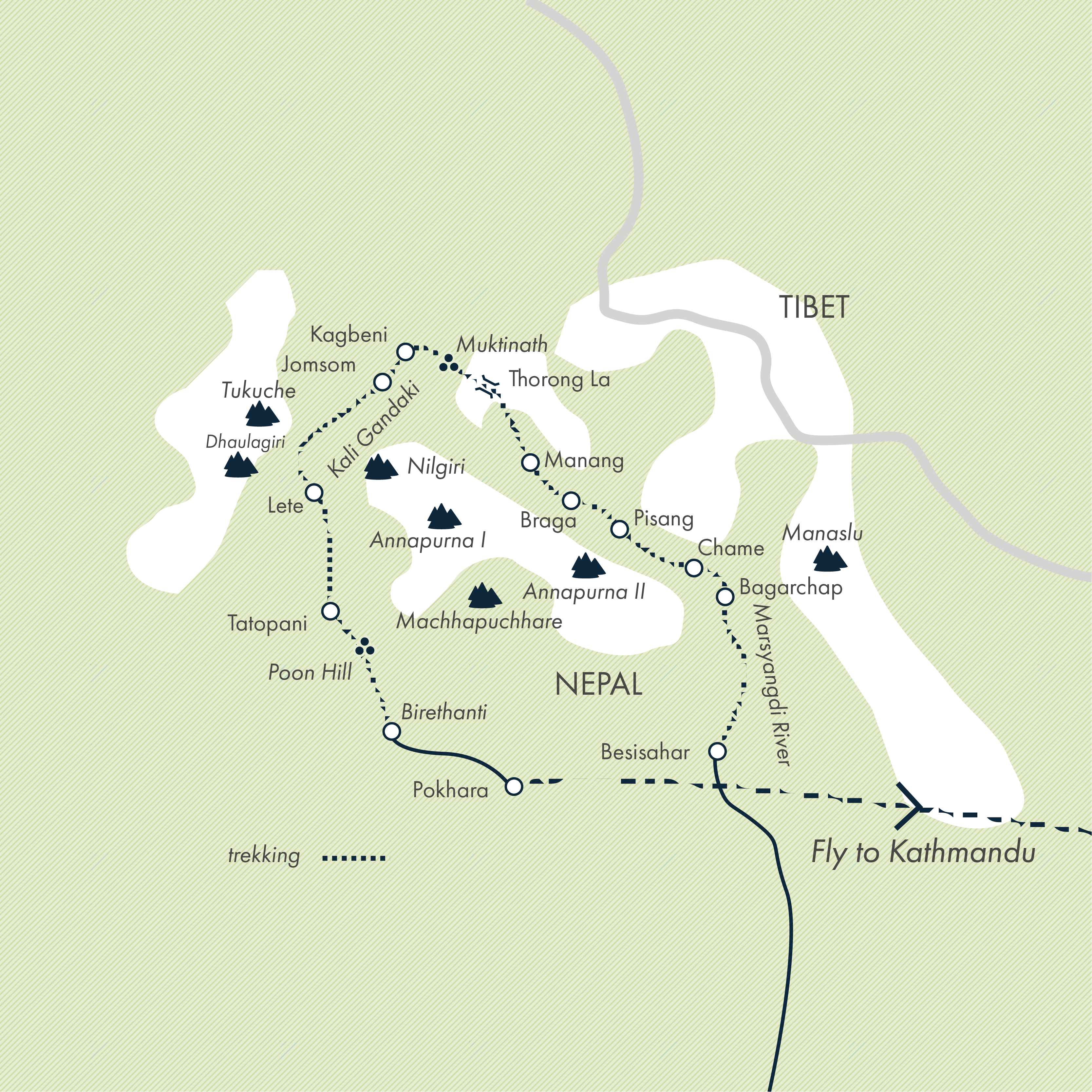
Day 1
Adventure starts in Kathmandu
Begin your adventure at the Royal Singi Hotel in Kathmandu, the start point for many of our Himalayan treks over the years.Around 6pm, bid namaste to your tour leader and fellow travellers, when we gather as a group for the first time to get to know each other and learn more about the adventures ahead during a full trek briefing.Your tour leader then ensures a big Nepalese welcome by arranging a group dinner.Want to explore Kathmandu further? Secure pre-tour hotel nights through your sales representative.
Meals: Dinner
Day 2
A long but scenic drive to Syange via Besisahar
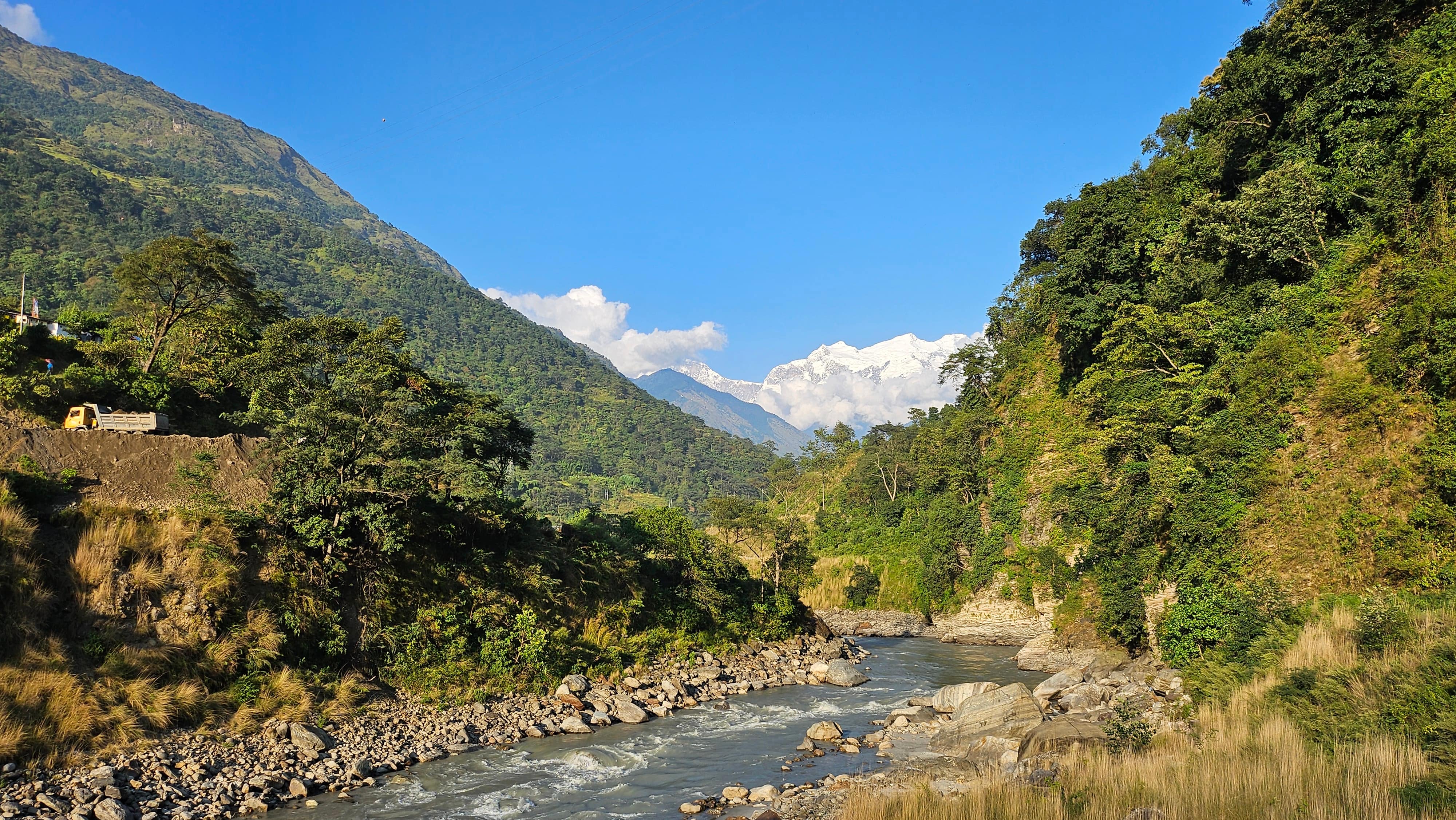
We leave Kathmandu early morning and drive towards Pokhara. Leaving the Kathmandu Valley, we follow the river to Mugling until we arrive at Besisahar. From Besisahar, we change to a high-clearance local bus (due to rough road conditions) and continue onto Syange for our overnight stay before we start our trek tomorrow. The total drive time can vary depending on road conditions and traffic but is approximately nine to ten hours.
Meals: Breakfast
Day 3
Visit Tallo Chiple village and cross the Marsyangdi Valley to Jagat
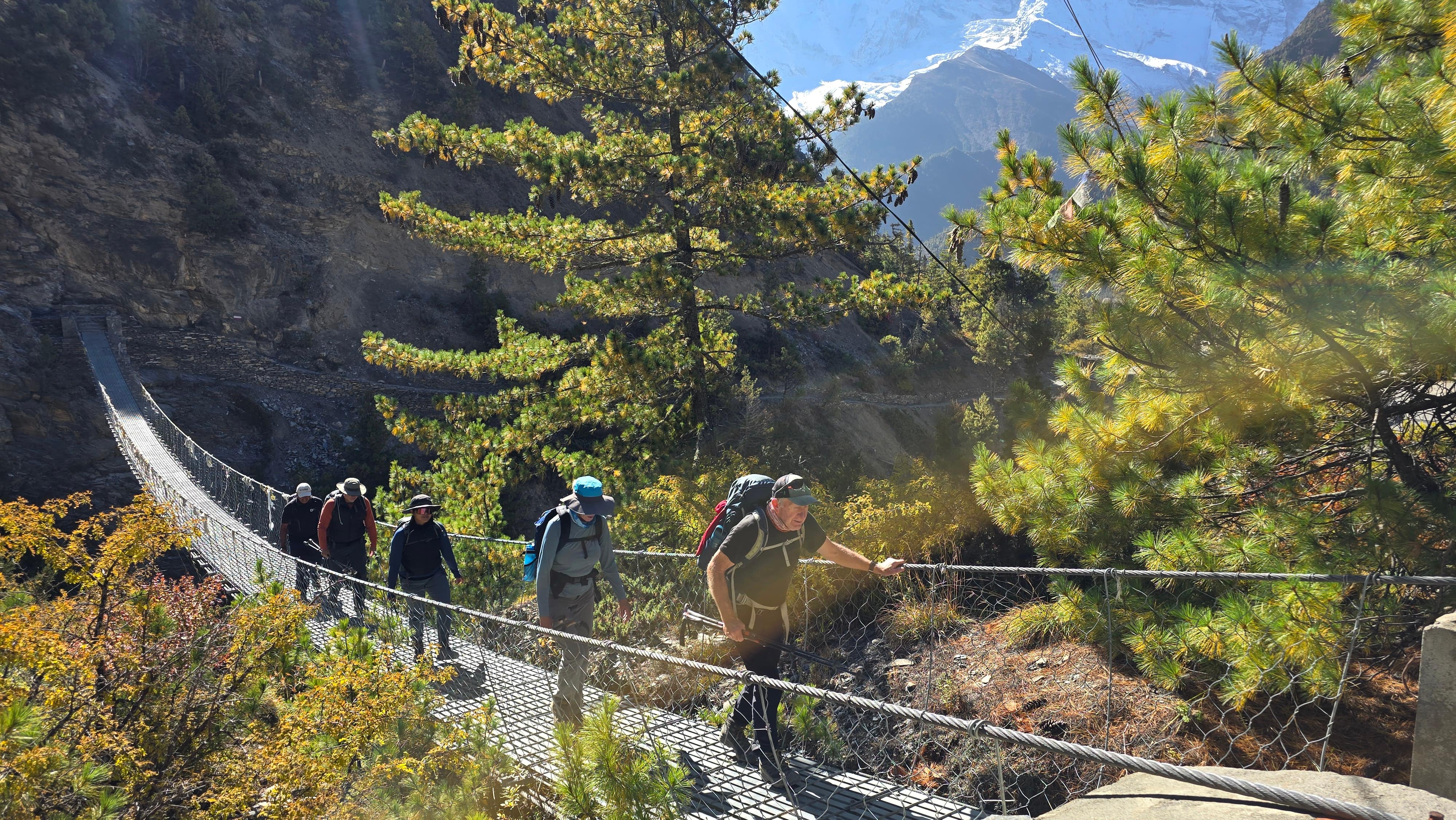
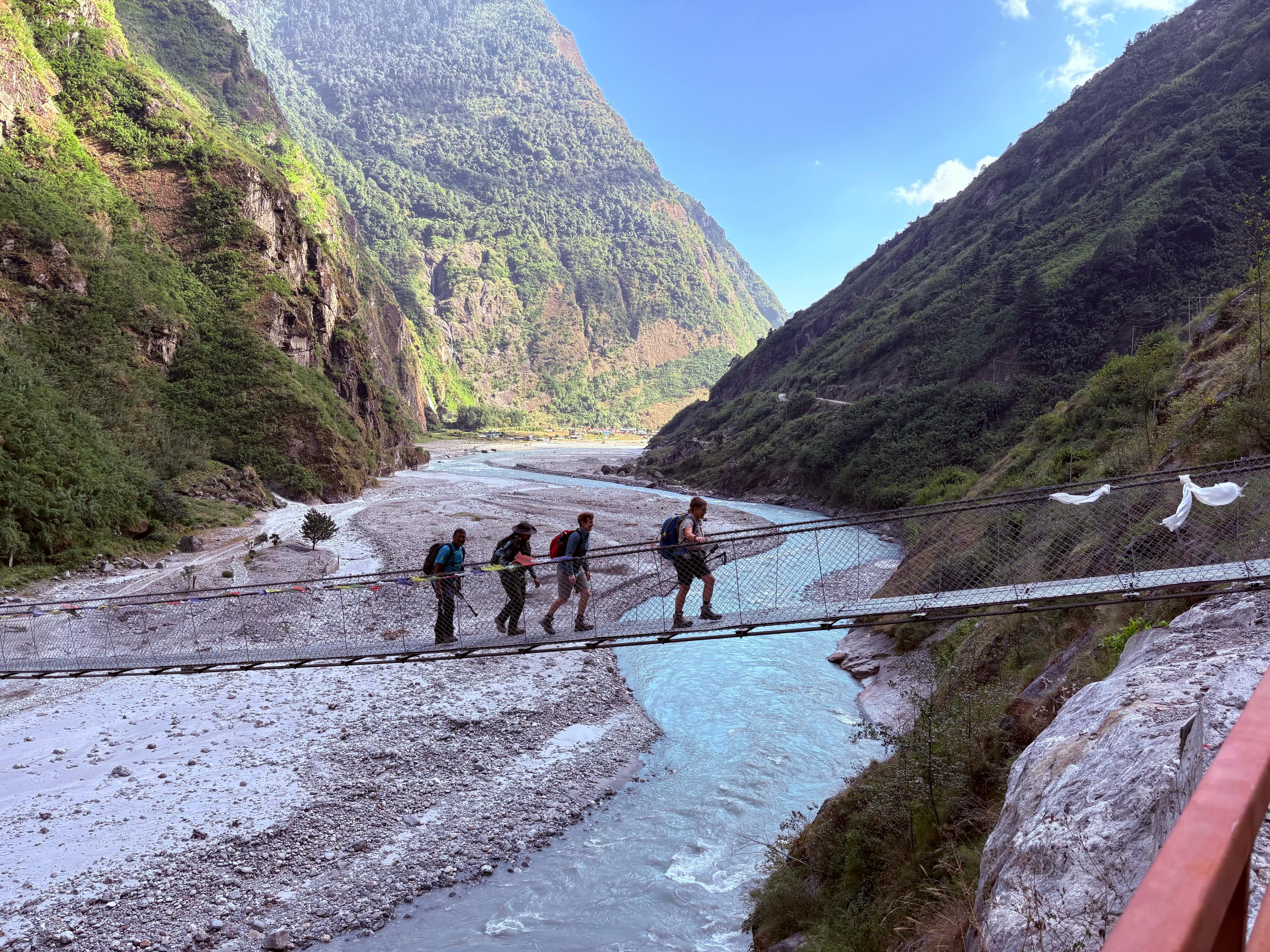
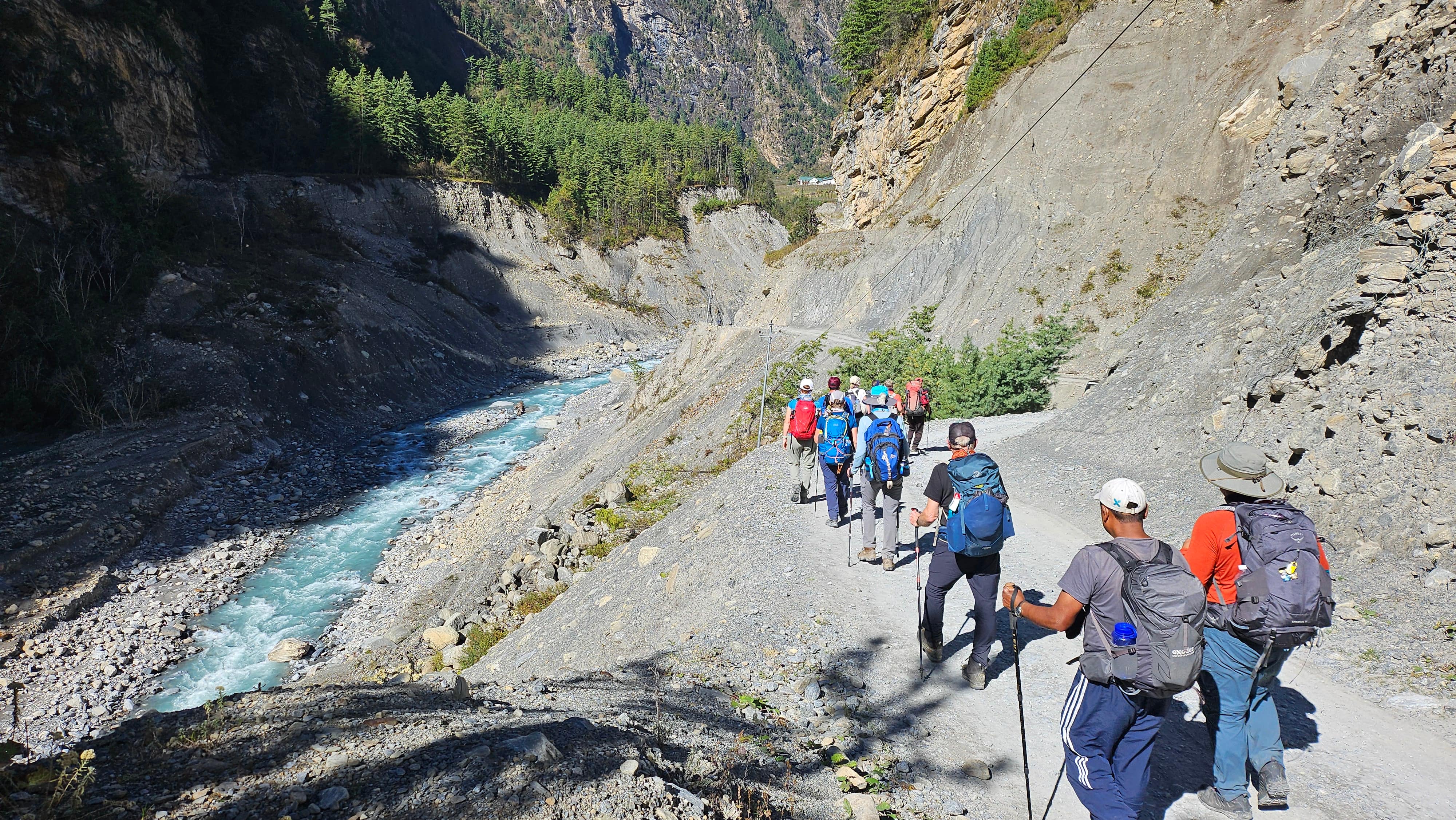
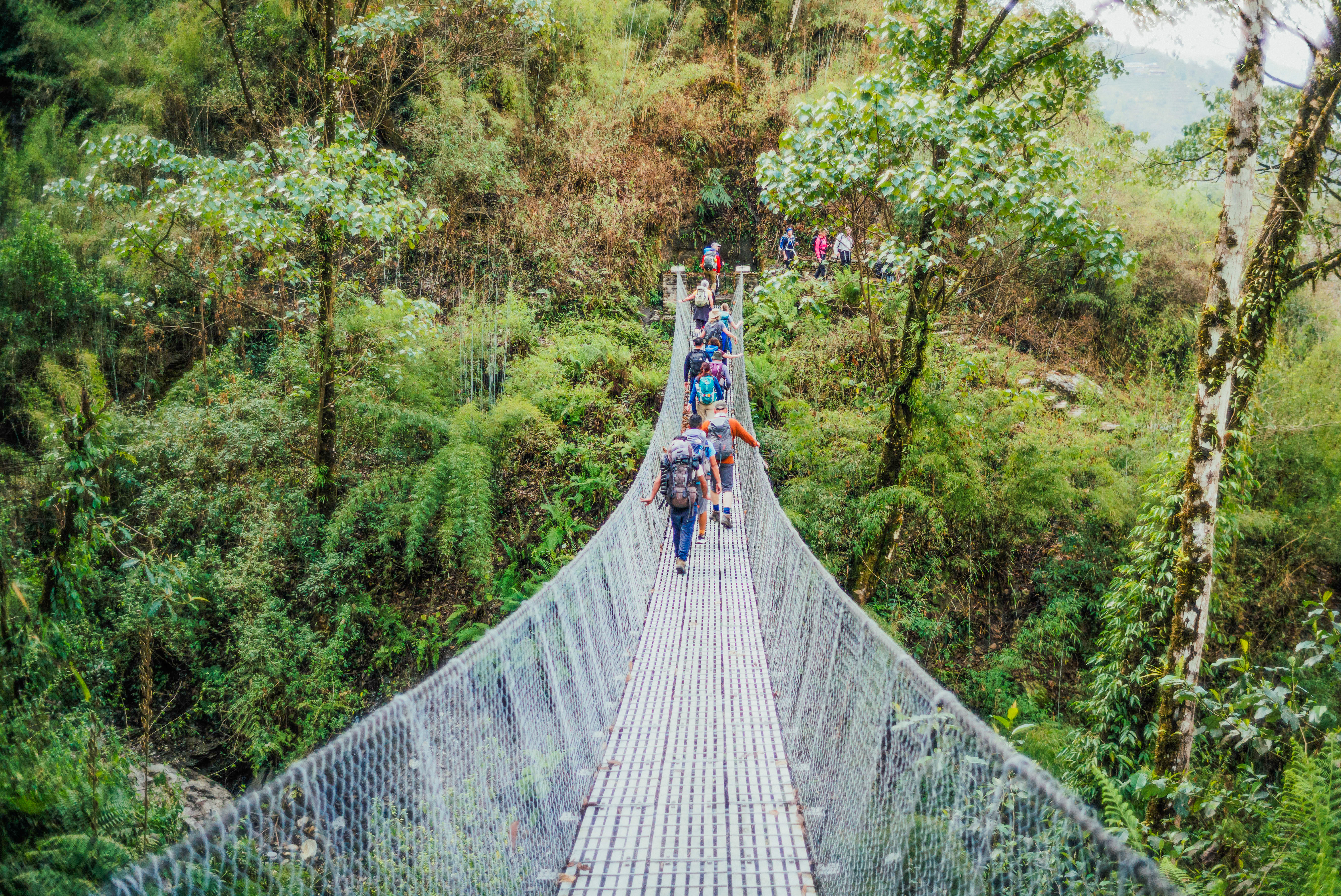
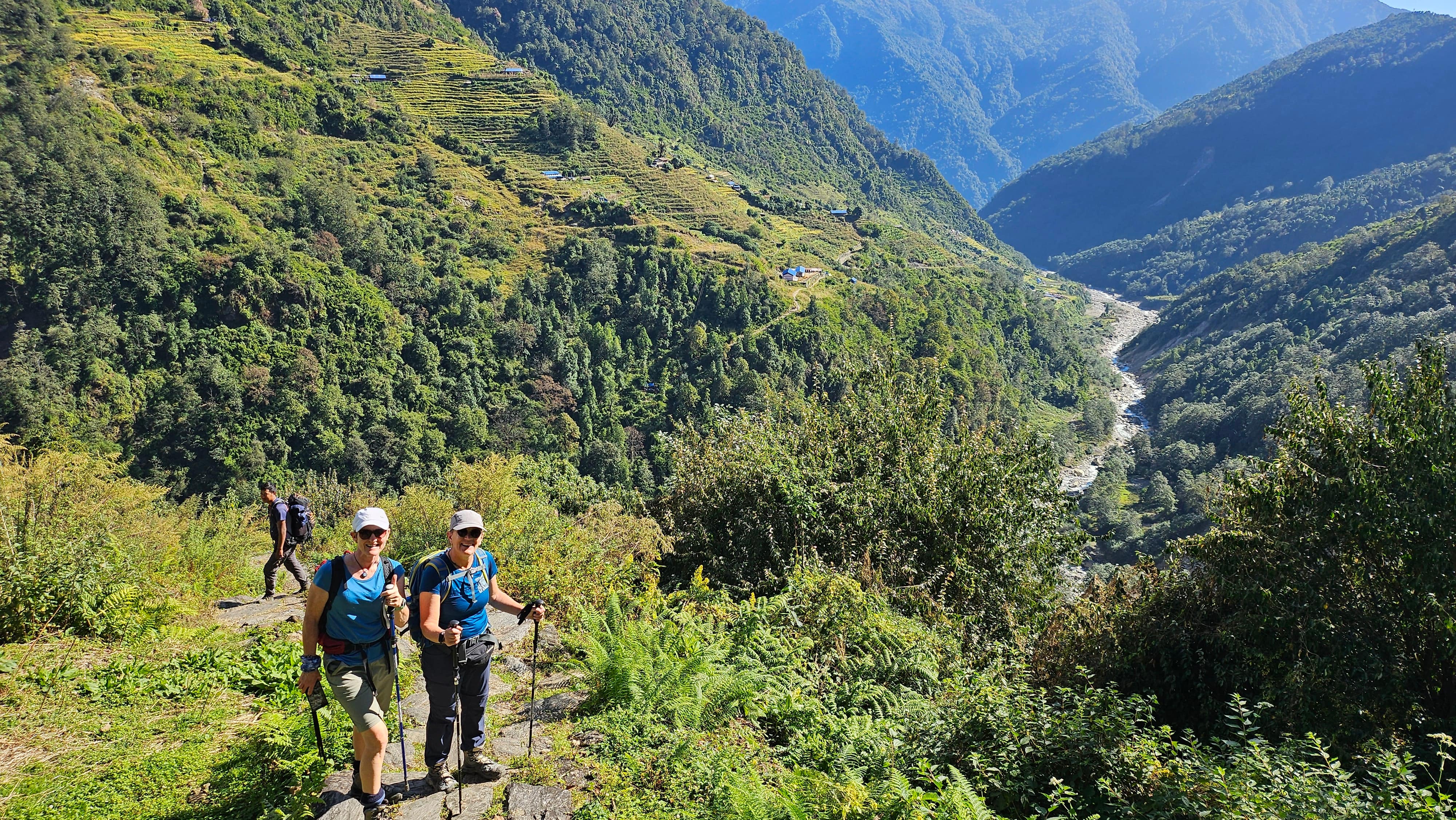
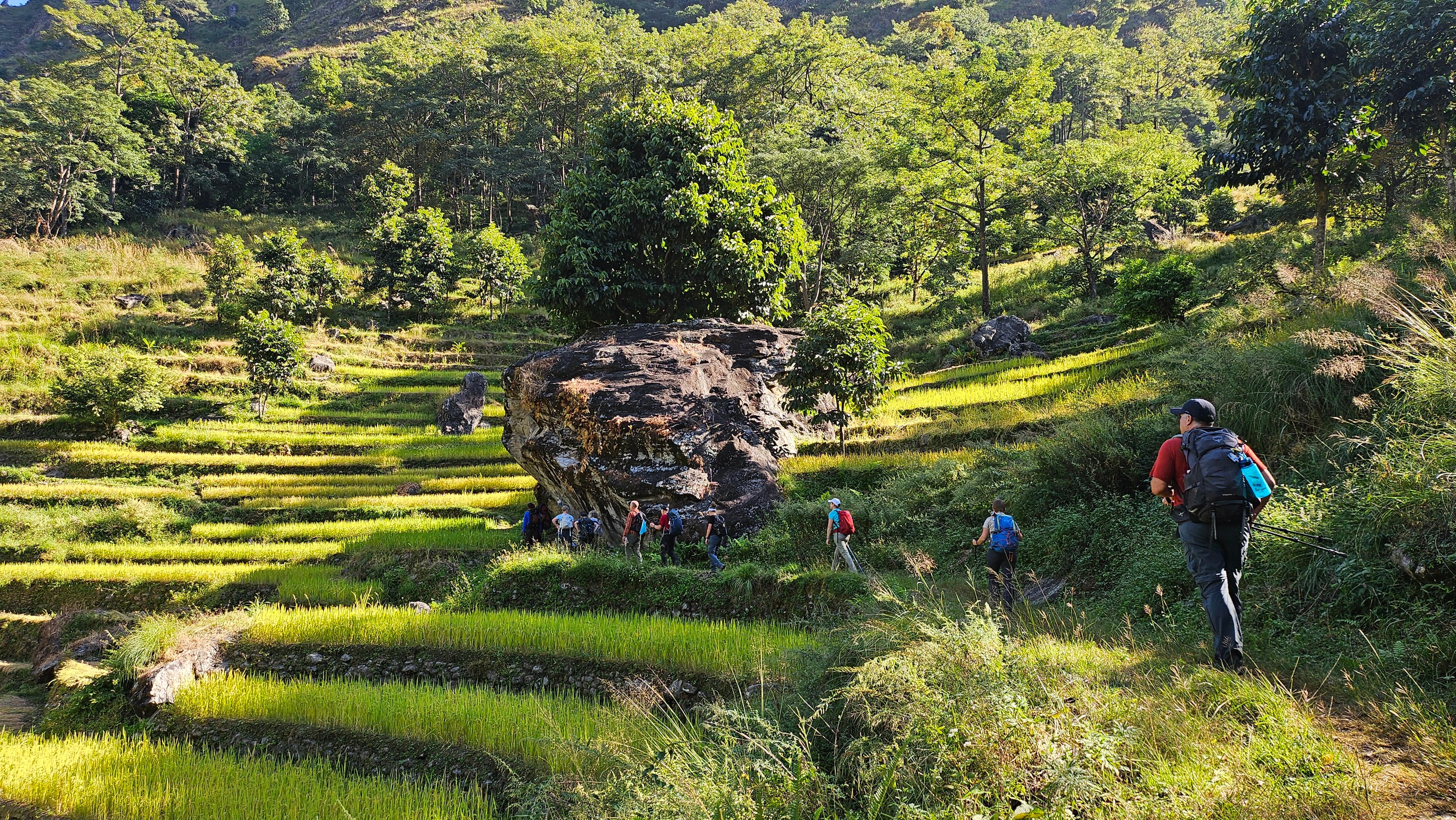
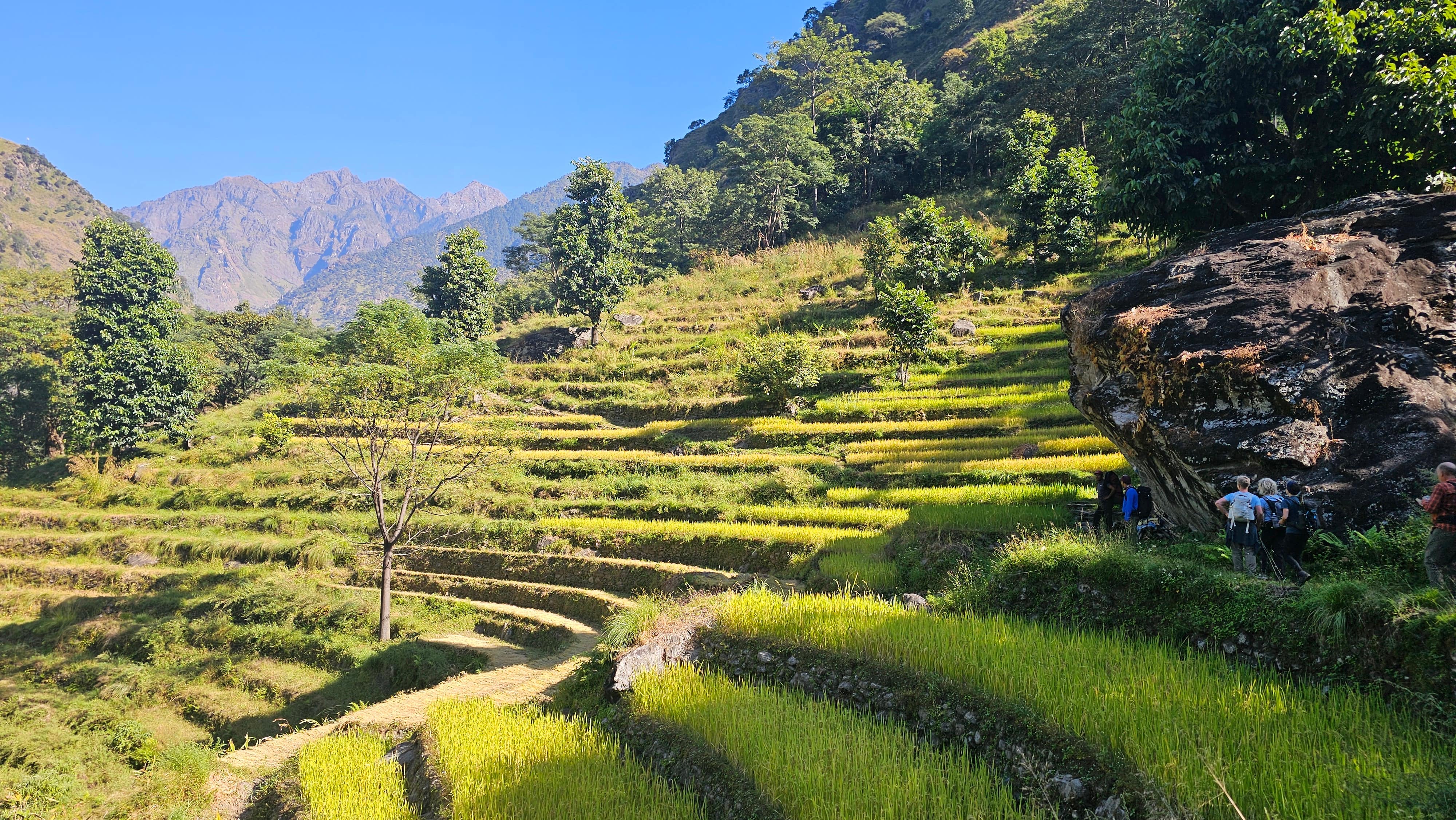
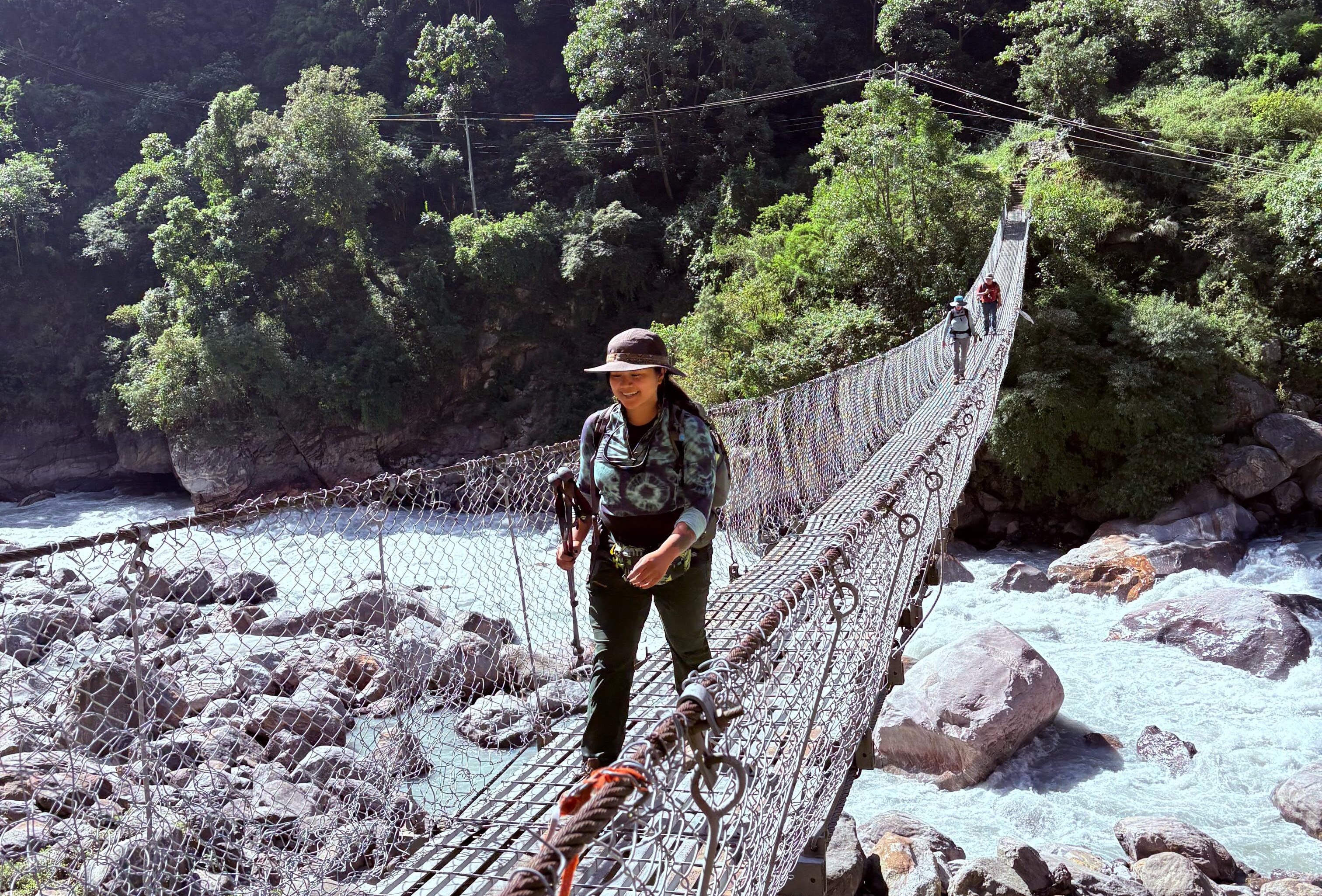
We start our trek today with a short but scenic walk. Our trail crosses the river at Syange by bridge. We climb up through Germu and follow an undulating trail through farmland to Tallo Chiple, where we stop for a tea break. The trail then descends to cross a suspension bridge, from where we have a steep climb towards Maththillo Chipla.The trail contours round the hillside and we then have a steep descent to the Marsyangdi River, which we cross by a suspension bridge. Walking steeply uphill for approximately 20 minutes, we rejoin the main trail at the village of Jagat, where we spend the night. We arrive in Jagat around lunchtime and the afternoon is free to explore the area. Down by the river are some hot springs!
Meals: Breakfast
Day 4
Reach the village of Dharapani
Immediately after leaving the lodge, a small, old trail turns off the road up to the left and undulates through forest and farmland all the way to Chyamje, after which we cross a suspension bridge and climb through oak forest. An undulating ascent brings us to a level valley where Tal, the next village, is situated at the foot of a grand waterfall (5,580ft/1,700m). From Tal, we cross the river and climb up to a jeep track which we follow to Dharapani.
Meals: Breakfast
Day 5
Visit Odar village. Climb to Temang, then descend to Chame
Beyond Dharapani, we leave the jeep trail and turn sharply up to the left and have a steep 40 minute climb up a stone staircase to the pretty village of Odar. Passing traditional farms and homesteads, we trek through Galenchowk before descending to the main trail at Bagarchap at 7,100ft (2,164m). The name of this village means ‘butcher’s place’ and, although Buddhist, the people of this region used to hunt animals.Continuing, we follow the jeep track for a short while past apple orchards to Dhanagyu. From here, we turn sharply up into the forest and have a fairly long climb to Temang, where we have lunch with magnificent views of Manaslu and Peak 29. The trail then descends through fir and pine forests to Thanchowk and further on through Koto to Chame (8,900ft/2,713m), the administrative centre of the Manang district.
Meals: Breakfast
Day 6
Continue ascending through forested hillsides past the rock face of Paungdi Danda to Upper Pisang
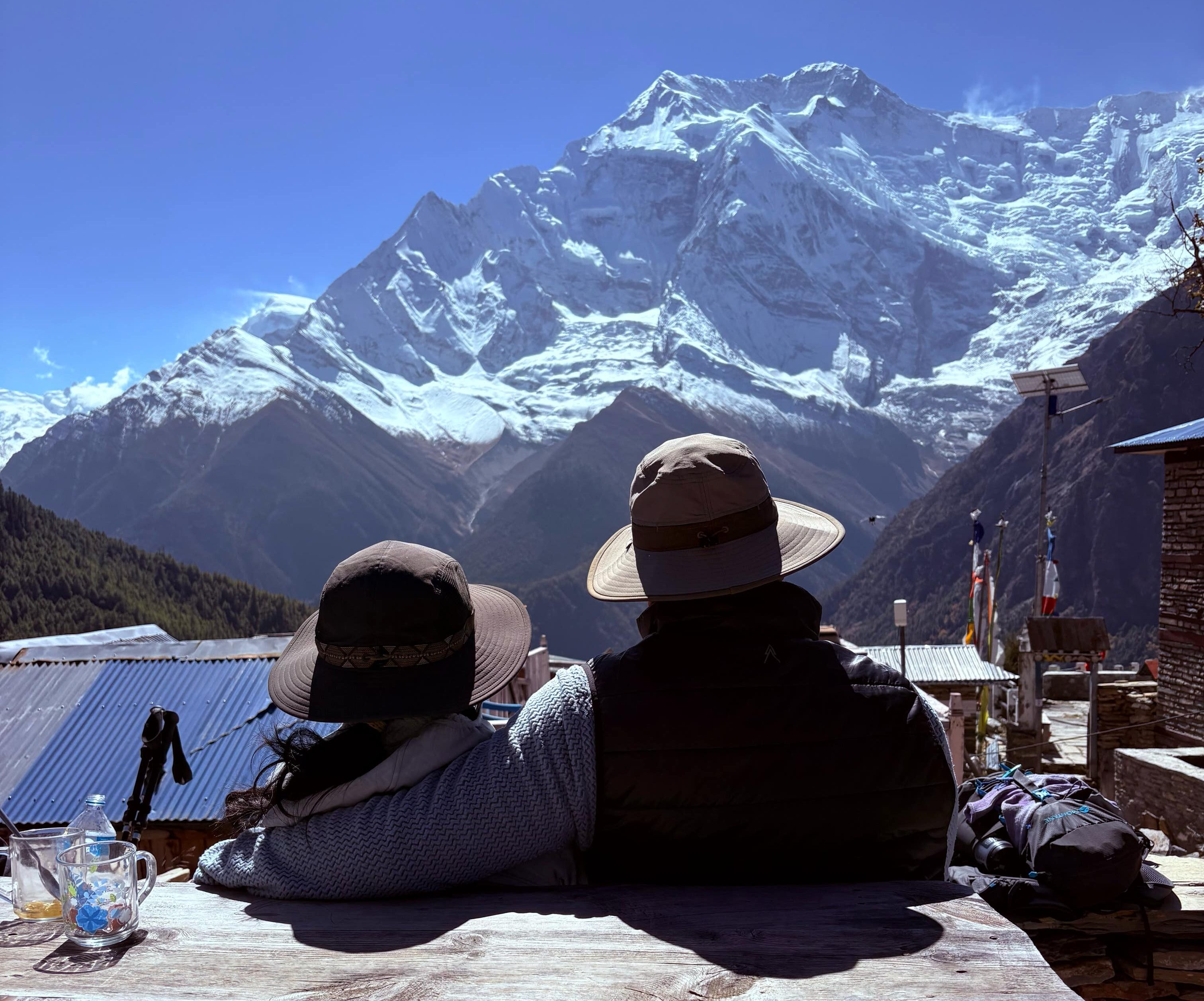
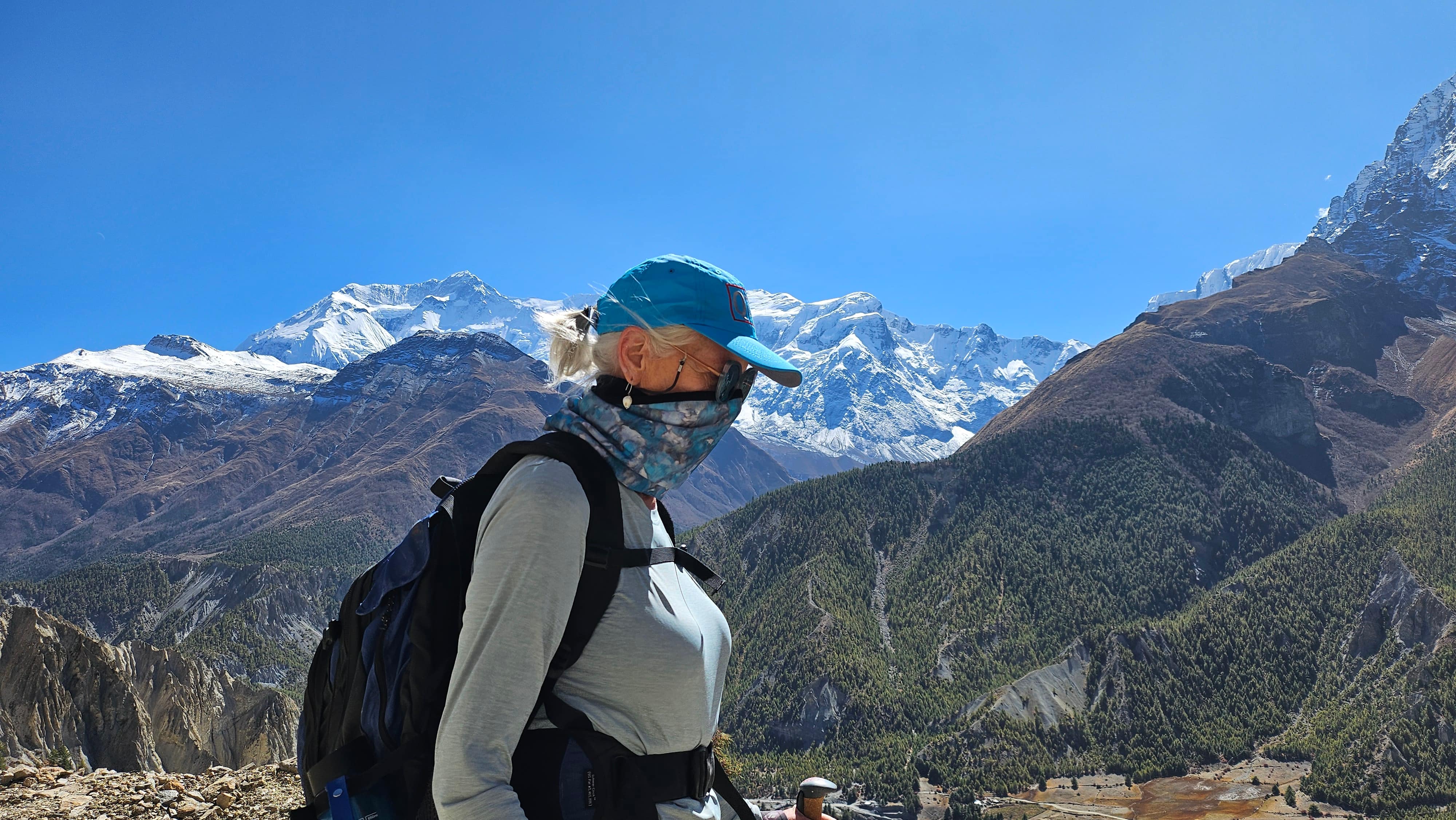
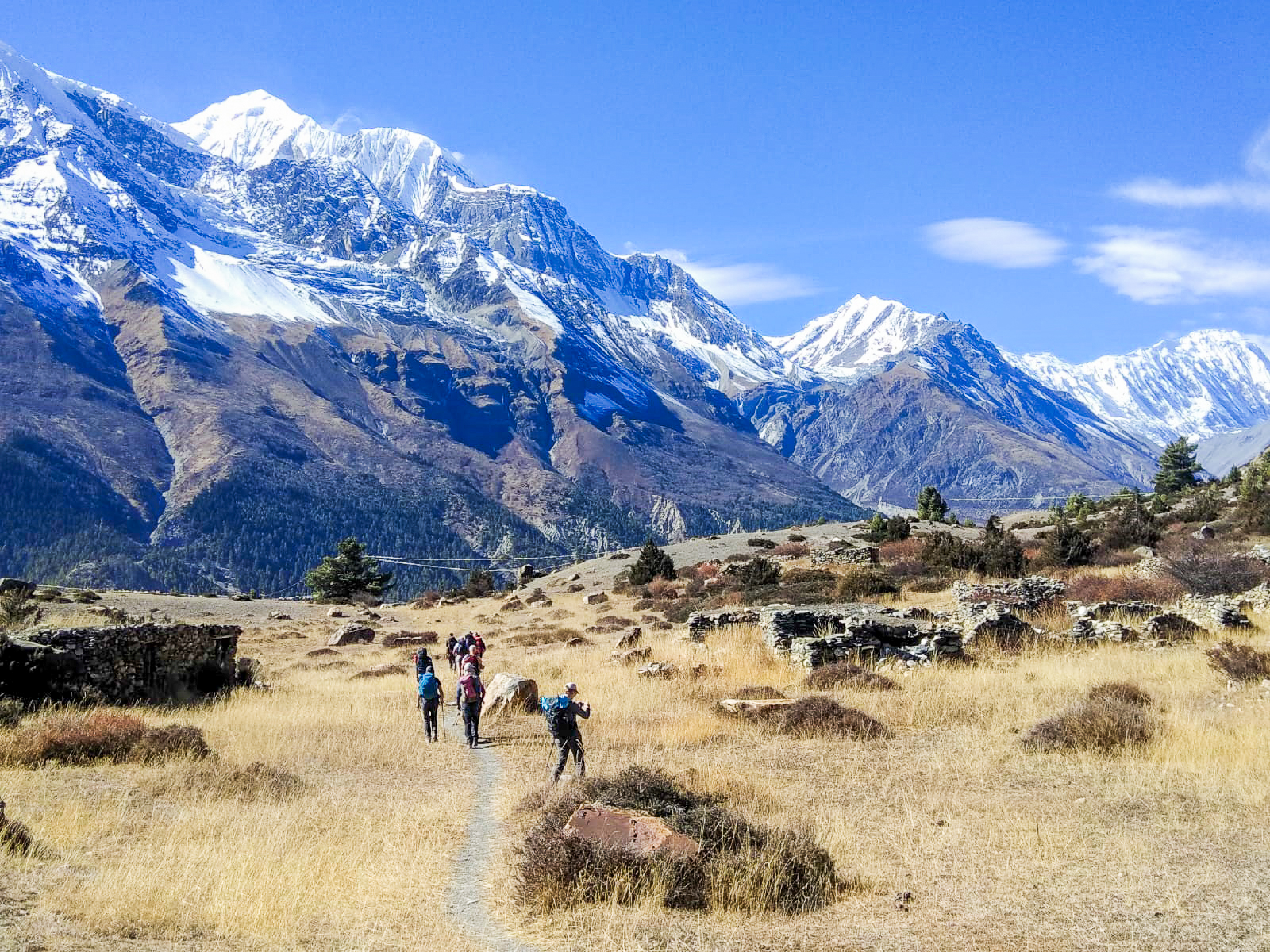
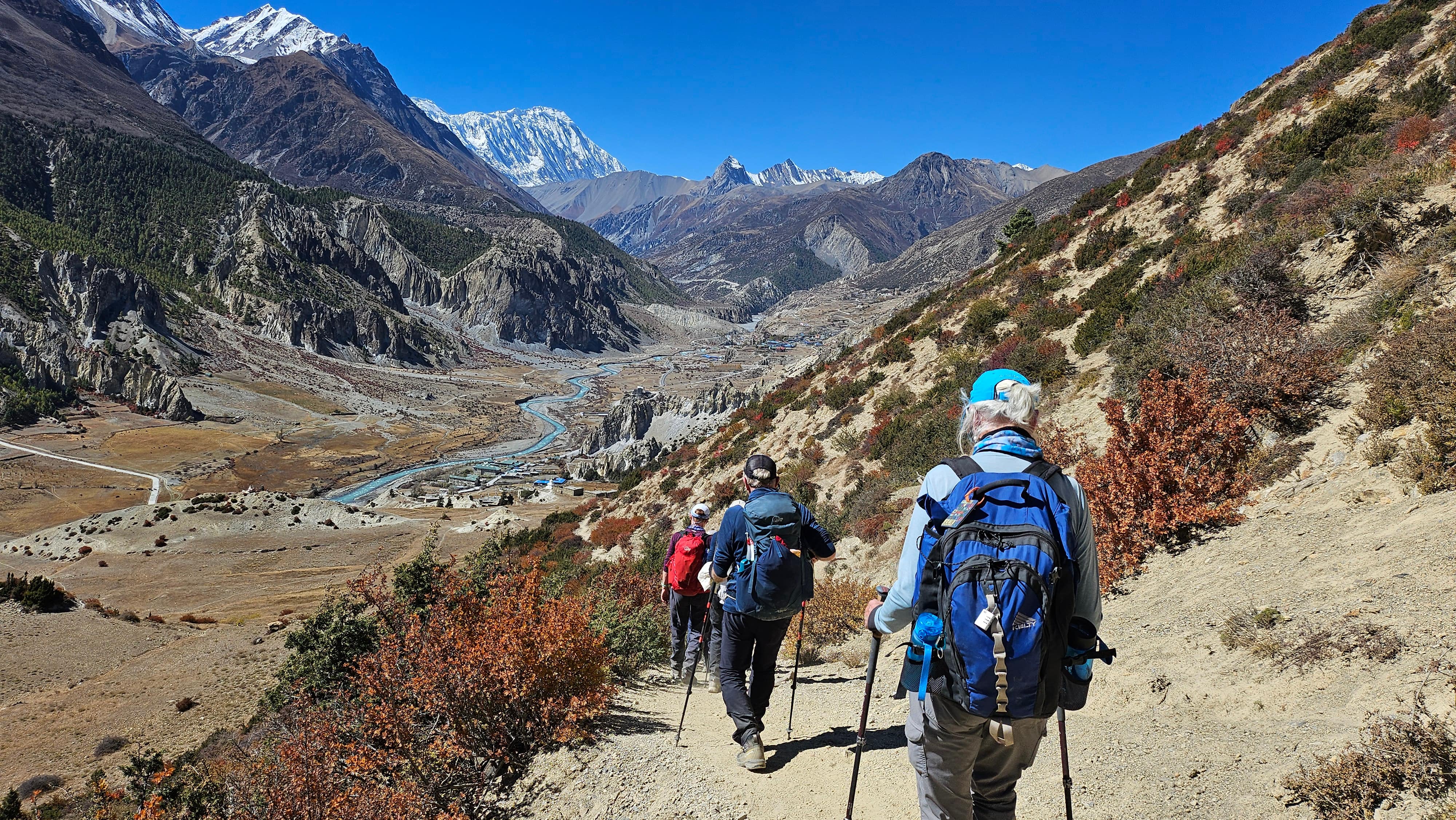
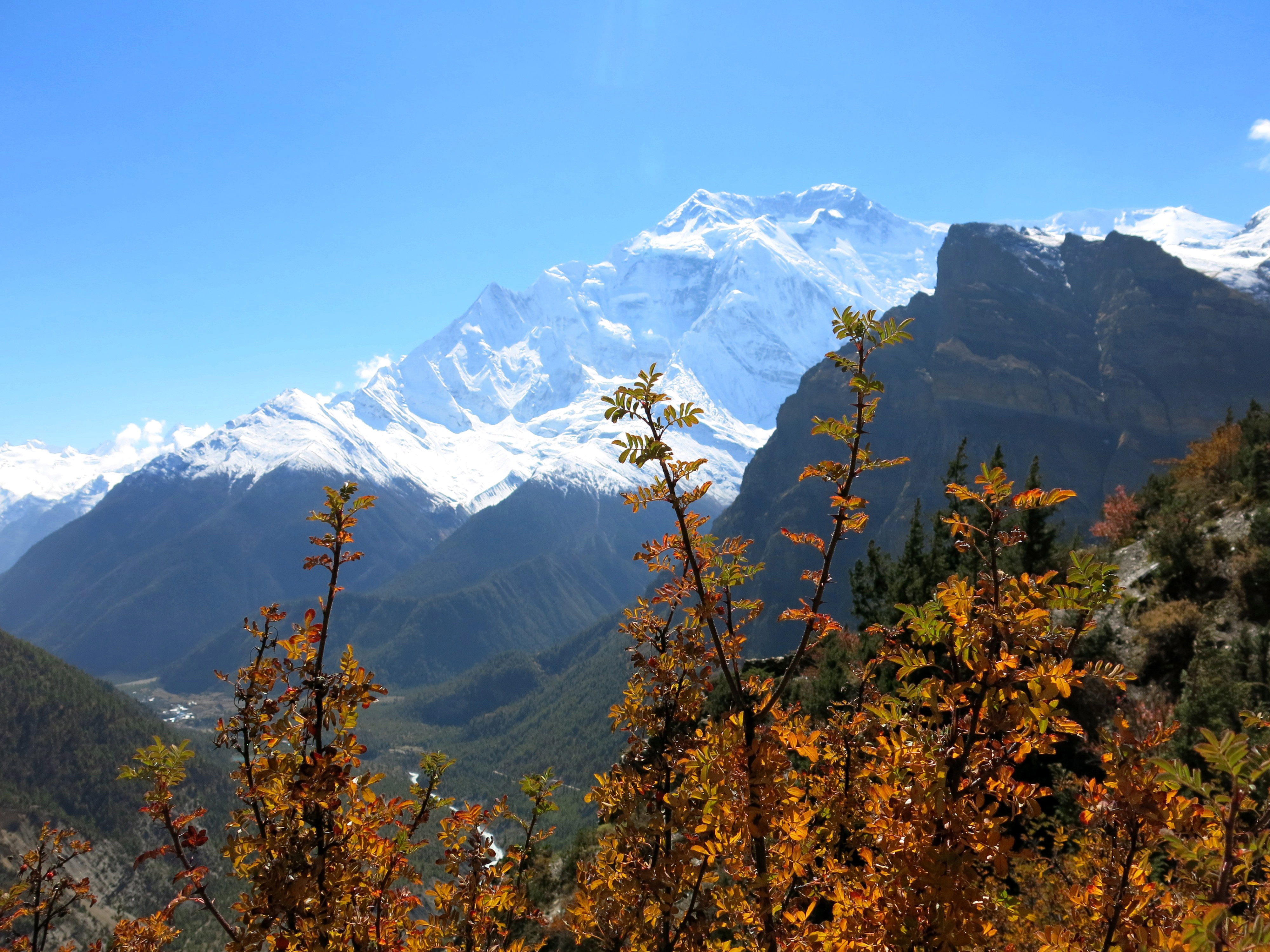
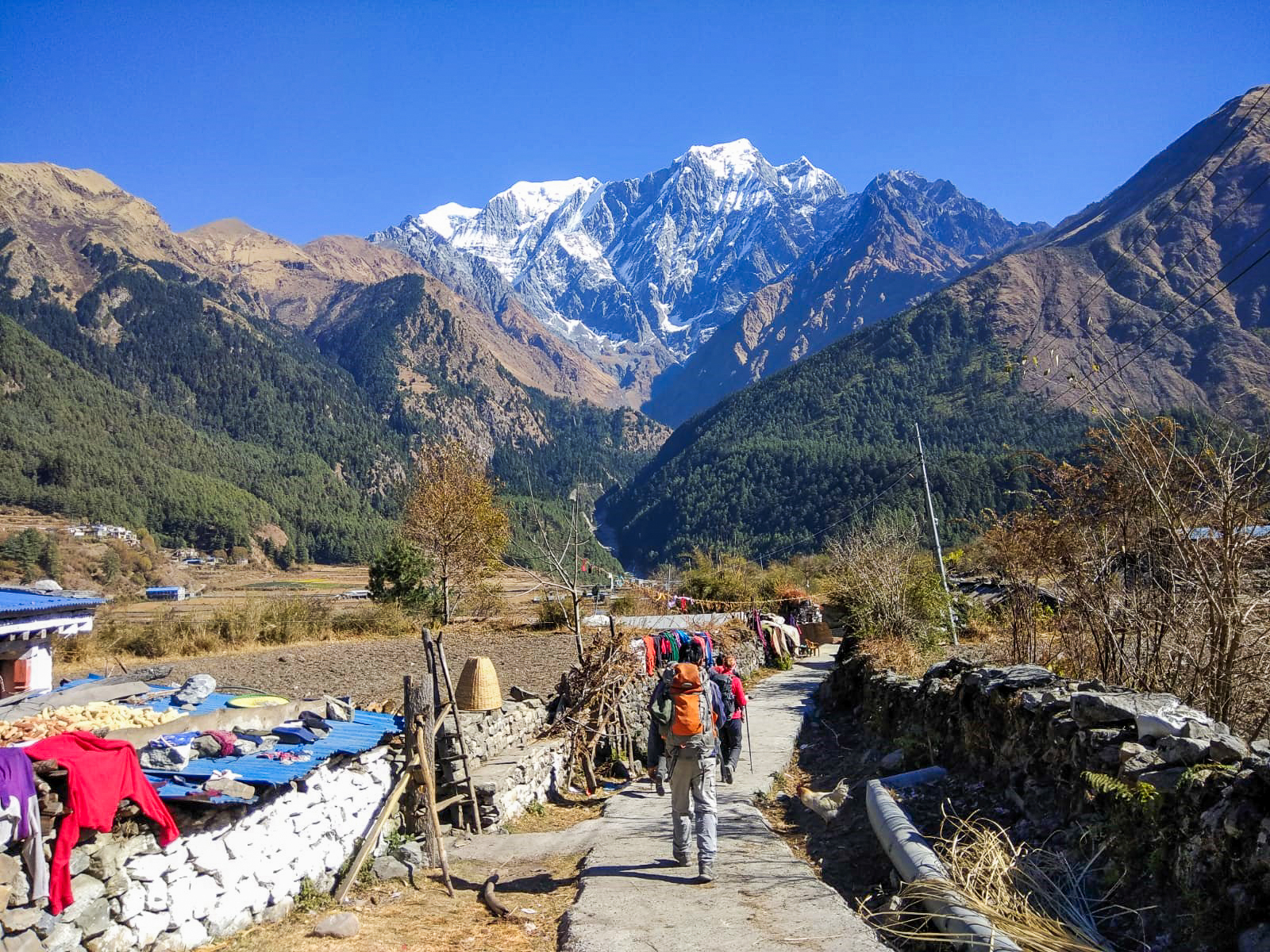
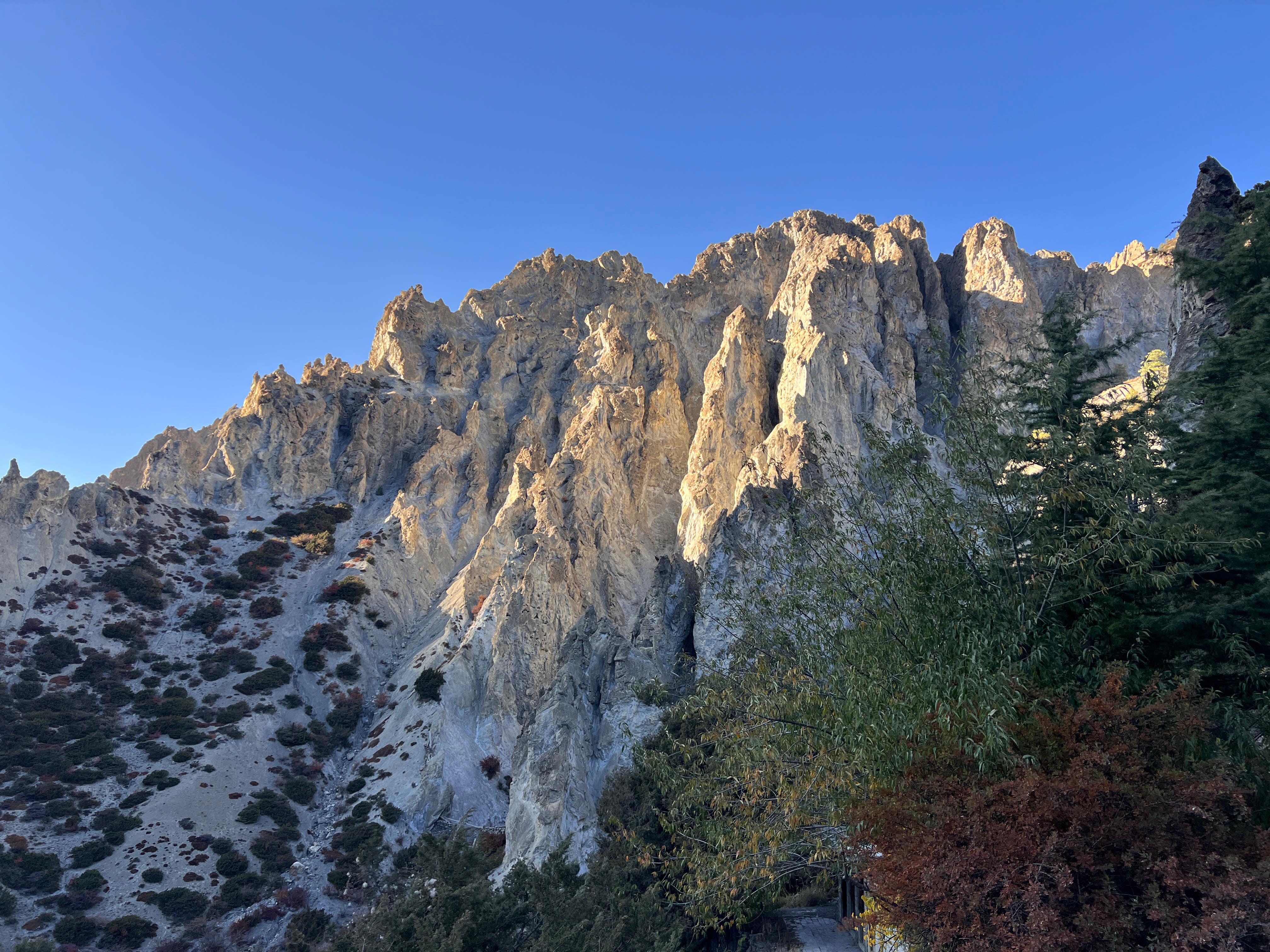
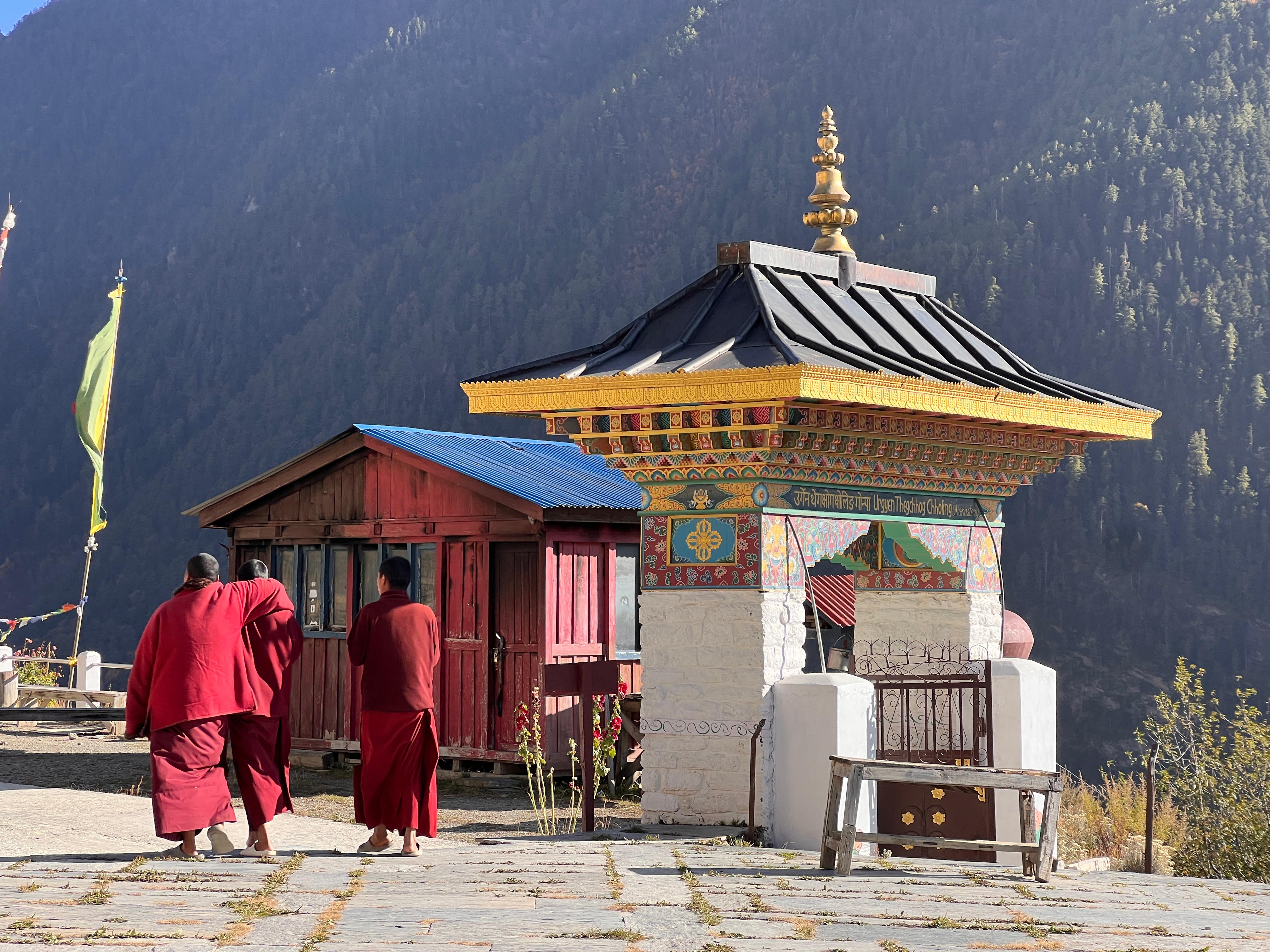
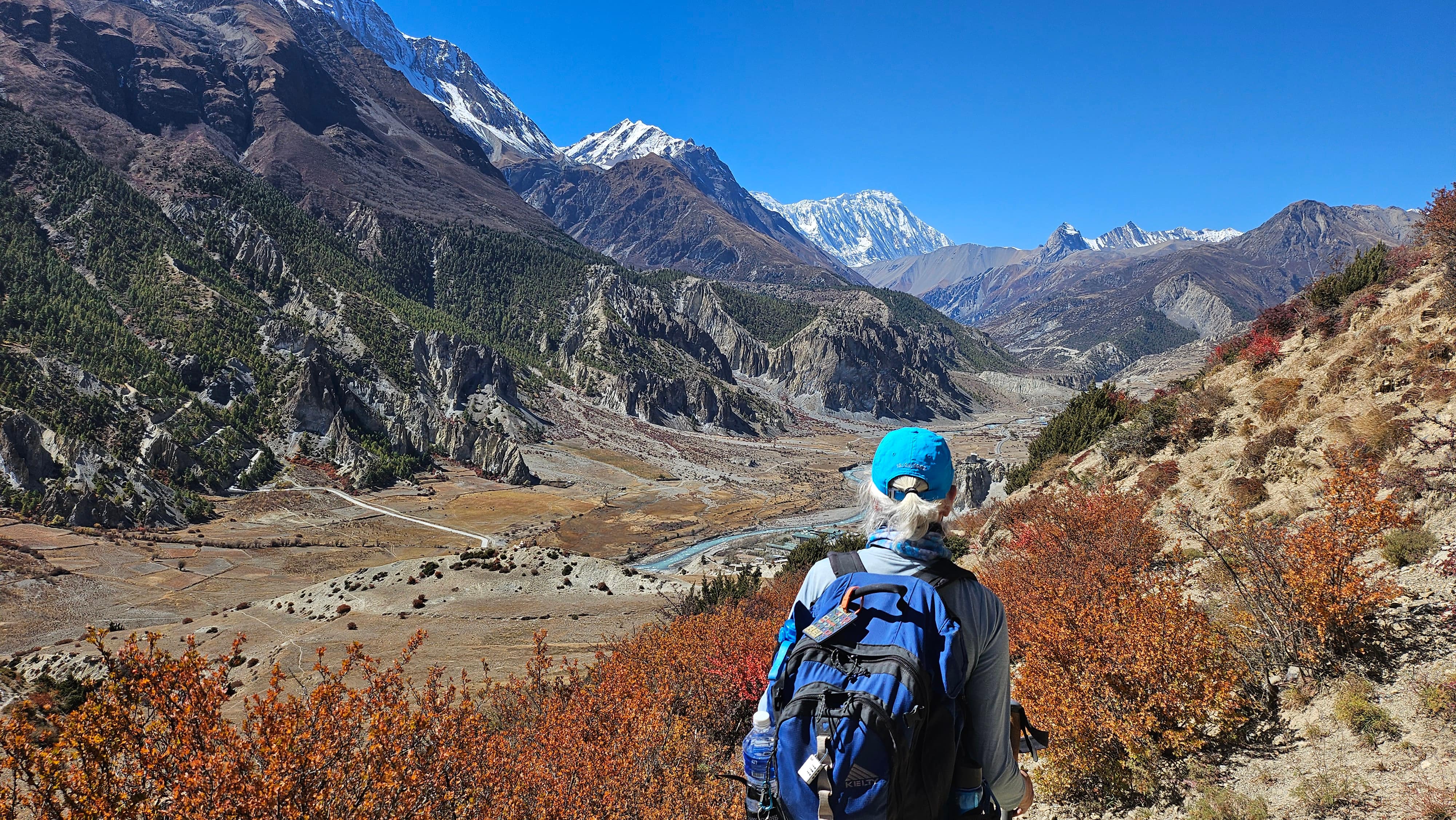
We now experience a dramatic change of scenery. Leaving the forests and vegetation of the alpine regions, we enter the upper district of Manang, known as Nyeshang. At first, our trail follows the river closely through a deep canyon on the jeep track for a couple of hours to Brathang (9,577ft/2,919m) where there is now a large apple plantation. We can stop for fresh coffee and cakes (and maybe some fresh apple juice) before we begin our climb this morning. The trail then crosses the river and leaves the jeep track to climb on forest trails through fir and pine trees. Here, the curved rockface of Paungda Danda rises nearly 4,920ft (1,500m) from the riverbank to Dukha Pokhari, where we stop for lunch.Next, we veer off to the right and take the trail that climbs away from the road track and to Upper Pisang village, where we stay in a lodge for the night. There is an impressive monastery in the village, which we can visit in the afternoon. From here to the pass, we are the closest we will be to the mountains and today the views of Annapurna II are particularly impressive (weather permitting).
Meals: Breakfast
Day 7
Climb high above the valley on a wonderful high trail to Ngawal; afternoon acclimatisation walk
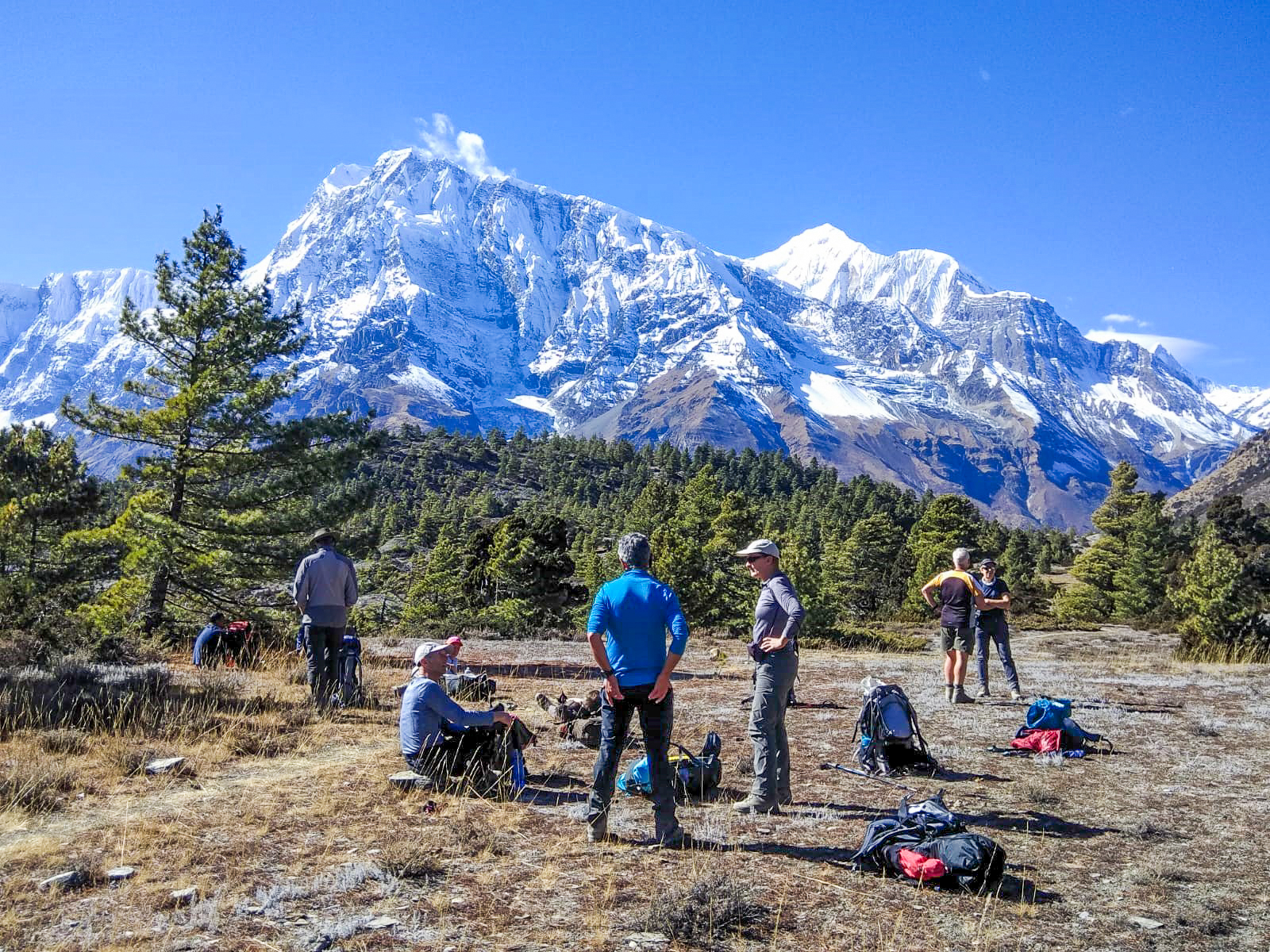
We have a shorter but spectacular day for acclimatisation. From Upper Pisang, we take the fantastic high-level route towards Manang via the villages of Gyaru and Ngawal. This is a wonderful walk with great views across to the Annapurnas. We start with a short descent through the forest to a small green lake and then have a very steep climb up to Gyaru for a tea break. The views across the valley become more spectacular the higher we go. From here, the trail undulates high above the river with magnificent views across the Annapurnas to Ngawal, where we stay tonight. After lunch at our lodge we can explore this pretty medieval village and also have the option for a 6km acclimatisation walk up above the village to a small shrine and cave (approximately two and a half hours) ascending 420m.
Meals: Breakfast
Day 8
Follow the high trail from Ngawal via Julu to Braga; afternoon acclimatisation walk
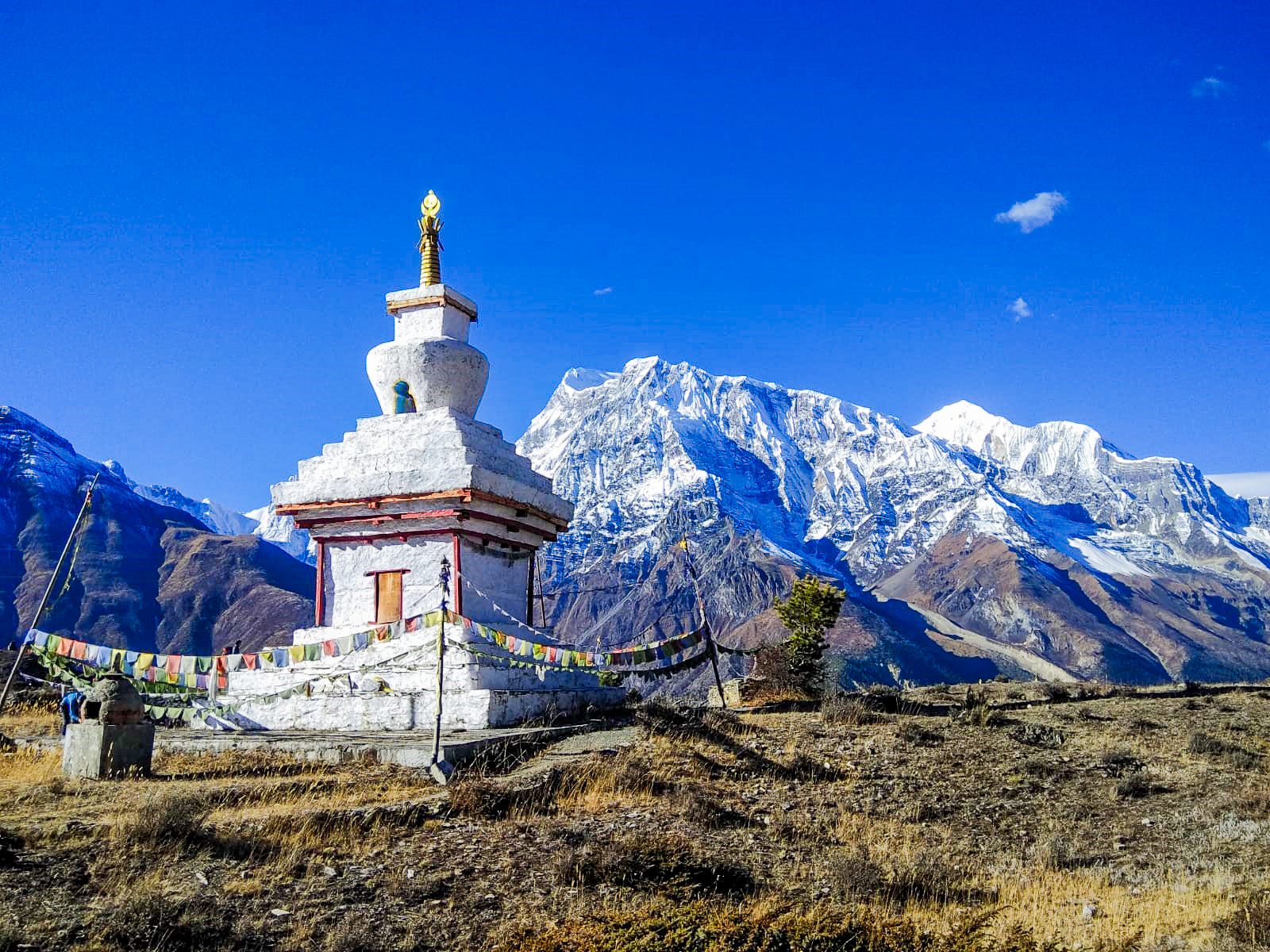
We have another half day for acclimatisation. From Ngawal, we take a spectacular high trail, which contours high above the valley with amazing views across to the Annapurnas and Gangapurna. As we leave Ngawal village, we pass a large chorten (Tibetan Buddhist shrine) before the trail drops to Julu village. We take the route that climbs steeply out of Julu onto a wonderful high trail above the valley. The trail climbs to a plateau and we contour through forests with great views across the valley to the Annapurnas and Gangapurna. The trail drops down to the pretty village of Braga, which is dominated by a large ancient gompa.We stop here for the night and in the afternoon there will be the option for an additional acclimatisation walk exploring the village. We also visit the 500-year-old gompa.
Meals: Breakfast
Day 9
Trek to Yak Kharka.
Leaving Braga, it’s a 1.2mi (2km) walk on the main trail to Manang village, passing beautifully carved mani (prayer) walls as we head towards the base of the Thorong La. We will stop at Manang for a short while, there are shops and bakeries here giving you the chance to pick up some snacks for the day or treat yourself to apple pie and a coffee. We climb out of the Marsyangdi Valley and turn northwest up the valley of the Jarsang Khola. Looking back, we enjoy ever-more spectacular views as we are above the forests and pass through dry, alpine country, with scrub juniper and occasional clumps of birch. We stop at Gunsang for a light lunch before continuing up the valley.We spend tonight at a lodge in Yak Kharka. Look out for the blue sheep that inhabit this cold, windy spot. For the energetic, this afternoon we can take an additional walk into the hills behind the lodge.
Meals: Breakfast
Day 10
Short half-day walk to Phedi, at the foot of the Thorong La
A short day to aid acclimatisation. The scenery becomes wilder as we continue ascending the valley. At one point, we descend to cross the Jarsang Khola, then traverse a scree slope to the lone teahouses at Phedi at the foot of the Thorong La. Thorong Phedi can be very cold and windy. In the afternoon, we can go for a walk up to Thorong High Camp, which is the last lodge and is about an hour above Phedi.
Meals: Breakfast
Day 11
Cross the Thorong La to Muktinath, a place of pilgrimage
We have a very long day as we leave Phedi very early in the morning for the climb to the pass. The first part of the ascent is very steep, but it eases somewhat as we approach the top, although the altitude still makes the going tough. Eventually, after numerous false summits, we reach the pass itself at 17,769ft (5,416m). Ahead there is a magnificent panorama of snow-capped peaks soaring above the Kali Gandaki Valley looking towards Dolpo and Mustang; looking back, we can see several of the main Annapurna peaks. Directly in front of us is the great chasm of the Kali Gandaki (8,200ft/2,500m). It’s a very long descent that begins gently and becomes steeper, as we follow a series of switchbacks down to more grassy slopes. We stop for lunch at Phedi, where there are a few teahouses. From Phedi, it’s another hour and a half of gentle descent to Muktinath. We can visit the local famous temples on the way to our lodge.Please note, conditions on the pass vary. It can be calm and clear with no snow but there can also be snow and ice and high winds on the pass. We recommend you carry Yaktrax or microspikes in case of snow or ice and take enough warm layers in case of high winds.
Meals: Breakfast
Day 12
Trek through beautiful barren landscapes to Kagbeni
An easier day after the exertions of yesterday. From Muktinath, we pass through a landscape of bare, eroded hills with a backdrop of snow-capped high peaks. We cross the Jhong Khola and climb up to Chongur, a small traditional village. The monastery was founded by a Sakya monk and the whole village is painted with the colours of the Sakya sect. Continuing along a mixture of trekking trails and jeep tracks, we come to Jhong, another beautiful village. There is a monastery here dating to the seventh or eighth century and the ruins of an old fortress. Passing wind-eroded cliffs in an array of beautiful colours, we continue down the valley through Putak village and finally have a steep descent into the Kali Gandakhi Valley and the interesting village of Kagbeni. We have a long morning today (so take some snacks) and have a late lunch in Kagbeni.There is time in the afternoon to explore this magical place. With narrow lanes and tunnels between the houses, it has an almost medieval feel.Please note, in the event we are delayed due to bad weather, this day will be missed out and we trek directly from Muktinath to Marpha.
Meals: Breakfast
Day 13
Follow the Kali Gandaki Gorge by jeep via Jomson to Marpha
To avoid walking on the road, we take a 4×4 transfer (20 minutes), following the Kali Gandaki River to Jomsom. Here, we take a break, a chance to grab a tea or some local snacks, before exploring the ancient town populated by Thakali and Tibetan people.From Jomsom, we hop back in our 4x4s for another 20 minutes until we reach the pretty village of Marpha, with its clean paved streets and white-washed houses, just in time for lunch. Marpha is known for producing apple and peach brandy, which you might like to sample to celebrate your crossing of the Thorong La.This afternoon, enjoy free time to explore the area around Marpha, recuperating from the first half of your journey in Nepal.
Meals: Breakfast
Day 14
Continue following the Kali Gandaki Valley to Larjung
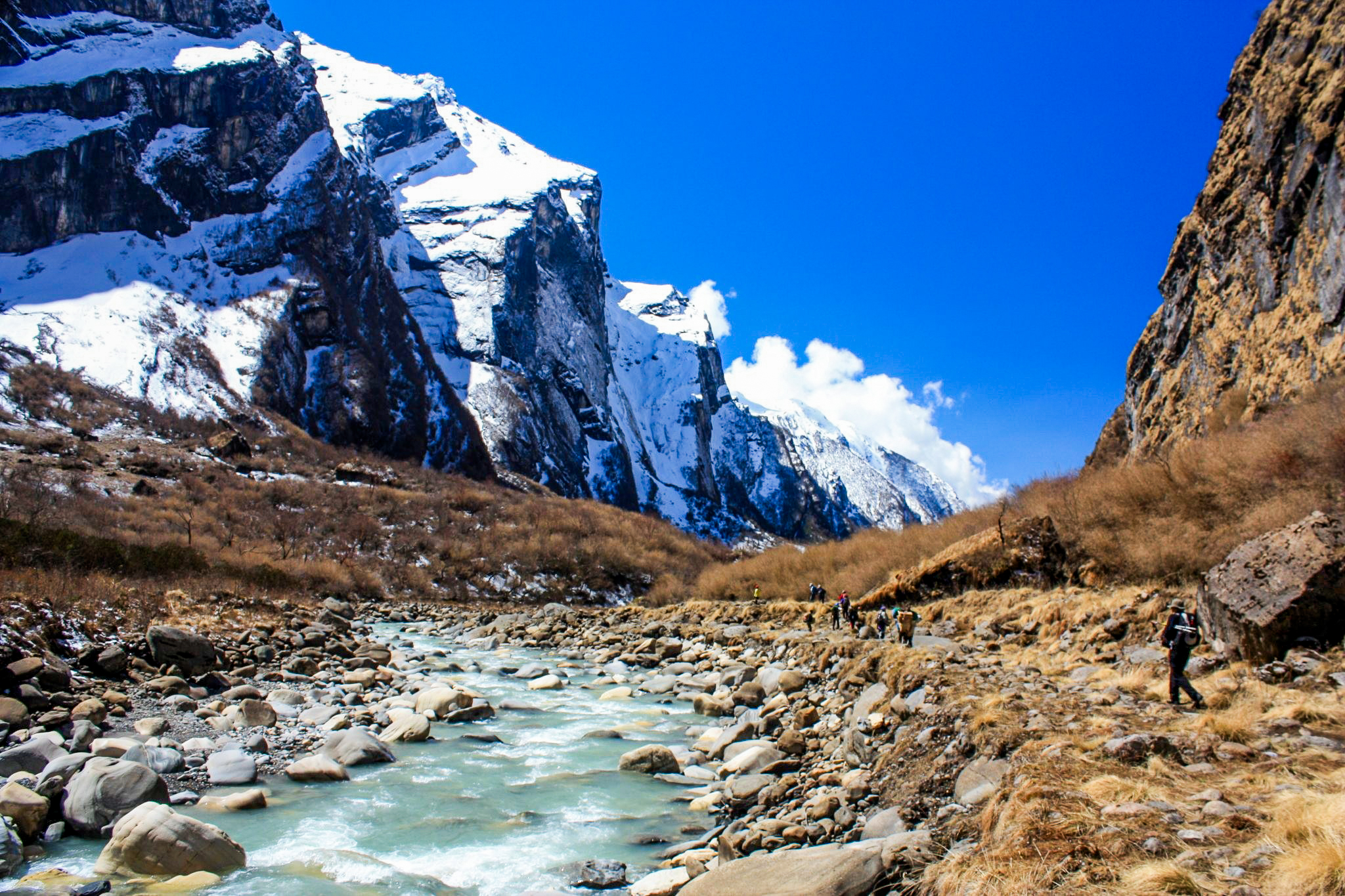
Today, we follow the Kali Gandaki Valley, a major trade route. We are now in the deepest gorge in the world; to the east, Annapurna I rises to 26,545ft (8,091m), to the west, Dhaulagiri soars above us at 26,795ft (8,167m).Leaving the dry, barren landscapes, we walk through pine, cypress and juniper forest, sometimes on the valley floor and at other times on a trail high above. From Marpha, before we cross back over the Kali Gandaki, we need to walk along the road for approximately 10 minutes before entering the walking trail through fir and pine forests. We climb up to the pretty Thakali village of Chimang.Descending to a side stream, we follow the side valley down for a short while before climbing again into the forest. We ascend for about an hour and then the trail undulates for a while before descending to the valley floor at Sauru. We stop here for a break and then cross the Kali Gandaki to Kobang and onto Larjung.Alternatively, from September to November, when the wooden suspension bridge crossing the Gali Gandaki is inaccessible, we must walk (1hr 30min) along a main road from Chimang to Larjung.We stay tonight in a lodge. In the afternoon, we walk up to Naurikot, another traditional Thakali village, for sunset views across the valley on Niligiri.
Meals: Breakfast
Day 15
Cross the Kali Gandaki and trek through Titi Tal, Kunjo to Ghasa
From our lodge we cross the Kali Gandaki to Sirkung. It’s then an easy climb up through the forest to Titi Tal, a very small lake (pond) but an important marsh zone for waterbirds in the Mustang area. We follow the trail through Taglung to Kunjo, where we have a simple Nepali lunch. After lunch we descend steeply through the forest to a rocky riverbed. Crossing a suspension bridge, we have a gradual climb up to Jhipre Deurali. The trail then descends to cross the Kali Gandaki where we join the road. We walk for approximately one hour along the road until we reach the start of the next trekking trail to Ghasa, where we reach our lodge for the evening.
Meals: Breakfast
Day 16
Follow an undulating trail through small settlements to Tatopani, famous for its hot springs
From Ghasa, we follow the road for 30 minutes, until we cross the river via a suspension bridge. The trail now climbs high above the river to Pairothaplo and then descends to Kopchepani. Across the river, we can see the huge waterfall at Rupse Chhara. We continue on the same side of the river and follow the rollercoaster trail up and down all morning. We have lunch in the small village of Narcheng before continuing past a hydroelectric project just before Tatopani. A suspension bridge brings us right into Tatopani, where we spend the night. Tatopani means ‘hot water’ and is famous for its hot springs just below the village. There is time in the late afternoon to enjoy a welcome soak – guaranteed to ease any aching limbs!
Meals: Breakfast
Day 17
A long climb up through the villages of Ghara, Shika and Chitre to Ghorepani
The last stage of the trek takes us over a high ridge to the end of the route. Today is a sting in the tail as we have a long climb to Ghorepani. We climb all day through small hamlets and terraced fields, starting with a short descent on the road track for 45 minutes to a couple of bridges. From the second bridge, we have 30 minutes along a track and then the trail starts climbing on a series of stone staircases. It’s fairly steep up to Durbin Danda from where we have a short descent through Ghara. We then mostly follow the old trail as it climbs up through the villages of Shika and Chitre. From Chitre, we enter a huge rhododendron forest and the last couple of hours takes us up to Ghorepani. Meaning ‘horse water’, Ghorepani was once a stopping place for the huge mule trains that used to ply this route. As we climb today, the mountains start to appear and from Ghorepani we get fabulous views of the Annapurnas from the lodge.
Meals: Breakfast
Day 18
Optional early morning walk up Poon Hill for sunrise before a long descent to Birethanthi
There’s an optional early start for those who want to climb Poon Hill for sunrise (approximately two hours’ return trip including stops – in addition to the 7hr 30min walking to Birethanthi). The effort is well worth the 1,015ft (310m) climb (again, in addition to the 1,050ft/320m of total ascent today) for the superb views over the Annapurnas, Dhaulagiri and Machhapuchhare. We return to our lodge for breakfast and then it’s all downhill through the forest to Banthanti and then down a stone staircase through Ulleri and Tirkhedunga to Birethanti by the Modi Khola, where we stay in a very modest lodge.
Meals: Breakfast
Day 19
Short walk to Naya Pul and drive to Pokhara; afternoon free
From Birethanti, it is a very short walk to Naya Pul, where we pick up transport back to Pokhara. We usually arrive by lunchtime and have the afternoon to explore this pretty lakeside town.
Meals: Breakfast
Day 20
Free day in Pokhara
We have the whole day in Pokhara. There are many options to choose from today. You might want to hire a bike and cycle around part of the lake or you could take a boat across the lake and walk up to the Japanese Peace Pagoda with great views of the mountains and the lake (from the pagoda, carry on up the ridge to Raniban Resort for lunch). Alternatively, visit the Mountaineering Museum, the Gurkha Museum, take a trip to the nearby Tibetan refugee settlement and craft centre, or simply relax in one of the many lakeside restaurants and stroll around the shops.
Meals: Breakfast
Day 21
Fly to Kathmandu
We fly to Kathmandu. Weather depending, there should be good views on the flight.
Meals: Breakfast
Day 22
Adventure ends in Kathmandu
The trip ends after breakfast and we begin our return journeys home, full of tales and memories to last a lifetime. If you’d like a little more time to explore Kathmandu or the surrounding region, speak to your sales representative about extending your stay.
Meals: Breakfast
What’s included
What’s not included
Additional information
Food
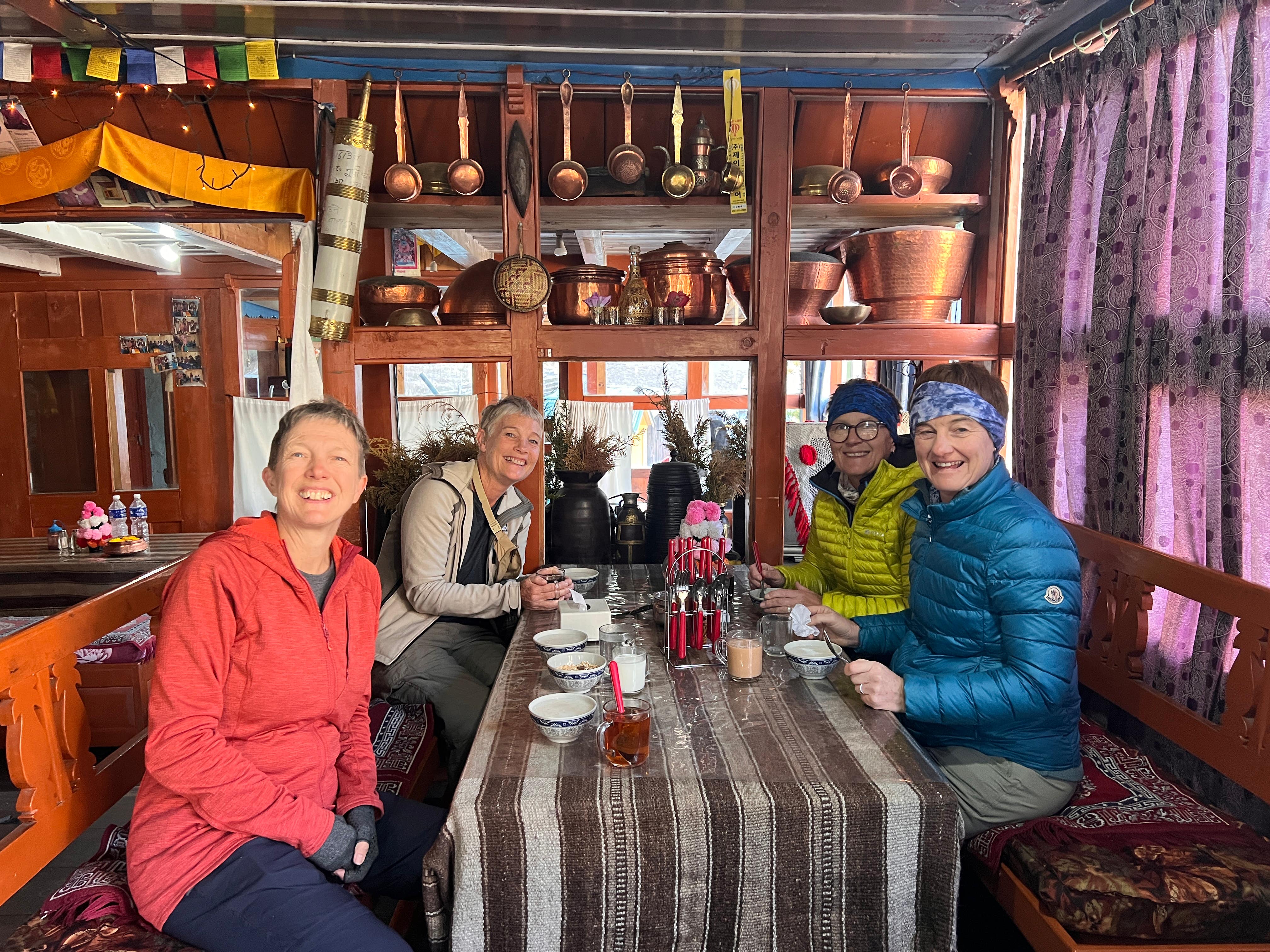
In the teahouses, breakfasts comprise of a choice of bread (a slice of toast, chapatti or Tibetan bread), a choice of egg (boiled, fried or omelette), and a choice between either muesli or porridge each day. Hot tea/coffee is also served. On some days, a pancake with jam/honey is served. You may also be able to supplement your included breakfast with additional items on the teahouse menu should you wish, additional items not included in the set menu should be ordered and paid for separately.
Please note, some more remote teahouses/lodges are unable to provide an extensive menu due to irregular delivery schedules and during periods of bad weather or a high volume of trekkers, there may be a more limited menu choice. Also, the higher altitude the more expenses the menus and extras generally are.
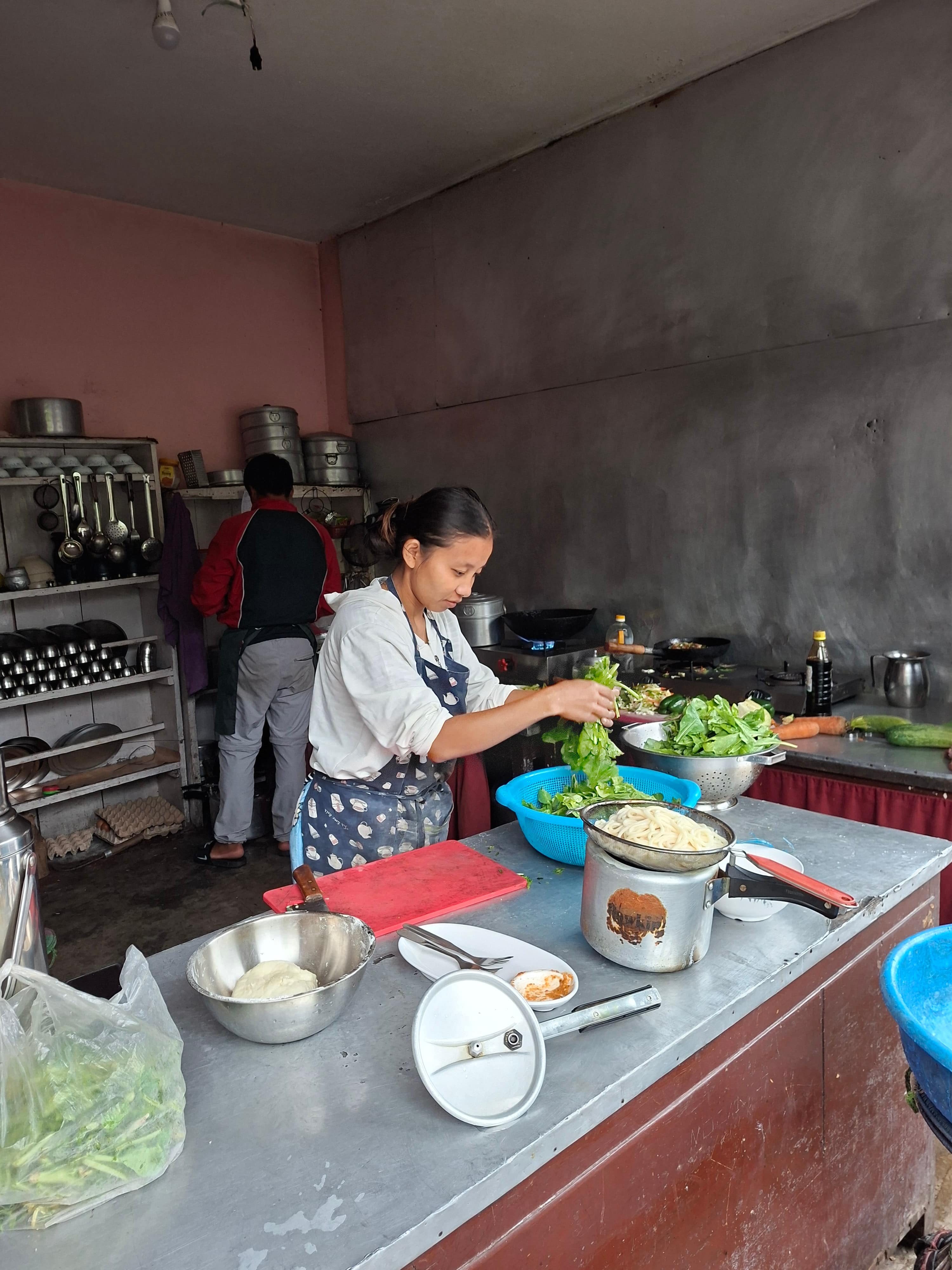
Lunch is at a teahouse en route – sometimes one of your guides will go ahead with the group’s order to make it more expedient. Dinner will be in the same teahouse that you sleep at (this is custom in Nepal as teahouses base their room rate on it).
The menus in the lodges are almost identical to one another but offer a varied choice, ranging from traditional Nepalese dhal bhat to pizza and apple pie. Dhal bhat is the staple diet in Nepal and comes in many different forms but generally comprises curried lentils and meat or vegetables, rice, and a pickle/chutney. Another popular snack is momos, a type of Nepalese dumpling, fried or steamed and filled with meat or vegetables.
Although meat is available in the teahouses, we advise against eating it on trek. The meat has often been carried in the heat from lower altitudes for several days before reaching the lodges and can cause stomach upsets or illness. Germs can also be spread by handling dirty money – we recommend using hand sanitiser.
If you have a gluten-free diet, we strongly recommend you bring extra food and snacks with you to supplement the food on trek as there will be little variety available to you, particularly for breakfast. Even many of the soups are from powder/packets and contain gluten. If you buy imported food and drink on trek you will spend more than the suggested amount.
Drinking water
Staying hydrated is important when undertaking any physical activity but particularly so at altitude where it is generally recommended to drink at least 100floz to 135floz (three litres to four litres) per person per day.
However, we strongly encourage you not to buy bottled water on trek as this contributes to the growing problem of plastic pollution in the trekking areas of Nepal.
A few villages along the Annapurna Sanctuary route have safe drinking water stations selling UV-treated water for about 50 rupees (US$0.40) per litre but these are not always open.
The teahouses also sell boiled water for approximately 150-300 rupees (US$1.15-US$2.30) per litre (the price increases the higher you trek) which should not require treating. This is also perfect for a bedtime refill as it can double up as a hot-water bottle.
Alternatively, all teahouses provide free cold water. Although this should not be drunk untreated, we recommend you bring a reusable bottle/water bladder/Camelpak (ideally two) and use an effective form of water treatment. There are a wide range of products available including Steripens or purification tablets, which are the quickest and easiest options to use on trek – we recommend talking to an outdoor retailer for the latest advice as technologies are improving all the time. Make sure to check the product’s performance in cold/freezing conditions and consider battery life (lithium batteries are best in cold conditions).
Exodus has partnered with Water-to-Go, a filtration system that eliminates more than 99.99 percent of all microbiological contaminants from any non-saltwater source – visit Water-to-Go for more information. Exodus customers can claim 15 percent off their first order and, better still, 15 percent of the purchase value will be donated to the Exodus Travels Foundation. These bottles filter the water as you drink through the spout may not be the most efficient while on the go on a trek. Please note, if the water freezes it will clog up the filter. In this event, defrost before use by sitting the filter in lukewarm water for 10-15 minutes.
Kagbeni Medieval Village Walk
Stroll the medieval alleys of Kagbeni, a labyrinth of mud-brick houses, hidden courtyards, and tunnelled lanes strung with prayer flags. Chortens and mani walls lead toward the red-walled monastery that anchors this frontier settlement.
As the gateway to Upper Mustang, Kagbeni blends Tibetan and Thakali influences. Its windswept setting on the Kali Gandaki invites you to linger, trace carved doorframes, and feel the village’s timeless way of life.
Marpha Village Walk & Apple Orchards
Wander whitewashed lanes in Marpha, the Thakali “apple capital” of Nepal. Stone alleys, tidy courtyards, and neatly stacked wood piles reflect a community famed for order and warmth, set beneath the shoulder of Nilgiri.
Explore orchard stands and small distilleries producing ciders and brandies. The village’s prosperity grew from trade on the Kali Gandaki route; today, its calm streets, traditional kitchens, and orchard scents offer a gentle cultural pause amid big-mountain days.
Marpha Apple Brandy Tasting
Sample Marpha’s apple brandy in the village famed for its orchards and meticulous Thakali homes. Learn how fruit is pressed and distilled in small local operations, then toast the journey with a warming sip.
This convivial stop celebrates the valley’s harvest traditions and the ingenuity of mountain communities. It’s an optional experience bookable on tour at additional cost; tastings are available in village shops and family-run distilleries.
Muktinath Temple Pilgrimage Visit
Visit Muktinath Temple, a revered site for both Hindus and Buddhists. Wander the stone courtyards where pilgrims perform ablutions beneath the 108 water spouts, and step to the Jwala Mai shrine to witness the eternal flame said to burn from natural gas.
Set against a stark Himalayan backdrop, this place of pilgrimage blends high-altitude serenity with centuries of living devotion. Prayer wheels, fluttering flags, and mountain light lend a contemplative atmosphere to this sacred complex.
Upper Pisang Monastery Visit & Paungda Danda Vista
Explore the hilltop monastery at Upper Pisang and visit the monastery for quiet views over stone lanes and cultivated terraces. From nearby ridges, gaze across to the curved rockface of Paungda Danda, the “Great Wall of Pisang,” and the glittering ice slopes of Annapurna II.
Incense-scented prayer halls and humming mantras frame an intimate lesson in local Nyeshang culture. The village’s timber-and-stone architecture and lofty setting create a vivid sense of life lived on the edge of the high Himalaya.
Gyaru–Ngawal High Trail Panorama
Walk a spectacular high trail linking the medieval stone villages of Gyaru and Ngawal. The contouring path keeps you high above the valley, revealing sweeping views of the Annapurnas and Gangapurna while prayer flags snap in the wind.
Centuries-old chortens, mani walls, and flat-roofed houses narrate the Nyeshang people’s Buddhist heritage. The altitude, silence, and vast horizons make this one of the circuit’s most scenic and culturally textured sections.
Braga Gompa Heritage Visit
Visit the 500-year-old Braga Gompa, a cliffside monastery commanding the Manang Valley. Step inside to see timeworn murals, prayer books, and butter lamps that illuminate Tibetan Buddhist art in an intimate, creaking assembly hall.
Outside, stacked whitewashed houses and fluttering flags echo the rhythm of highland life. The monastery’s vantage offers a quiet moment to absorb sweeping Annapurna views and the austere beauty of the trans-Himalayan landscape.
Jomsom Town Visit & Thakali Culture
Pause in Jomsom to explore the town at the heart of Lower Mustang, where stone-paved streets, bakeries, and teahouses shelter from the valley’s famous afternoon winds. Meet Thakali hosts known for their refined hospitality and trade heritage.
With Himalayan winds funneling the Kali Gandaki, Jomsom captures the intersection of trans-Himalayan routes and cultures. Sample local snacks, browse tiny shops, and absorb a lived-in mountain atmosphere shaped by merchants and pilgrims.
Kali Gandaki Gorge Forest Trail to Larjung
Follow a varied trail through fir, pine, and juniper to Larjung while cliffs tower from both sides of the deepest gorge in the world. Glimpses of Annapurna I and Dhaulagiri bookend the valley, with Thakali hamlets dotting the hillsides.
Between forest balconies and riverbed flats, the gorge’s geology and scale are on full display. Keep an eye on prayer-flagged bridges and traditional granaries—quiet signals of sturdy mountain life shaped by altitude and trade.
Naurikot Sunset Walk above the Kali Gandaki
Climb to the traditional village of Naurikot for a ridge-top stroll as the light softens over the valley. As dusk approaches, the westering sun burnishes Nilgiri’s ice flanks while fields and rooftops fall into long shadow.
The walk reveals Thakali architecture, mani stones, and terraced plots clinging to the slope. It’s a serene moment to breathe the cool evening air and savour sunset over the Himalaya in a setting few travellers reach.
Titi Tal Wetland Walk & Kunjo Village
Cross forested slopes to the small lake of Titi Tal, a seasonal marsh that attracts waterbirds against a stark Mustang backdrop. Continue through quiet hamlets toward Kunjo on a trail lined with juniper and alpine scrub.
The route pairs gentle wildlife interest with cultural texture—mani walls, timber roofs, and grazing pastures frame daily life at altitude. Keep your binoculars ready for migratory species while enjoying the solitude of this lesser-trodden corner.
Rupse Chhahara Falls Viewpoint & Tatopani Hot Springs
Trace balcony paths above the river to viewpoints of Rupse Chhahara, a thundering cascade carving into the cliff. Continue to Tatopani to soak in the hot springs, easing trekking legs in steaming pools beneath terraced hillsides.
Here, the Kali Gandaki canyon narrows and roars, a dramatic contrast to the restorative calm of Tatopani. The pairing of roaring waterfall and mineral-rich waters delivers both sensory drama and deep relaxation.
Rhododendron Forest Trek to Ghorepani
Climb ancient stone stairways into a vast rhododendron forest en route to Ghorepani. Moss-draped trunks, birdsong, and filtered light lend a primeval feel as the trail weaves between hamlets and terraced fields.
In spring, blossoms ignite the canopy in red and pink; year-round, windows open to views of the Annapurnas. The village’s name—“horse water”—recalls the days when caravans and mule trains paused here on the trans-Himalayan route.
Poon Hill Sunrise Viewpoint over Annapurna & Dhaulagiri
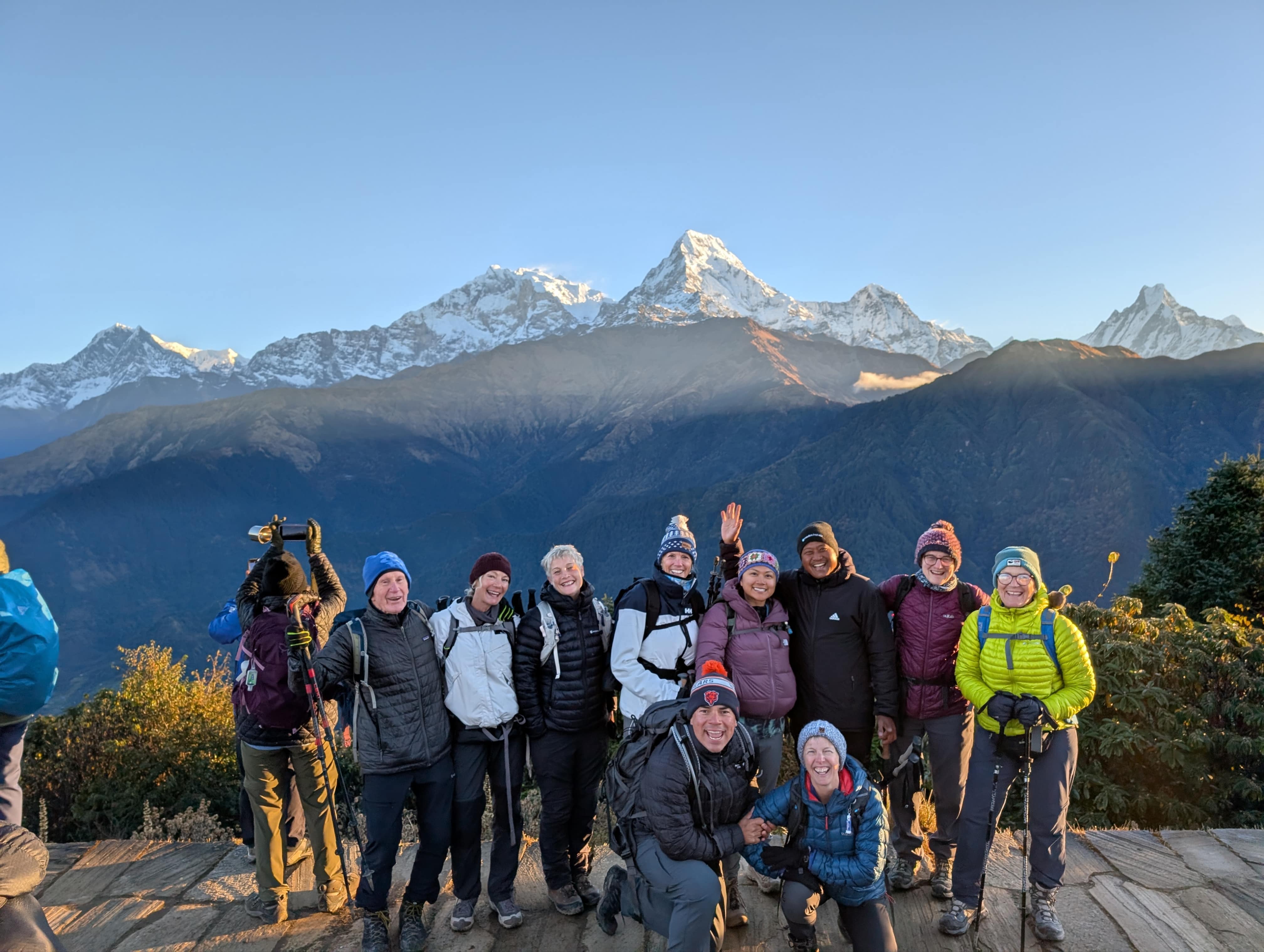
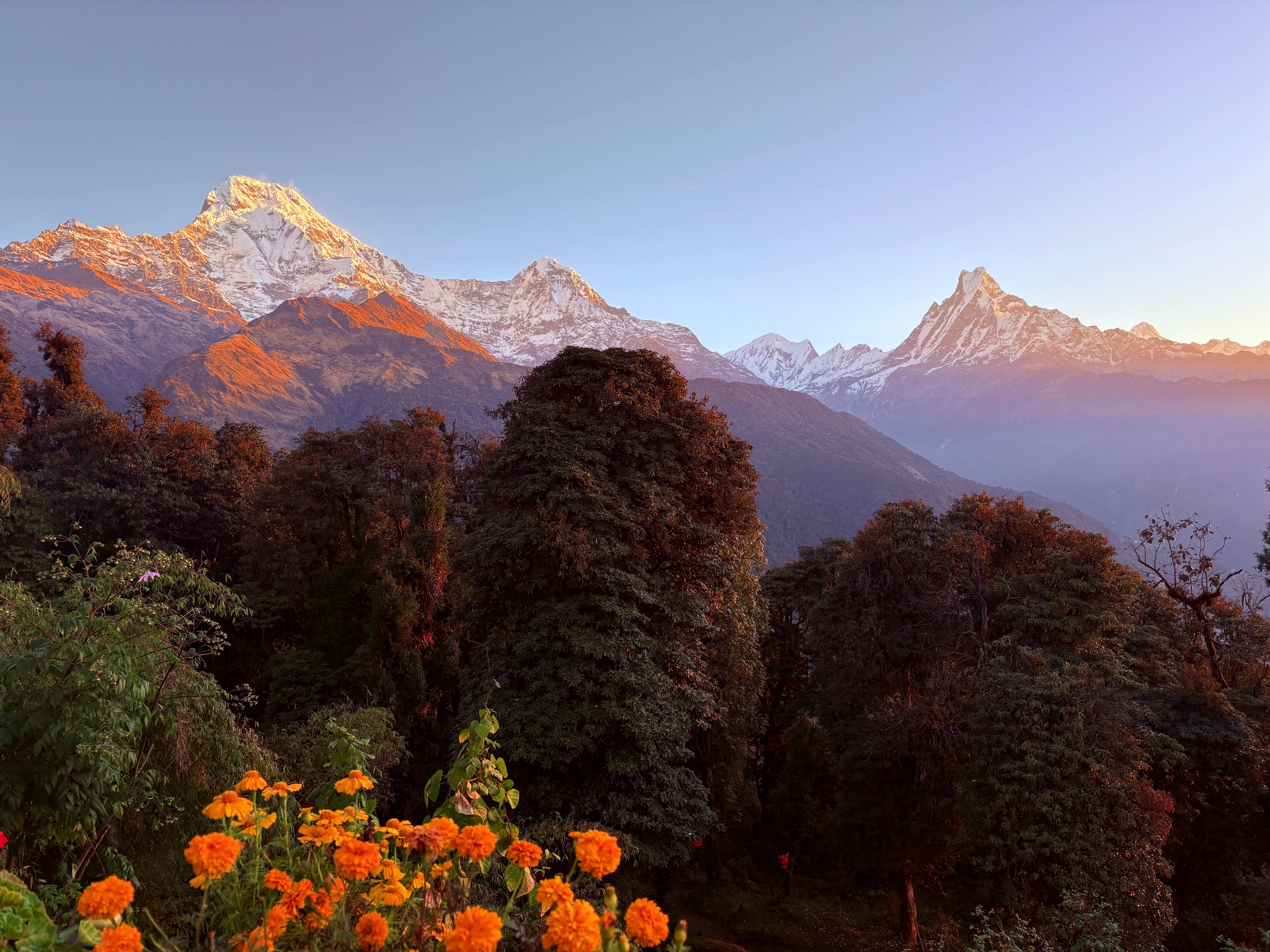
Set out pre-dawn to reach Poon Hill as the first light brushes Dhaulagiri, the Annapurnas, and the shark-fin of Machhapuchhare. The amphitheatre of peaks glows from rose to gold while valleys still lie in shadow.
This beloved viewpoint rewards the short, steady climb with panoramic Himalayan horizons perfect for photography. On clear mornings, the scale and symmetry of the ranges deliver a sunrise you will measure others against.
High Manang Approach via Manis and Mani Walls
Walk toward Manang past long mani walls carved with Buddhist prayers, where juniper scrub yields to high-alpine terrain. Pause in settlements to admire timber balconies, stone granaries, and views across the Jarsang Khola toward ice-hung ridges.
The approach reveals the cultural frontier between lush lower valleys and the arid trans-Himalaya. Bakeries, teahouse ovens, and high-mountain light set the mood for the days ahead toward the pass.
Phewa Lake Boat Ride & World Peace Pagoda Walk (Pokhara)
Boat across Phewa Lake to the forested shore and follow a hillside path to the World Peace Pagoda. From the white dome, gaze over the lake’s mirrored surface to the Annapurna range and the distinctive peak of Machhapuchhare.
This gentle half-day pairs light activity with big scenery and a serene Buddhist monument. This is an optional experience bookable on tour at additional cost; your leader can help arrange boats and transfers.
Pokhara Culture Tour: Mountaineering & Gurkha Museums with Tibetan Settlement
Explore Pokhara’s cultural side with visits to the International Mountain Museum and the Gurkha Museum, tracing legendary climbs and regimental history. Continue to a nearby Tibetan refugee settlement to see handicrafts and learn stories of exile and resilience.
Exhibits, photographs, and artisan workshops bring the Himalaya’s human narrative into focus. This is an optional experience bookable on tour at additional cost, with entry fees and transport arranged locally.
Thorong La Pass Crossing (5,416m)
Challenge yourself to cross the Thorong La pass, the high point of the Annapurna Circuit and a Himalayan rite of passage. Walk among prayer flags and cairns as the horizon opens to snow-capped peaks and the great chasm of the Kali Gandaki. The thin, crisp air and wide-open skylines deliver a rare sense of exposure and achievement.
This is a carefully paced ascent led by experienced guides, with time to pause for photos and reflection on the saddle. Views sweep toward Mustang and Dolpo, while behind you the Annapurna range gleams in brutal, icy clarity.